AMS & Color
The AMS Lite enclosure problem
Four spools, open to the room, sometimes for weeks. That is the one design decision in the AMS Lite that costs you prints, and it has a cheap fix.
By Michael W. · Published October 6, 2026
Some links here are Amazon affiliate links, so a purchase may earn this site a commission at no cost to you. It does not change what gets recommended or the order it appears in — how that works.
The short answer
There is no official enclosure for the AMS Lite, and that is by design — it is the open-air variant, built for A1 and A1 mini machines that have no enclosure to mount a sealed unit on. It has no humidity monitoring and no active drying.
The fix is not to enclose the AMS Lite. It is to change where spools live between prints: a four-spool dryer or sealed boxes as spool parking, with the set moving onto the AMS Lite for the job and back afterwards. That turns permanent exposure into a few hours of it.
If you only do one thing, buy sealed storage for whichever material actually goes wrong on you — almost always PETG or TPU.
What the AMS Lite does and does not do
The four AMS variants are genuinely different products rather than tiers, and the difference that matters on this page is enclosure and drying.
| Unit | Enclosure | Humidity monitoring | Active drying | Fits |
|---|---|---|---|---|
| AMS Lite | None - open air | No | No | A1, A1 mini |
| AMS | Sealed | Yes | No | P-series, X-series |
| AMS 2 Pro | Sealed | Yes | Yes | P-series, X-series |
| AMS HT | Sealed, single spool | Not stated in our source | Yes, high temperature | See listing |
Reading across that table explains the search. An AMS owner has a sealed box that at least monitors humidity; an AMS 2 Pro owner has one that does something about it. An AMS Lite owner has four spools in the room, and the obvious thought is "can I put a box around it?"
Why enclosing the unit itself is the wrong instinct
You can build an enclosure around an AMS Lite, and people do. The reason it is not the first thing I would do is that it solves the problem badly:
- A box is not a dry box. Enclosed room air is still room air. Without desiccant inside, or heat, you have slowed moisture ingress rather than stopped it.
- You lose the one advantage of the open design. On an AMS Lite a jam is visible and reachable. Boxed in, it becomes the teardown you were avoiding by not buying a sealed unit.
- The A-series needs its cooling. Open frames cool PLA well, which is part of why the A1 is good at it. Enclosing things near the machine is a thermal change you did not plan.
- It does not help the other eight spools. Only four live on the AMS Lite. If the rest of your filament is open on a shelf, the loaded four are not your worst problem.
If you do want to build something, treat it as dust and draft protection with desiccant inside, not as a dry box — the DIY enclosure page covers the same thinking for the printer itself.
What a heated AMS Lite would and would not fix
"AMS Lite heater" is a recurring search and the logic behind it is sound: active drying is what the AMS 2 Pro added, so heat is the thing missing. Two honest cautions.
Heat without a seal is inefficient, not useless
Warming spools in open air does drive moisture off, and it also warms the room. The AMS 2 Pro works because it heats a sealed volume. Replicating the effect on an open unit costs far more power for far less result.
PLA near its glass transition is a real risk
Any heating arrangement around spools needs to stay well below where PLA softens, or you get a spool that deforms on the holder and feeds badly. This is the reason we would point you at a purpose-built dryer with a controller rather than at an improvised heat source. How to dry filament properly has the temperatures and the risks.
The three-tier answer, by budget
Cheapest: sealed bags and fresh desiccant
Everything not currently loaded goes in a sealed bag with silica gel. This costs almost nothing and removes most of your exposure, because most of your filament is not on the AMS Lite at any given moment. Do this first regardless of what else you buy.
Middle: one sealed dry box for the problem material
PETG and TPU are the materials that actually ruin prints when damp. TPU in particular absorbs moisture in hours rather than weeks. One box for the one material is the highest-return purchase on this page.
Best: a four-spool dryer as spool parking
The loaded set lives in the dryer between jobs and transfers to the AMS Lite for the print. This is the arrangement that most closely reproduces what an AMS 2 Pro owner has, on a machine that cannot take one. The dryer roundup has the full comparison.
Is an AMS Lite still worth buying?
Yes, with the dryer budgeted in. It is the only route to four-color printing on an A1 or A1 mini and it handles color changes well. What it is not is a filament storage solution, and the mistake is treating the open-air design as a detail rather than as a line item.
If you are choosing between units rather than fixing one you own, AMS 2 Pro against AMS Lite is the comparison, and it mostly comes down to which printer you have rather than to preference. Figures on this page come from the sources listed below; nothing here was measured by this site — how we review.
What to buy
Stock photograph of this product class, not of this specific unit.
#ad We earn a commission · live price shown on Amazon
1. Best fix for an AMS Lite
SUNLU FilaDryer S4
Four spools dried and stored at once, which is exactly the number an AMS Lite holds.
The capacity match is the whole argument. An AMS Lite holds four spools and they are a set — you print with all four in one job, so drying one at a time while the other three sit in room air re-absorbing is the wrong shape of solution. Four spools at once is the only capacity that matches a four-color workflow.
In practice this becomes your spool parking: the set lives in the dryer between jobs and moves onto the AMS Lite for the print. That is a short exposure instead of a permanent one, which is the realistic version of fixing this problem.
Two costs. Footprint — measure the shelf, because an A1 plus an AMS Lite plus a four-spool dryer is a lot of desk, and a vertical rack may become part of the answer. And cycles are long, because four spools heat more slowly than one.
What it gets right
- Four spools at once is the only capacity that matches a four-color workflow
- Dries the whole set you are about to print with, rather than one spool at a time while three re-absorb
- Cheaper per spool than any single-spool dryer
What it does not
- It is a big box; four-spool dryers need shelf space you may not have next to the printer
- Standard-temperature drying is not enough for nylon or PC — that needs a high-temp unit
- Four spools heat more slowly than one, so cycles are long
| Capacity | Four spools |
|---|---|
| Positioning (cited) | Best for multi-color and multiple printers |
Stock photograph of this product class, not of this specific unit.
#ad We earn a commission · live price shown on Amazon
2. Best if you want sealed storage rather than a dryer
Polymaker PolyDryer
Per-spool sealed boxes at a cited 10-20% RH - prevention rather than repair, bought one box at a time.
This is the conceptually right answer to the AMS Lite problem, because the problem is exposure rather than moisture that has already arrived. Per-spool sealed boxes with a cited 10-20% RH mean the spool you load was never wet, so there is nothing to dry.
The cost shape is the appeal: start with one box for the material that actually goes wrong — usually PETG or TPU — and add more only if it earns it. That is a much easier first purchase than a dryer.
Scaling is where it stops being cheap. Boxes for a full filament shelf add up past a four-spool unit and take more total area, because per-box storage is less space-efficient than a rack. Standard-temperature drying only, so it is not an engineering-filament answer.
What it gets right
- The modular box system means every spool lives sealed, which prevents the problem instead of fixing it
- A cited 10-20% RH is the number that matters, and it is a good one
- Cheap to start with one box and add more, instead of one large purchase
What it does not
- Buying enough boxes for a full filament shelf adds up past the price of a four-spool dryer
- Standard-temperature drying — not an engineering-filament answer
- Per-box storage takes more total shelf area than a stacked rack
| Approach (cited) | Passive sealed storage plus active drying |
|---|---|
| Humidity reached (cited) | 10-20% RH |
| Entry point (cited) | From a per-box price, boxes bought individually |
Stock photograph of this product class, not of this specific unit.
#ad We earn a commission · live price shown on Amazon
3. Best if you want the spools permanently protected
EIBOS Cyclopes
An infinite timer means the unit can stay on as dry storage rather than running a cycle and stopping.
The AMS Lite exposes spools continuously, so the matching fix is continuous protection. Most dryers run a cycle and stop; an infinite timer lets this one simply stay on, which turns it from a repair tool into storage.
Four spools at a cited 100 W PTC heater is efficient for the volume it holds, and it is a direct competitor to the SUNLU S4 at similar capacity — price both.
Running any dryer continuously costs power, and that cost is real on a unit you never switch off. For spools you are not printing this month, a sealed bag with fresh desiccant is the honest answer instead.
What it gets right
- An infinite timer means the unit can simply stay on as dry storage, not just run a cycle
- Four spools at a 100 W PTC heater is efficient for the volume it holds
- Direct competitor to the SUNLU S4 at a similar capacity, so shop both
What it does not
- Running a dryer continuously as storage costs power — consider a sealed box with desiccant for long-term storage instead
- Standard-temperature class, so nylon and PC are not its job
- Four-spool footprint again: measure the shelf first
| Capacity | Four spools |
|---|---|
| Heater (cited) | 100 W PTC |
| Timer (cited) | Infinite |
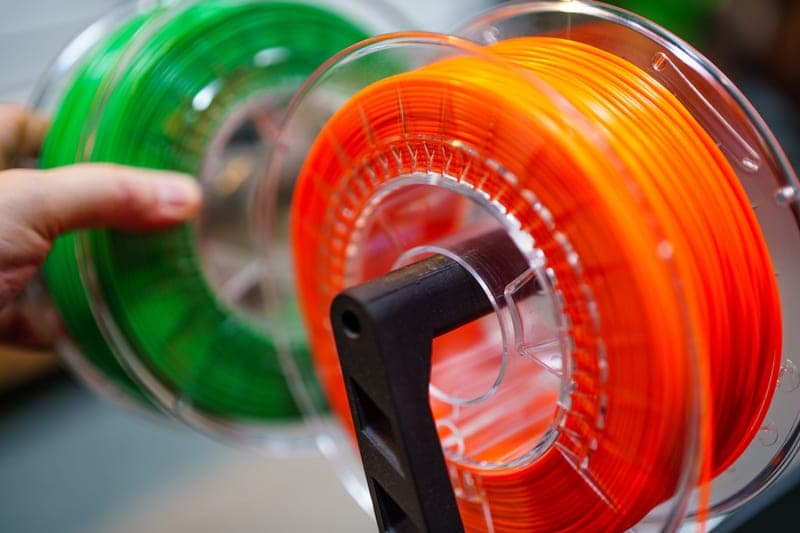
Stock photograph of this product class, not of this specific unit.
#ad We earn a commission · live price shown on Amazon
4. The unit this page is about
Bambu Lab AMS Lite
The only AMS that fits an A1 or A1 mini, and open air is the price of that fitment.
Worth being clear that the open-air design is not a flaw so much as a consequence. The A1 and A1 mini are open-frame machines with no enclosure to mount a sealed AMS on, and the AMS Lite is the only way to get four-color printing on them. It does that job well.
Open air has one genuine advantage, which almost nothing written about it mentions: a jam is visible and reachable rather than a teardown. On a sealed unit, the same jam is a panel removal.
The limit is the one this whole page exists for. No sealed chamber, no humidity monitoring and no active drying means PETG, TPU and nylon all need a separate answer. Budget a dryer or sealed boxes as part of the AMS Lite purchase rather than as a later upgrade.
What it gets right
- The only way to get four-color printing on the A-series, and it does it well
- Open-air design makes a jam visible and reachable instead of a teardown
- Cheapest multi-color hardware Bambu sells
What it does not
- Open air means zero moisture protection — in a humid room your filament is exposed between prints
- No active drying and no sealed chamber, so PETG, TPU and nylon all need a separate dryer
- Not compatible with the P-series or X-series
| Type | Compact, open-air four-spool variant |
|---|---|
| Fits | A1 and A1 mini |
| Enclosure | None — spools sit in open air |
Questions people actually ask
Is there an enclosure for the Bambu Lab AMS Lite?
Not an official one, and that is deliberate - the AMS Lite is the open-air variant, built for A1 and A1 mini machines that have no enclosure to mount a sealed unit on. It has no humidity monitoring and no active drying, so the practical fix is changing where spools live between prints rather than boxing in the unit.
How do I keep AMS Lite filament dry?
Use the AMS Lite for printing and something sealed for storage. Cheapest: sealed bags with fresh desiccant for everything not loaded. Better: one sealed dry box for whichever material actually fails on you, usually PETG or TPU. Best: a four-spool dryer as spool parking, with the set moving onto the AMS Lite for the job.
Can I add a heater to an AMS Lite?
The logic is sound - active drying is what the AMS 2 Pro added - but heat without a sealed volume is inefficient rather than effective, and any improvised heat source near spools risks softening PLA on the holder. A purpose-built dryer with a temperature controller does the same job properly.
Does top-mounting an AMS Lite help with moisture?
No. Lifting the spools onto a frame above the printer is a desk-space fix and a good one, especially on an A1 where four open spools take over a surface. It changes nothing about humidity, so do not treat it as having solved the drying problem.
Is the AMS Lite still worth buying?
Yes, as long as you budget a dryer or sealed boxes alongside it. It is the only way to get four-color printing on an A1 or A1 mini and it handles color changes well. The mistake is treating the open-air design as a detail rather than as a line item in the purchase.
Sources
Read this next
- Bambu Lab AMS LiteWhat the AMS Lite does well on an A1 or A1 mini, the moisture gap it leaves open, and the two things to buy alongside it.
- AMS 2 Pro vs AMS LiteThe AMS 2 Pro fits enclosed machines and the AMS Lite fits the A-series. What each does, and the gap you have to fill on an A1.
- The best filament dryers in 2026Dryer picks split by temperature range and capacity, because a 70 C unit and a 110 C unit are different products for different materials.
- The best filament dryer for TPUWhy TPU needs a dryer more than any other common filament, and which unit to buy when you want to print straight out of it.
- A1 and A1 mini mods worth doingA-series mods ordered by the problem each solves, why P-series parts do not fit, and the two problems specific to an open machine.
- Enclosures for the A1 and A1 miniFabric, purpose-built and DIY enclosure options for an A1, what each realistically delivers, and the measurement people get wrong.