Printers
The best Bambu Lab printer to step up to in 2026
Nine machines, one pick per situation — and a standing argument that for most P1S owners the right answer is still the printer on the bench.
By Michael W. · Published October 5, 2026
Some links here are Amazon affiliate links, so a purchase may earn this site a commission at no cost to you. It does not change what gets recommended or the order it appears in — how that works.
Quick picks
Tap any row to jump to the full write-up. Prices and stock live on Amazon, never here.
| # | Product | Best for | Price |
|---|---|---|---|
| 1 | 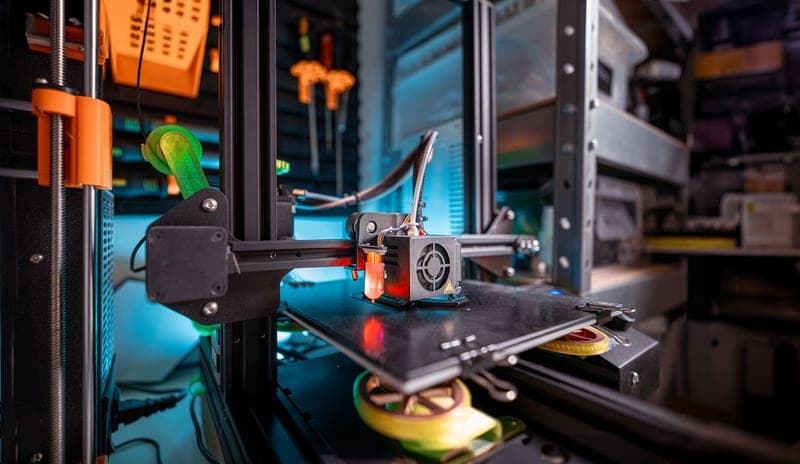 Bambu Lab H2D The only machine here that is a different class, not a faster version of what you own. | Best overall step-up The genuine step up — large format plus a direct-drive dual nozzle in one machine | Check price on Amazon #ad We earn a commission · live price shown on Amazon |
| 2 |  Bambu Lab P2S Buys you a touchscreen and a quick-swap nozzle. Buys you no extra build volume at all. | Best if your complaint is the P1S workflow The P1S owner whose actual complaint is the nozzle swap and the missing screen | Check price on Amazon #ad We earn a commission · live price shown on Amazon |
| 3 | Bambu Lab H2S Nearly the H2D's bed for meaningfully less money, as long as you can live with one nozzle. | Best value for build volume Buying the H2 build volume without paying for a dual nozzle you would not use | Check price on Amazon #ad We earn a commission · live price shown on Amazon |
| 4 | Bambu Lab X2D A reported 65 C heated chamber in a desk-sized machine — the one thing a P1S cannot be upgraded into. | Best for ABS and ASA on a desk Dual-nozzle printing at the smaller build volume, if you want two materials more than you want a big bed | Check price on Amazon #ad We earn a commission · live price shown on Amazon |
| 5 | 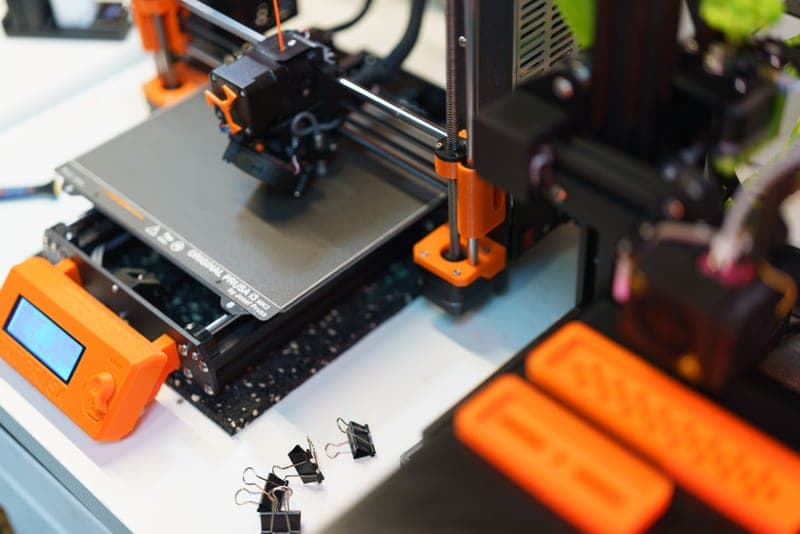 Bambu Lab A1 The right answer when the upgrade you need is a second printer, not a better one. | Best second machine The owner who wants a bigger bed and four colors without paying for an enclosure they would not use | Check price on Amazon #ad We earn a commission · live price shown on Amazon |
| 6 | Bambu Lab H2C Automatic hotend swapping removes the one step that stops people using a fine nozzle for detail. | Most interesting if you swap nozzle sizes Running two nozzle diameters in one job without touching the machine | Check price on Amazon #ad We earn a commission · live price shown on Amazon |
| 7 | Bambu Lab X1-Carbon A capable enclosed machine with lidar and a hardened nozzle as standard — at used prices, not flagship prices. | Best used buy The used-market buy, now that it is no longer the flagship it is remembered as | Check price on Amazon #ad We earn a commission · live price shown on Amazon |
| 8 | Bambu Lab H2D Pro Enterprise networking plus a tungsten carbide nozzle at HRA 90 — maintenance intervals change, not print quality. | Best for a print farm A print farm or a shop that needs enterprise networking and a nozzle that outlives hardened steel | Check price on Amazon #ad We earn a commission · live price shown on Amazon |
The short answer
If you own a P1S or X1C: do not buy a printer. An AMS 2 Pro, a hardened hotend and a second build plate fix what is actually bothering you, for a fraction of a new machine. The exceptions are size and chamber heat, which hardware cannot fake: for size, the H2S; for ABS and ASA on a desk, the X2D.
If you own an A1 or A1 mini: the open frame is a real limit. Either add an enclosure or move to an enclosed machine — the P2S if you want the smaller footprint, the H2S if you want the bed as well.
If you genuinely need the largest machine here: the H2D, and it is the one pick on this page that is a different class of machine rather than a better version of yours.
How this page is ordered, and why it is not ordered by price
Every pick here is placed by the situation it solves, because "best printer" is not a question that has one answer for an owner. You are not choosing from nothing; you are choosing whether to replace something. That makes the relevant comparison not printer-against-printer but printer-against-upgrade, and about half the time the upgrade wins.
The selection criteria, stated before the picks rather than after:
- Does it fix something hardware cannot? Build volume and active chamber heating are the only two capabilities in this range that no accessory can deliver. Everything else has a cheaper answer.
- Is it current? Seven machines shipped in fifteen months. A recommendation written against the 2024 lineup is wrong now, and the X1-Carbon is where that shows most.
- What does it cost you beyond the price? Shelf space, maintenance burden, accessory compatibility with the parts you already own.
- Who is it wrong for? Every entry says. A roundup where every pick suits everyone is a catalog, not advice.
The current lineup, by release date
This matters more in this category than almost any other, because the pace of releases has outrun the articles. The X1-Carbon is still widely presented as the flagship and has not been since March 2025.
| Model | Released | Type |
|---|---|---|
| X1 / X1-Carbon | May 2022 | Enclosed CoreXY, lidar bed leveling |
| P1P | November 2022 | Non-enclosed CoreXY |
| P1S | July 2023 | Enclosed CoreXY, auxiliary fan and filter |
| A1 mini | September 2023 | Open-frame bed slinger |
| X1E | October 2023 | Ethernet, hotter nozzle, active chamber heating |
| A1 | December 2023 | Open-frame bed slinger, two-tower gantry |
| H2D | March 2025 | Large format, direct-drive dual nozzle |
| H2D Pro | August 2025 | Enterprise, tungsten carbide nozzle |
| H2S | August 2025 | Large format, single nozzle |
| P2S | October 2025 | Enclosed CoreXY, touchscreen, quick-swap nozzle |
| H2C | November 2025 | Automatic hotend swapping |
| X2D | April 2026 | Dual nozzle, improved filtration and speed |
| A2L | June 2026 | Large format, blade cutter |
The three upgrades a printer cannot fix, and the two it can
Cannot be fixed by a new printer
Wet filament. No machine in this range prints well from a spool that has been sitting open in a humid room, and the symptoms — stringing, popping, brittle parts — get blamed on the printer constantly. Drying is cheaper than everything on this page. How to tell.
A contaminated build plate. First-layer failures are overwhelmingly adhesion, and adhesion is overwhelmingly skin oils. The fix is soap and water.
A worn nozzle. If you have run abrasive filament through a stainless nozzle, the nozzle is the fault and a new printer with the same nozzle material would wear the same way. Which filaments do this.
Can only be fixed by a new printer
Build volume. If the part does not fit, it does not fit. The H2S and H2D are the answers, at reported 325 x 320 x 325 mm and 350 x 320 x 325 mm.
An actively heated chamber. A P1S holds heat; it does not make heat. For reliable ASA on tall parts that distinction is the whole game, and the X2D is reported at up to 65 C. There is no upgrade path from passive to active.
By what you own now
You own an A1 mini
Keep it. It is the quietest machine in the lineup and it makes an excellent second printer for small parts forever. If you want more, the question is whether you want a bigger open bed (the A1) or an enclosure (the P2S), and the answer is almost always the enclosure, because size is rarely the A1 mini's real limit — materials are.
You own an A1
The open frame is your ceiling. Decide between adding an enclosure, which is cheap and imperfect, and moving to an enclosed machine, which is expensive and complete. If you move, the P2S is the same desk footprint and the H2S is a different kind of workshop. The full A1 upgrade path.
You own a P1S
This is the most common case and the answer is usually: keep it and spend a fifth of the money fixing the one thing that bothers you. The P1S is a well-sorted machine whose remaining irritations — no screen, slow nozzle changes, a mediocre camera — all have aftermarket answers. The two reasons to actually replace it are size and active chamber heat. The full argument.
You own an X1-Carbon
You already have lidar, an aluminum enclosure and a hardened nozzle. The only upgrades above you are size (H2S, H2D) and dual-nozzle capability. Do not move sideways to a P2S — you would be trading lidar for a touchscreen.
What I have and have not run
Worth stating plainly, because a lot of pages in this niche imply more than they should. I own and use Bambu hardware, and my judgment about the P-series and A-series comes from that. I have not run an X2D, an A2L, an H2C or an H2D Pro — all four are 2025 or 2026 releases, and what I write about them here is specification, published positioning and reasoning, clearly labeled as such.
There is no test lab behind this site, no measurement rig and no benchmark data. Every figure on this page is attributed to its source in the list at the bottom, and where a figure could not be attributed it is absent rather than estimated. Prices live on Amazon rather than here, because a price typed into an article is wrong within a month. How this works in full.
Every pick in full
Stock photograph of this product class, not of this specific unit.
#ad We earn a commission · live price shown on Amazon
1. Best overall step-up
Bambu Lab H2D
The only machine here that is a different class, not a faster version of what you own.
This is the step-up that is genuinely a step up. Everything else on this page is an improved version of a machine you already have; the H2D is a different proposition, and the two reasons are its reported 350 x 320 x 325 mm build volume and its direct-drive dual nozzle.
The build volume is the part no accessory can fake. If you have been splitting models and gluing them for a year, that is the recurring cost this removes. The dual nozzle is the subtler win: two hotends mean a support material in a different polymer, or a second color, without the purge tower an AMS color change produces on every layer. For functional printing with soluble supports that is a capability, not a convenience.
What makes me cautious about recommending it broadly is the money. This is the largest single jump in the range, and it has to replace a workflow rather than satisfy a wish. The honest test: in the last six months, how many prints did you split because of size, and how many times did you want a second material in one part? If the answers are "a few" and "never", the H2S saves you real money for nearly the same bed.
What it gets right
- Direct-drive dual nozzle is a different kind of machine, not a faster version of the one you own
- The largest reported build area of the models an enthusiast realistically buys
- Two hotends means dissolvable or contrast material without an AMS color-change purge every layer
What it does not
- This is the biggest single jump in money in the whole lineup — it has to replace a workflow, not a wish
- Two nozzles is two of every maintenance task
- If multi-color is the actual goal, an AMS 2 Pro on your existing printer gets you most of the way for a fraction of it
| Released | March 25, 2025 |
|---|---|
| Type | Large-format enclosed, direct-drive dual nozzle |
| Build volume (reported) | 350 x 320 x 325 mm |
| Laser Edition (reported) | Adds laser, blade and pen toolheads |
Stock photograph of this product class, not of this specific unit.
#ad We earn a commission · live price shown on Amazon
2. Best if your complaint is the P1S workflow
Bambu Lab P2S
Buys you a touchscreen and a quick-swap nozzle. Buys you no extra build volume at all.
The P2S is the P1S successor and it fixes exactly two things: there is now a touchscreen on the machine, and the nozzle is quick-swap. Both are real irritations on a P1S, and if either has been bothering you for a year this is a clean answer.
What it does not do is make your prints better or bigger. Reported build volume is a 256 mm cube, the same class as the P1S, and the P1S was already fast enough that speed is not the argument. Treat this as a workflow purchase, which is a legitimate thing to buy — just not one to describe as a print-quality upgrade.
Before you commit, price up the alternative: a third-party touchscreen plus a quick-change hotend deliver both features on the printer you own for a fraction of this. That path leaves you with third-party firmware in the stack, which is a genuine trade — but it is a trade, not a loss. The full version of this argument is on P1S vs P2S.
What it gets right
- Quick-swap nozzle turns a 0.4-to-0.6 change from a maintenance task into a between-prints decision
- A real touchscreen on the machine, so you are not opening an app to start a print
- Same footprint and roughly the same build area as the P1S, so your enclosure and shelf still work
What it does not
- If you have never once wished your P1S had a screen, this is not the upgrade you need
- Reported build volume is a 256 mm cube — the same class as the P1S, so it buys you nothing in size
- Your P1S-specific third-party parts may not carry over; check fitment per part, not per brand
| Released | October 9, 2025 |
|---|---|
| Type | Enclosed CoreXY, P1S successor |
| Over the P1S | Touchscreen and quick-swap nozzle |
| Build volume (reported) | 256 mm cube |
Stock photograph of this product class, not of this specific unit.
#ad We earn a commission · live price shown on Amazon
3. Best value for build volume
Bambu Lab H2S
Nearly the H2D's bed for meaningfully less money, as long as you can live with one nozzle.
The H2S is the H2D with one nozzle instead of two, at a reported 325 x 320 x 325 mm against the H2D's 350 x 320 x 325 mm. In practice that is the same shelf, the same class of large print, and a smaller bill.
I would recommend this over the H2D to most people who think they want the H2D, because size is almost always the real motivation and the second nozzle is almost always the part that goes unused. Single nozzle also means one hotend to maintain rather than two, which matters more than it sounds once you are running abrasive filament.
The reason to pay the difference is specific: soluble supports on complex geometry, or genuine two-material parts. If neither is in your actual print history, the H2S is the better buy and the saving covers a good dryer and a spare plate.
What it gets right
- The large-format build area is the only thing a P1S genuinely cannot give you
- Single nozzle means one hotend to maintain instead of two
- Costs less than the H2D for the same reported footprint and near-identical bed size
What it does not
- No dual nozzle, so no support material in a different polymer and no two-color single-head workflow
- Large-format machines want floor or shelf space, not desk space
- If your prints all fit in 256 mm, you are paying for air
| Released | August 26, 2025 |
|---|---|
| Type | Large-format enclosed, single nozzle |
| Build volume (reported) | 325 x 320 x 325 mm |
Stock photograph of this product class, not of this specific unit.
#ad We earn a commission · live price shown on Amazon
4. Best for ABS and ASA on a desk
Bambu Lab X2D
A reported 65 C heated chamber in a desk-sized machine — the one thing a P1S cannot be upgraded into.
If your upgrade is driven by materials rather than size, this is the interesting machine. A P1S chamber is passive: the bed warms the air and the panels keep it in. The X2D is reported to heat its chamber actively to 65 C, and that is the difference between ASA working most of the time and ASA working reliably, especially on tall parts where the lower layers cool while the upper ones print.
It is also dual nozzle at the smaller footprint, with newer filtration and thermal hardware. For engineering-material printing on a desk rather than a floor, nothing else in the range occupies that spot.
Two honest caveats. The reported build volume is the same 256 mm class as your P1S, so this is purely a capability upgrade. And I have not run one — released in April 2026, it is specification and reasoning here, not observation. If that matters to you, wait a few months for the accessory ecosystem and the long-term reports to fill in. See P2S vs X2D.
What it gets right
- Dual nozzle without stepping up to the H2 footprint — two materials on a desk-sized machine
- A reported 65 C heated chamber is a real capability jump over any passive P-series enclosure
- Newest filtration and thermal hardware in the smaller form factor
What it does not
- Released April 2026, so third-party part support is thin compared with the P1S
- Same reported 256 mm build volume as a P1S — this is a capability upgrade, not a size one
- I have not run one. What follows anywhere on this site about the X2D is specification and reasoning, not observation
| Released | April 14, 2026 |
|---|---|
| Type | Enclosed CoreXY, dual nozzle |
| Improvements cited | Air filtration, thermal management and speed |
| Build volume (reported) | 256 mm cube |
| Chamber (reported) | Heated to 65 C |
Stock photograph of this product class, not of this specific unit.
#ad We earn a commission · live price shown on Amazon
5. Best second machine
Bambu Lab A1
The right answer when the upgrade you need is a second printer, not a better one.
This is the pick nobody asks for and a lot of people need. If your bottleneck is throughput — one machine, a queue of prints, a long job blocking a short one — then a second cheap printer beats a better expensive one. Two machines printing PLA is more useful than one machine printing PLA slightly faster.
The A1 is the right second machine because it is open-frame and therefore cools well for fast PLA, it takes an AMS Lite for four-color work, and the two-tower gantry is more rigid than a single-upright bed slinger. Pair it with the enclosed machine you already own and you have covered both material classes.
The limit is the one you would expect: open frame means PLA and PETG, and ABS and ASA stay on the enclosed machine. An aftermarket enclosure narrows that gap without closing it.
What it gets right
- Larger build area than the A1 mini for very little extra money or desk space
- The two-tower gantry is noticeably more rigid than a single-upright bed slinger
- AMS Lite in the combo makes four-color PLA and PETG genuinely practical
What it does not
- Still open-frame — this is the single thing that will eventually make you upgrade
- Bed slinger kinematics mean it will never match a CoreXY machine on tall, fast prints
- No active chamber heating, so ABS and ASA warp without an aftermarket enclosure
| Released | December 14, 2023 |
|---|---|
| Type | Open-frame bed slinger, two-tower gantry |
| Multi-color | AMS Lite (4 spools, open air) |
Stock photograph of this product class, not of this specific unit.
#ad We earn a commission · live price shown on Amazon
6. Most interesting if you swap nozzle sizes
Bambu Lab H2C
Automatic hotend swapping removes the one step that stops people using a fine nozzle for detail.
The H2C automates hotend swapping, which sounds like a convenience and is actually a behavior change. The reason most owners never use a 0.2 mm nozzle for detail work or a 0.6 mm for bulk is the friction of changing it. Remove the friction and nozzle diameter becomes a per-print decision.
On the H2 large-format chassis, that makes it the most genuinely novel engineering in the current lineup for anyone whose print mix spans fine detail and functional bulk.
The reasons for caution are the usual ones for a November 2025 release: a more complex mechanism has more to go wrong, the service history is short, and third-party accessory support is minimal. This is an enthusiastic recommendation for a narrow use case, not a general one.
What it gets right
- Automatic hotend swapping removes the one manual step that stops people using a 0.2 mm nozzle for detail
- Large-format H2 chassis, so build area is not the compromise
- The most interesting engineering in the current lineup if your prints mix fine detail and bulk
What it does not
- A newer, more complex mechanism means more to go wrong and a thinner service history
- Released November 2025 — third-party accessory support is minimal
- Only pays off if you genuinely swap nozzle sizes often; most owners do not
| Released | November 13, 2025 |
|---|---|
| Headline feature | Automatic hotend swapping |
| Series | H2 large format |
Stock photograph of this product class, not of this specific unit.
#ad We earn a commission · live price shown on Amazon
7. Best used buy
Bambu Lab X1-Carbon
A capable enclosed machine with lidar and a hardened nozzle as standard — at used prices, not flagship prices.
The X1-Carbon is the most over-recommended printer in this niche, and the reason is simple: it was the flagship for long enough that the articles never got updated. It has not been the top of the range since the H2D launched in March 2025, and the X2D followed in April 2026.
None of which makes it a bad machine. It is an enclosed CoreXY with lidar-based bed leveling and first-layer inspection that the P-series does not have, an aluminum enclosure that holds chamber heat better than the P1S's panels, and a hardened steel nozzle as standard — so abrasive filament is a day-one capability rather than a purchase.
At used prices that is a lot of machine. At new flagship prices it is a mistake, and anyone still presenting it as the current best is not paying attention. X1C vs P1S and X1C vs X2D have the detail.
What it gets right
- Ships with a hardened steel nozzle, so abrasive filament is a day-one capability rather than a purchase
- Lidar bed leveling and first-layer inspection, which the P-series does not have
- An aluminum enclosure holds chamber heat better than the P1S's panels
What it does not
- It is not the current flagship and has not been since March 2025 — buying it new at flagship money is a mistake
- The H2D and X2D both exceed it, so resale value is on a downward path
- Single nozzle, where the current top of the range is dual
| Series | X1, released May 24, 2022 |
|---|---|
| Type | Enclosed CoreXY with lidar-based bed leveling |
| X1-Carbon spec | Aluminum enclosure, hardened steel nozzle, auxiliary cooling fan |
| Screen | 5-inch touchscreen |
| Superseded by | H2D (March 2025) and X2D (April 2026) |
Stock photograph of this product class, not of this specific unit.
#ad We earn a commission · live price shown on Amazon
8. Best for a print farm
Bambu Lab H2D Pro
Enterprise networking plus a tungsten carbide nozzle at HRA 90 — maintenance intervals change, not print quality.
The H2D Pro carries the same reported print hardware as the H2D plus enterprise networking and a tungsten carbide nozzle. The nozzle is the interesting part: carbide is cited at HRA 90 against hardened steel's HRA 74, which changes abrasive-filament maintenance intervals outright rather than incrementally.
If you are running carbon-filled filament as your default material, that is a consumables argument that adds up. And enterprise networking stops being a bullet point the moment you are managing more than two machines.
For one printer in a garage, it is the wrong purchase. Carbide is also harder but more brittle than steel, so a nozzle crash is a more expensive mistake. See printers for a print farm and H2D vs H2D Pro.
What it gets right
- A tungsten carbide nozzle at HRA 90 against hardened steel's HRA 74 changes abrasive-filament maintenance intervals outright
- Enterprise networking matters the moment you are running more than two machines
- Same reported print hardware as the H2D, so nothing is traded away for the Pro badge
What it does not
- For a single hobby machine the Pro premium buys features you will never configure
- Carbide nozzles are harder but more brittle than steel — a crash is more expensive
- Overkill unless abrasive filament is most of what you print
| Released | August 11, 2025 |
|---|---|
| Positioning | Enterprise |
| Nozzle | Tungsten carbide (HRA 90, against HRA 74 for hardened steel) |
| Print hardware | Reported same as H2D, plus enterprise networking |
Questions people actually ask
What is the best Bambu Lab printer in 2026?
For an owner upgrading, the H2D is the best machine, because its reported 350 x 320 x 325 mm build volume and direct-drive dual nozzle are capabilities no accessory can add. For most people reading this it is still the wrong purchase: if your prints fit in a 256 mm cube and you print one material at a time, an AMS 2 Pro and a hardened hotend on the printer you own fix more of what actually annoys you.
Is the X1C still worth buying in 2026?
Used, yes. New at the price it used to command, no. It has not been the top of the range since the H2D launched in March 2025, and the X2D followed in April 2026. What it still offers is lidar bed leveling the P-series lacks, an aluminum enclosure that holds chamber heat well, and a hardened steel nozzle as standard.
Which Bambu Lab printer is best for ABS and ASA?
Among the machines an enthusiast realistically buys, the X2D, because it is reported to heat its chamber actively to 65 C. An enclosed P1S holds heat from the bed but does not make heat, and that gap is why tall ASA parts can still split inside one. The H-series machines are also enclosed and capable; the X2D is the one that puts active chamber heating in a desk-sized footprint.
Should I buy a second printer instead of upgrading?
If your bottleneck is throughput rather than capability, yes - two machines printing is more useful than one machine printing slightly faster. An A1 is the sensible second machine alongside an enclosed printer: it is open-frame so it cools well for fast PLA, and it takes an AMS Lite for color work.
How much better is a P2S than a P1S?
In two specific ways, and no others. It adds a touchscreen and a quick-swap nozzle. Reported build volume is the same 256 mm class, and the P1S was already fast. If neither of those two things has been irritating you, the P2S has nothing to offer you - and if they have, a third-party screen plus a quick-change hotend deliver both on the machine you own for much less.
Which Bambu Lab printers have dual nozzles?
The H2D and H2D Pro have a direct-drive dual nozzle, and the X2D is reported as dual nozzle in a smaller footprint. The H2S is the single-nozzle variant of the H2 chassis, and the H2C takes a different approach by swapping hotends automatically rather than carrying two at once.
Sources
- Bambu Lab model list, release dates and model descriptions - Wikipedia
- Reported build volumes, chamber temperature and H2D Pro nozzle hardness - third-party lineup roundups captured October 2026 (3dprinting.com, precwise.com, innoaddi.com)
- Bambu Lab hardened steel nozzle and hotend upgrade documentation - Bambu Lab wiki
Read this next
- Bambu Lab P1S vs P2SThe P2S adds a touchscreen and a quick-swap nozzle and no build volume. When that is worth a new machine and when a far cheaper part does the same job.
- Upgrading from a P1SThe two reasons to replace a P1S and the four cheaper parts that cover everything else, with the arithmetic laid out.
- Bambu Lab H2D vs H2STwo machines on one chassis. The beds are nearly the same; the difference is one nozzle, and most people will not use the second.
- The best Bambu Lab printer for ASAWhich machines handle ASA and ABS, why passive and active chambers differ, and the free technique to try before buying.
- Bambu Lab AMS 2 ProWhy active drying makes the AMS 2 Pro a different product from the original AMS, and the case for buying it instead of a new printer.
- The best Bambu Lab upgradesUpgrades ranked by the problem each one solves, with the popular ones that fix nothing clearly marked as such.