Filament Drying
The best filament dryers in 2026
Two numbers decide this purchase: the temperature it reaches and how many spools it holds. Everything else is detail.
By Michael W. · Published October 5, 2026
Some links here are Amazon affiliate links, so a purchase may earn this site a commission at no cost to you. It does not change what gets recommended or the order it appears in — how that works.
Quick picks
Tap any row to jump to the full write-up. Prices and stock live on Amazon, never here.
| # | Product | Best for | Price |
|---|---|---|---|
| 1 | 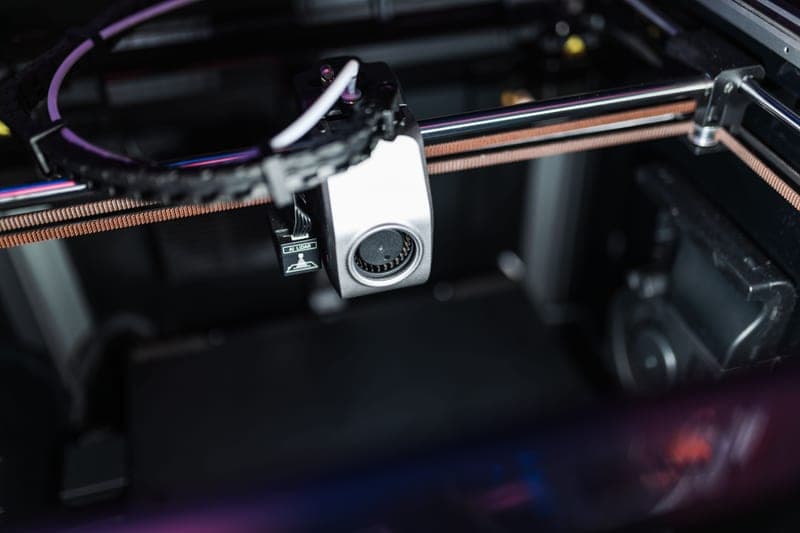 SUNLU FilaDryer S4 Four spools at once, which is the only capacity that matches a multi-color workflow. | Best filament dryer Multi-color and multi-printer owners — four spools dried at once | Check price on Amazon #ad We earn a commission · live price shown on Amazon |
| 2 | SUNLU E2 FilaDryer A cited 35-110 C range with a 500 W PTC heater, which is the first number here that is enough for nylon. | Best for engineering filament Engineering filament — PA6-CF, PA12-CF, PC, ABS and ASA — and annealing finished parts | Check price on Amazon #ad We earn a commission · live price shown on Amazon |
| 3 | EIBOS Cyclopes Four spools, a 100 W PTC heater and an infinite timer, so it can simply stay on. | Best for continuous dry storage Four-spool drying with a timer that does not force you to restart it | Check price on Amazon #ad We earn a commission · live price shown on Amazon |
| 4 | Polymaker PolyDryer Sealed boxes plus active drying, reaching a cited 10-20% RH, bought one spool at a time. | Best storage-first approach Sealed storage first, active drying second — the per-spool approach | Check price on Amazon #ad We earn a commission · live price shown on Amazon |
| 5 | SUNLU FilaDryer S2 A cited 35-70 C range, one spool, quiet enough to run overnight. | Cheapest dryer worth owning The cheapest dryer worth owning, if you just need PETG and TPU to behave | Check price on Amazon #ad We earn a commission · live price shown on Amazon |
| 6 | 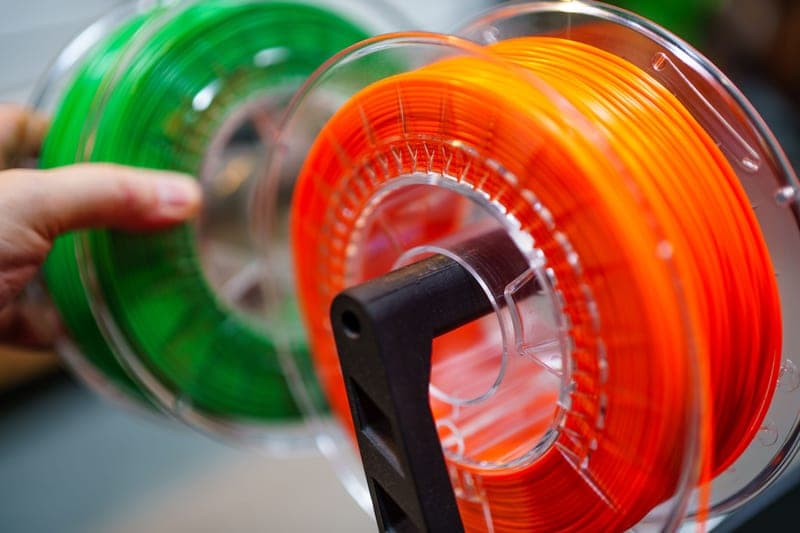 Bambu Lab AMS 2 Pro Drying inside the unit you print from, which closes the reabsorption gap entirely. | Best if you own an enclosed Bambu machine The single best upgrade for a P1S or X1C owner who is tempted by a new printer | Check price on Amazon #ad We earn a commission · live price shown on Amazon |
The short answer
PLA, PETG and TPU, one spool at a time: a cheap 35-70 C single-spool dryer. It covers everything those materials need.
Multi-color printing: a four-spool unit, because drying one while three reabsorb is close to pointless.
Nylon, polycarbonate or PA-CF: a high-temperature unit reaching around 110 C. A 70 C dryer cannot serve those materials, and buying a bigger 70 C dryer does not help.
You own a P1S, P2S or X-series machine: price an AMS 2 Pro before a dryer. It dries and prints from the same box, which no standalone dryer does.
How this page is ranked
By temperature and capacity, because those are the two specifications that decide whether a dryer can do your job at all. Everything else — timers, displays, fan noise — is secondary. The criteria, up front:
- Does it reach the temperature your material needs? A 70 C ceiling is a hard limit for nylon and PC, not a minor shortfall.
- Does capacity match your workflow? Four-color printing needs four spools dried together.
- Does it close the reabsorption gap? Printing from the unit matters more with hygroscopic materials than any other feature.
- What does running it cost? A 500 W heater and a unit left on permanently are both real running costs.
- Who is it wrong for? On every entry.
The two numbers, in a table
| Unit | Spools | Temperature | Notable |
|---|---|---|---|
| SUNLU FilaDryer S2 | 1 | 35-70 C | Quiet enough for overnight |
| SUNLU FilaDryer S4 | 4 | Standard class | Cited best for multi-color |
| SUNLU E2 FilaDryer | 1 | 35-110 C, 500 W PTC | Also anneals; named for PA-CF, PC, ABS, ASA |
| EIBOS Cyclopes | 4 | Standard class, 100 W PTC | Infinite timer |
| EIBOS Tetras | Works with an AMS | Active | Cited best for Bambu AMS owners |
| Polymaker PolyDryer | Per-box, modular | Active | Cited 10-20% RH; sealed storage first |
| Bambu AMS 2 Pro | 4 | Active | Prints from the unit — no reabsorption gap |
Which materials actually need drying
Not all filament is equally hygroscopic, and the gap is wide enough to change what you should buy.
- PLA — mildly hygroscopic. Months on an open shelf in a dry room is usually fine; in a humid climate it still degrades.
- PETG — noticeably worse, and the material most people first learn about drying from. Stringing is its tell.
- TPU — absorbs readily and fails obviously. Brittle TPU is wet TPU.
- Nylon, PC, PA-CF — absorb fast enough to ruin a print within a day of opening the bag. These are the materials a 70 C unit cannot serve.
How to tell whether moisture is your problem before you spend anything.
Drying and storage are different jobs
A dryer removes moisture. A sealed container with desiccant stops it coming back. Those are not the same purchase and conflating them is how people end up running a heated appliance continuously for a job a sealed box does for free.
The cheapest correct setup for most workshops: dry when needed, store sealed always. That is why the modular sealed-box system above is a genuinely different proposition rather than a worse four-spool dryer.
Before you buy, try the free test
If you are not sure moisture is your problem, dry a suspect spool in a kitchen oven or a food dehydrator and print the same part again. If it improves, you have your answer and a purchase to justify. If nothing changes, go to print quality triage instead and save the money. Oven method and its rules.
Every pick in full
Stock photograph of this product class, not of this specific unit.
#ad We earn a commission · live price shown on Amazon
1. Best filament dryer
SUNLU FilaDryer S4
Four spools at once, which is the only capacity that matches a multi-color workflow.
Cited as best for multi-color and multiple printers, holding four spools at once. That capacity is the whole argument: drying one spool while three others sit in room air reabsorbing moisture is close to pointless on a four-color job.
It is also the cheapest approach per spool of anything here. If you own an AMS and print in color, this matches the way you actually work.
Two honest costs. Four-spool dryers are physically large, so measure the shelf before ordering. And four spools heat more slowly than one, so cycles are long — this is an overnight appliance rather than a before-dinner one.
What it gets right
- Four spools at once is the only capacity that matches a four-color workflow
- Dries the whole set you are about to print with, rather than one spool at a time while three re-absorb
- Cheaper per spool than any single-spool dryer
What it does not
- It is a big box; four-spool dryers need shelf space you may not have next to the printer
- Standard-temperature drying is not enough for nylon or PC — that needs a high-temp unit
- Four spools heat more slowly than one, so cycles are long
| Capacity | Four spools |
|---|---|
| Positioning (cited) | Best for multi-color and multiple printers |
Stock photograph of this product class, not of this specific unit.
#ad We earn a commission · live price shown on Amazon
2. Best for engineering filament
SUNLU E2 FilaDryer
A cited 35-110 C range with a 500 W PTC heater, which is the first number here that is enough for nylon.
Cited at 35-110 C with a 500 W PTC heater, and specifically named for PA6-CF, PA12-CF, PC, ABS and ASA. It also anneals finished parts, which is a second genuine use rather than a marketing line.
That 110 C ceiling is the point. Standard dryers stop around 70 C, which covers PLA, PETG and TPU and is simply not enough heat for nylon or polycarbonate. If you print engineering filament, this is the category you need rather than a bigger standard dryer.
A 500 W heater is not a quiet, low-draw appliance, and annealing is a technique that shrinks and distorts parts — something to learn rather than a button to press.
What it gets right
- 110 C is the first number on this page that is genuinely enough for nylon and PC
- A 500 W PTC heater gets to temperature fast instead of creeping there over an hour
- Doubles as an annealing oven, which is a second real use rather than a marketing bullet
What it does not
- Overkill and over-priced if PLA and PETG are all you print
- A 500 W heater is not a quiet, low-draw appliance
- Annealing shrinks and distorts parts — it is a technique to learn, not a button to press
| Temperature range (cited) | 35-110 C |
|---|---|
| Heater (cited) | 500 W PTC |
| Second function | Annealing as well as drying |
| Materials cited | PA6-CF, PA12-CF, PC, ABS, ASA |
Stock photograph of this product class, not of this specific unit.
#ad We earn a commission · live price shown on Amazon
3. Best for continuous dry storage
EIBOS Cyclopes
Four spools, a 100 W PTC heater and an infinite timer, so it can simply stay on.
Four spools with a cited 100 W PTC heater and an infinite timer. The timer is the distinguishing feature: it means the unit can act as permanent dry storage rather than running a cycle and stopping.
Efficient for the volume it holds, and a direct competitor to the SUNLU S4 at similar capacity — worth pricing both.
The honest alternative to running it continuously is a sealed box with desiccant, which costs nothing to maintain. Use the dryer to dry and the box to store, and the infinite timer becomes a convenience rather than a strategy.
What it gets right
- An infinite timer means the unit can simply stay on as dry storage, not just run a cycle
- Four spools at a 100 W PTC heater is efficient for the volume it holds
- Direct competitor to the SUNLU S4 at a similar capacity, so shop both
What it does not
- Running a dryer continuously as storage costs power — consider a sealed box with desiccant for long-term storage instead
- Standard-temperature class, so nylon and PC are not its job
- Four-spool footprint again: measure the shelf first
| Capacity | Four spools |
|---|---|
| Heater (cited) | 100 W PTC |
| Timer (cited) | Infinite |
Stock photograph of this product class, not of this specific unit.
#ad We earn a commission · live price shown on Amazon
4. Best storage-first approach
Polymaker PolyDryer
Sealed boxes plus active drying, reaching a cited 10-20% RH, bought one spool at a time.
A modular system: passive sealed storage plus active drying, cited as reaching 10-20% RH, starting from a per-box price. That relative-humidity figure is the one that actually matters and it is a good one.
The philosophy is different from the other picks and it is the correct one: every spool lives sealed, which prevents the problem rather than fixing it afterwards. You dry when needed and store sealed always.
It scales badly at volume. Per-box storage takes more total shelf area than a stacked four-spool unit, and buying enough boxes adds up past the price of a dryer.
What it gets right
- The modular box system means every spool lives sealed, which prevents the problem instead of fixing it
- A cited 10-20% RH is the number that matters, and it is a good one
- Cheap to start with one box and add more, instead of one large purchase
What it does not
- Buying enough boxes for a full filament shelf adds up past the price of a four-spool dryer
- Standard-temperature drying — not an engineering-filament answer
- Per-box storage takes more total shelf area than a stacked rack
| Approach (cited) | Passive sealed storage plus active drying |
|---|---|
| Humidity reached (cited) | 10-20% RH |
| Entry point (cited) | From a per-box price, boxes bought individually |
Stock photograph of this product class, not of this specific unit.
#ad We earn a commission · live price shown on Amazon
5. Cheapest dryer worth owning
SUNLU FilaDryer S2
A cited 35-70 C range, one spool, quiet enough to run overnight.
Cited at 35-70 C, supporting all common filament diameters, and noted as quiet enough for overnight drying. The cheapest entry point here that is a real dryer with controlled temperature rather than a warm box.
That 35-70 C range covers PLA, PETG and TPU, which is most of what actually goes wet in a hobby workshop. If you are not sure moisture is your problem, this is the cheapest way to find out for certain.
Single spool, no printing from the unit, so a dried spool starts reabsorbing the moment it comes out.
What it gets right
- 35-70 C covers PLA, PETG and TPU, which is most of what actually goes wet in a hobby workshop
- Quiet enough to run overnight in a room you sleep in
- The cheapest entry point that is still a real dryer rather than a warm box
What it does not
- 70 C ceiling means nylon, PC and PA-CF are out of range
- One spool at a time, which does not fit a four-color job
- No printing from the unit, so a dried spool starts re-absorbing the moment it comes out
| Temperature range (cited) | 35-70 C |
|---|---|
| Capacity | One spool |
| Diameters | Supports all common filament diameters |
| Noted | Quiet enough for overnight drying |
Stock photograph of this product class, not of this specific unit.
#ad We earn a commission · live price shown on Amazon
6. Best if you own an enclosed Bambu machine
Bambu Lab AMS 2 Pro
Drying inside the unit you print from, which closes the reabsorption gap entirely.
Worth including on a dryer page because for P-series and X-series owners it is often the better buy than a standalone box. Four spools, sealed, with active drying, humidity monitoring and RFID logging.
The advantage no dryer can match: the spool you dried is the spool you print from, so there is no window where it sits in room air during a long print. For nylon, that window can undo a full drying cycle.
It costs more than a dryer and it does more — four-color printing as well. If you were considering both a dryer and multi-color, price this first.
What it gets right
- Active drying means the spool you print from is the spool you dried — no transfer step, no re-absorption window
- Four colors on a machine you already own, for a fraction of a new printer
- RFID logging removes the single most common cause of a ruined multi-color print: the wrong material profile
What it does not
- Four-color printing wastes filament on every tool change; the purge tower is real and it is not small
- If you only print single-color PLA, you are buying a dryer with a filament changer attached
- Needs the space beside or above the printer that your shelf may not have
| Type | Four-spool automatic material system |
|---|---|
| Headline feature | Active filament drying |
| Inherits | Humidity monitoring and RFID logging from the original AMS |
Questions people actually ask
What is the best filament dryer?
It depends on two things: the temperature your material needs and how many spools you dry at once. For PLA, PETG and TPU a cheap 35-70 C single-spool unit is enough. For multi-color printing you want four spools. For nylon or polycarbonate you need a high-temperature unit reaching around 110 C, because a 70 C ceiling cannot serve those materials.
Do I need a four-spool dryer?
If you print multi-color, yes - drying one spool while three others sit in room air reabsorbing moisture is close to pointless on a four-color job. If you print one material at a time, a single-spool unit is cheaper and heats faster.
What temperature do I need for drying nylon?
More than a standard dryer provides. Units topping out around 70 C cover PLA, PETG and TPU; nylon, polycarbonate and PA-CF need a high-temperature unit, with around 110 C being the class figure cited for those materials. Always stay below the material's glass transition temperature.
Is an AMS 2 Pro better than a filament dryer?
For a P-series or X-series owner, often yes - because the spool you dried is the spool you print from, so there is no window where it reabsorbs moisture during a long print. It also gives you four-color printing. It will not fit an A1, and it does not reach the temperatures nylon wants.
Can I leave filament in a dryer permanently?
Some units have an infinite timer for exactly that, and it works. It also uses power indefinitely, where a sealed box with desiccant stops moisture returning at no running cost. The cheaper correct setup is to dry when needed and store sealed always.
Sources
Read this next
- How to dry filamentFour drying methods compared, the temperature each material wants, and the one method that does not work despite being widely suggested.
- How to tell if your filament is wetThe three near-conclusive signs of wet filament, the ambiguous ones, and the free test that settles it in one print.
- Is a filament dryer worth it?Who a dryer genuinely pays for, who should buy sealed storage instead, and the free test that settles it before you spend.
- Printing while dryingWhat the reabsorption gap costs per material, which units let you print from them, and when closing the gap is worth paying for.
- Bambu Lab AMS 2 ProWhy active drying makes the AMS 2 Pro a different product from the original AMS, and the case for buying it instead of a new printer.
- AMS HT vs a filament dryerThe reabsorption gap explained, and whether it justifies an AMS HT over a standalone high-temperature dryer for your print mix.