Enclosures
Making a Bambu Lab printer quieter
An enclosure is the third thing to try, not the first. Most of the noise you notice is coming through the furniture.
By Michael W. · Published October 5, 2026

Some links here are Amazon affiliate links, so a purchase may earn this site a commission at no cost to you. It does not change what gets recommended or the order it appears in — how that works.
Do these in this order
- Change what it stands on. A hollow desk or thin shelf acts as a soundboard and amplifies every stepper movement. Move the printer onto something dense — a thick slab, a paving stone, a solid-core worktop.
- Add damping under the feet. Dense foam pads, sorbothane feet or even squash balls in printed cups break the path between machine and surface.
- Then consider an enclosure, which muffles airborne noise and does little for vibration.
- Maintain the machine. Dry rails and a failing fan bearing both make real noise, and both are free or cheap to fix.
Most people do this list backwards, buy an enclosure first, and report that it barely helped. It barely helped because step one was skipped.
Why the surface matters more than the box
A printer makes two kinds of noise. Airborne noise — fans, the whine of steppers moving — travels through air and is what an enclosure attenuates. Structure-borne noise is vibration transmitted into whatever the machine touches, which then radiates as sound from a much larger surface than the printer itself.
A hollow desk is an excellent radiator. The desktop acts like a drum skin, and a small vibration at the feet becomes a noticeable hum through the whole panel. No enclosure helps with this, because the noise is being produced outside the enclosure.
This is why a slab under the printer often does more than a box around it, and why it is free if you already own a spare paving stone.
Maintenance noise, which people mistake for design noise
| Sound | Likely cause | Fix |
|---|---|---|
| Dry scraping or squeaking on movement | Linear rails dry or contaminated | Clean and re-grease the rails |
| A rattle or buzz at certain speeds | A panel worked loose, or a cable touching a moving part | Reseat panels; route cables clear |
| A whine or warble from one spot | A fan bearing failing | Identify which fan and replace it — a cheap part |
| A knock at the end of fast moves | Belt tension, or a loose toolhead fastener | Check belt tension and fasteners |
| Grinding from the extruder | Filament slipping on worn gears, or a clog | Inspect gears; check for a clog |
A machine that has got noticeably louder over a year has usually developed one of these rather than aged generally. The rails are the first place to look — maintenance that matters.
What to expect from each step
I am not going to give you decibel figures, because this site has no sound meter and no test rig. What I can tell you honestly is the mechanism and the order, which is more useful than a number from a different room with a different desk.
The qualitative expectation: moving a printer from a hollow desk to a dense slab is usually the most noticeable single change people make. Damping feet add to it. An enclosure changes the character of the remaining noise — less high-frequency whine — more than the volume.
Where an enclosure does help with noise
Specifically with fan noise and high-frequency stepper whine, which are the components that travel through air. If your complaint is a thin sharp whine rather than a low hum, an enclosure addresses the right thing.
If your complaint is a hum felt through the floor or a desk, it does not. Enclosure options, with the caveat that an enclosure bought for noise alone is often disappointing.
If you are buying a machine and noise matters
Open-frame machines are quieter, because there is no enclosure to resonate and no chamber fan. That is a real factor in the A1 vs P1S decision and one that rarely appears in comparisons, which tend to weigh the enclosure purely as a capability.
What to buy
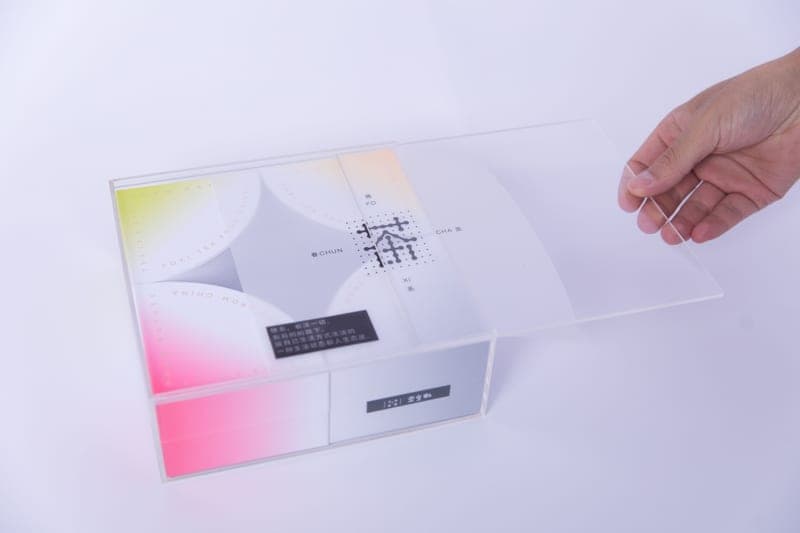
Stock photograph of this product class, not of this specific unit.
#ad We earn a commission · live price shown on Amazon
1. Step three, not step one
Comgrow 3D Printer Enclosure
Cites noise reduction among its benefits, and it will not soundproof anything.
A fabric enclosure muffles airborne fan and stepper noise, and the vendor cites noise reduction among its benefits. Treat that as real and partial.
What it cannot do is stop vibration traveling into whatever the printer stands on, which is usually the larger share of perceived noise in a room. Hence its position in this list.
What it gets right
- A flame-retardant lining on a machine that runs unattended overnight is the kind of upgrade you do not regret
- Stabilizes temperature enough to cut warping on large PETG parts, which is the realistic win here
- Collapses and stores, unlike an acrylic box
What it does not
- It reduces noise; it does not soundproof. Expect a difference, not silence
- Fabric and a passive frame will never give you a 60 C chamber — this is not an ABS solution
- Listed compatibility is written around Creality-sized machines, so measure your printer and your AMS before buying
| Type | Fabric enclosure tent with an iron frame |
|---|---|
| Interior | Flame-retardant aluminum lining |
| Outer shell | 600D Oxford fabric, waterproof and dustproof |
| Features cited | Dust reduction, noise reduction, temperature stabilization, tool pockets |
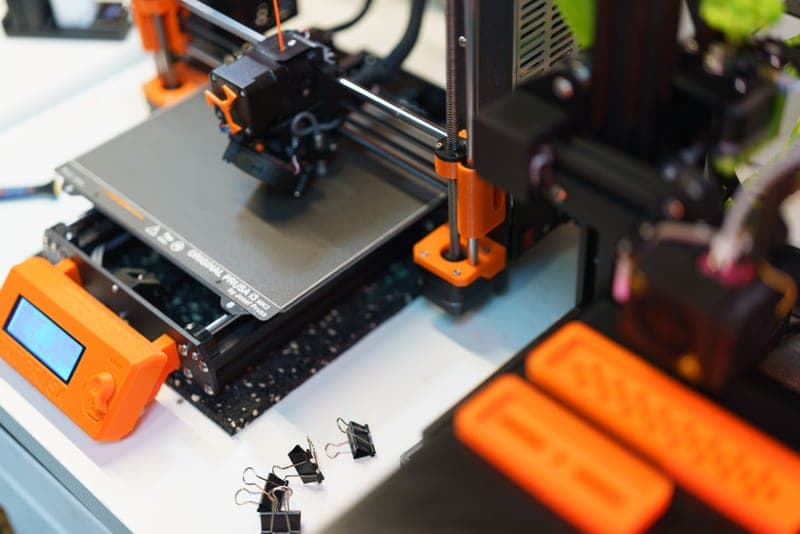
Stock photograph of this product class, not of this specific unit.
#ad We earn a commission · live price shown on Amazon
2. The genuinely quiet option
Bambu Lab A1 mini
No enclosure to resonate and no chamber fan, which makes it the quietest machine in the lineup.
Sometimes the honest answer to "how do I make my printer quieter" is a different printer. An open-frame machine has no enclosure acting as a resonant box and no chamber fan, and the A1 mini is the smallest and quietest of them.
As a second machine for overnight PLA prints in a room someone sleeps in, it is a legitimate purchase rather than a consolation prize.
What it gets right
- The quietest machine in the lineup by a wide margin, because there is no enclosure resonating
- AMS Lite support means four-color printing on the cheapest printer Bambu sells
- Small enough to sit on a desk you also work at
What it does not
- Open frame, so ABS and ASA are off the table without an aftermarket enclosure
- The smallest build area in the range — large single-piece prints need splitting
- No enclosure means no chamber temperature, so warping on anything but PLA and PETG
| Released | September 20, 2023 |
|---|---|
| Type | Open-frame bed slinger |
| Intended use | Printing small objects |
| Multi-color | AMS Lite (4 spools, open air) |
Questions people actually ask
How do I make my Bambu Lab printer quieter?
In this order: move it onto something dense instead of a hollow desk, add damping pads or feet, then consider an enclosure, then check maintenance - dry rails and a failing fan bearing both make real noise. Most people buy the enclosure first and find it barely helps, because the surface was the bigger problem.
Will an enclosure soundproof my printer?
No. It muffles airborne noise - fan whine and stepper hiss - and does little about vibration transmitted into whatever the printer stands on. If your complaint is a hum through the desk or floor, an enclosure addresses the wrong half of the problem.
Why has my printer got louder over time?
Usually dry or contaminated linear rails, a fan bearing starting to fail, or a panel that has worked loose and now buzzes at certain frequencies. All three are cheap or free to address, and the rails are the first place to look.
What should I stand my printer on?
Something dense. A thick slab, a paving stone, a solid-core worktop - anything with mass that will not act as a soundboard. A hollow desk or a thin shelf behaves like a drum skin and radiates vibration as sound from a much larger area than the printer itself.
Which Bambu Lab printer is quietest?
The A1 mini, because it has no enclosure to resonate and no chamber fan. Open-frame machines are generally quieter than enclosed ones for exactly that reason. We publish no decibel figures for any machine because this site has no sound meter.
Sources
Read this next
- The best Bambu Lab enclosuresOne pick per reason - ABS capability, noise, dust, or fixing a hazy P1S door - because a box that is good at one is mediocre at the others.
- Building your own enclosureHow to build a working enclosure cheaply, the ventilation rule that is not optional, and the three mistakes that make DIY worse than nothing.
- Maintenance that actually mattersThe five maintenance jobs that change print quality, in priority order, plus the consumables worth stocking before you need them.
- Bambu Lab A1 vs P1SThe A1 and P1S differ in one way that matters and several that do not. Which materials you print settles it in a sentence.
- Upgrading the Bambu Lab cameraWhat the stock camera cannot do, which upgrades address it, and the one question that decides whether you should buy one.