Nozzles & Plates
The best nozzles and hotends for a Bambu Lab
The cheapest part on the printer decides more about your output than anything else you could buy. Which one depends entirely on your filament.
By Michael W. · Published October 5, 2026
Some links here are Amazon affiliate links, so a purchase may earn this site a commission at no cost to you. It does not change what gets recommended or the order it appears in — how that works.
Quick picks
Tap any row to jump to the full write-up. Prices and stock live on Amazon, never here.
| # | Product | Best for | Price |
|---|---|---|---|
| 1 | 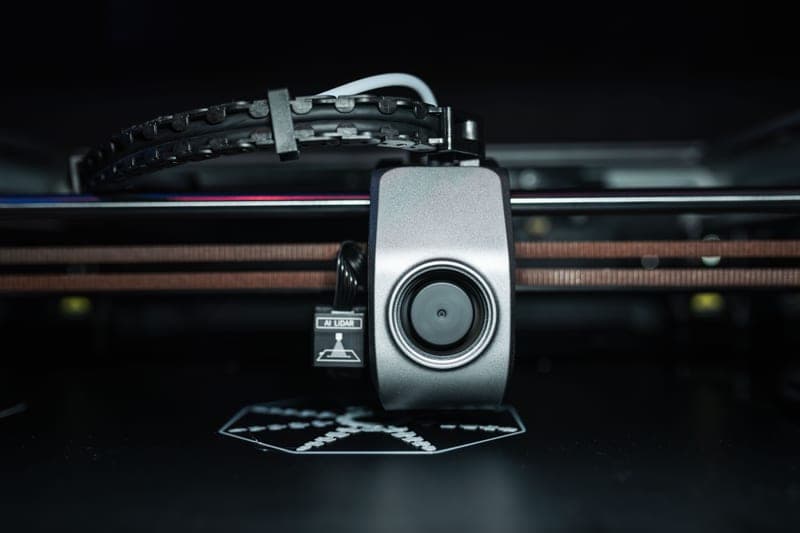 Bambu Lab Hotend with Hardened Steel Nozzle, 0.4 mm The purchase that has to happen before your first spool of anything filled. | Best nozzle upgrade The one purchase that has to happen before your first spool of anything carbon-filled | Check price on Amazon #ad We earn a commission · live price shown on Amazon |
| 2 | BIQU Panda Revo Hotend Quick nozzle changes on a P1S, which is the main feature people buy a P2S for. | Best if you change diameters Getting quick nozzle changes on a P1S without buying a P2S | Check price on Amazon #ad We earn a commission · live price shown on Amazon |
| 3 | Bambu Lab Hotend with Hardened Steel Nozzle, 0.6 mm The wider bore is the actual fix for chopped-fiber clogging, not just a speed increase. | Best for carbon fiber filament Carbon-fiber filament that clogs a 0.4 mm nozzle on chopped fiber | Check price on Amazon #ad We earn a commission · live price shown on Amazon |
| 4 | BIQU Panda Juicer Hotend Hardened steel at 0.4 mm for an A1, A1 mini or H2D, cheap enough to keep a spare. | Best for the A-series A spare hardened hotend for an A1, A1 mini or H2D at less than the official part | Check price on Amazon #ad We earn a commission · live price shown on Amazon |
The short answer
Printing anything filled or abrasive? A hardened steel hotend, in 0.4 mm. Not optional — carbon fiber, glass fiber, metal-filled, wood-filled and glow-in-the-dark all chew through stainless.
Printing only plain PLA and PETG? Buy nothing. A stainless nozzle runs those for years, and hardened steel costs you a slight thermal penalty for no benefit.
Printing carbon fiber specifically? Hardened steel in 0.6 mm. The wider bore is the real fix for chopped-fiber clogging.
Wish nozzle changes were quick? A quick-change hotend. That is the feature people buy a P2S for.
How this page is ranked
By the filament you run, because that is what decides nozzle material, and by the machine you own, because fitment is not negotiable. The criteria, stated up front:
- Does your filament require hardened steel? A binary question with a clear answer per material — see the table below.
- Does it fit your printer? P-series and A-series hotends are different parts. Check the listing against your exact model.
- What does it cost you beyond money? Re-slicing every profile, losing an official support path, re-running calibration.
- Who is it wrong for? On every entry.
Which filaments need hardened steel
| Filament | Hardened steel needed? | Why |
|---|---|---|
| PLA | No | Not abrasive. Stainless lasts years. |
| PETG | No | Not abrasive. |
| ABS / ASA | No | Not abrasive. |
| TPU (unfilled) | No | Soft and not abrasive. |
| PLA-CF / PETG-CF / any -CF | Yes | Chopped carbon fiber is hard and cuts the bore. |
| Glass-filled (-GF) | Yes | Glass fiber is harder than the nozzle. |
| Metal-filled | Yes | Metal particles abrade directly. |
| Wood-filled | Yes | Wood particles plus binder are mildly abrasive and clog-prone. |
| Glow-in-the-dark | Yes | Strontium aluminate pigment is genuinely hard. The surprise entry. |
| Glitter / silk with glitter | Yes | The glitter is glass. |
| Marble / stone-effect PLA | Yes | Mineral filler abrades. |
The full version of this question, which gets asked ten different ways, is on do I need a hardened nozzle.
Nozzle size matters more than material for most people
0.4 mm is the right default and most owners should stay there. Two reasons to change, and both are specific:
0.6 mm
For carbon-fiber filament, where it is a clog fix rather than a speed change, and for functional parts where layer lines do not matter. Faster, stronger walls, visibly coarser finish.
0.2 mm
For miniatures and fine mechanical detail. The costs are real: print times multiply, and clog risk goes up substantially because a smaller bore blocks more easily.
Nozzle sizes in detail, including why most people own a second size and never fit it.
Why a quick-change hotend changes behavior
Because the obstacle to using different nozzle diameters has never been owning them. On a stock P1S, changing diameter means a hotend swap, and the friction means it does not happen. Remove the friction and nozzle diameter becomes a per-print decision.
It also makes abrasive filament less of a commitment: a hardened nozzle for filled material and a stainless one for everything else is only practical if swapping takes seconds. That is the strongest argument for the Revo-type option above, and the honest cost is third-party firmware and hardware between you and the printer.
What about carbide?
Tungsten carbide nozzles exist — the H2D Pro ships with one, cited at HRA 90 against hardened steel's HRA 74. The hardness advantage is real and it is a running-cost argument for someone printing filled filament constantly, not a quality one. Carbide is also more brittle, so a crash costs more. Nozzle materials compared.
Every pick in full
Stock photograph of this product class, not of this specific unit.
#ad We earn a commission · live price shown on Amazon
1. Best nozzle upgrade
Bambu Lab Hotend with Hardened Steel Nozzle, 0.4 mm
The purchase that has to happen before your first spool of anything filled.
If you print carbon-filled, glass-filled, metal-filled, wood-filled or glow-in-the-dark filament, this is not an upgrade, it is a prerequisite. Abrasive material rounds a stainless nozzle quickly, and with the worst of it a single print can do visible damage.
Bambu supplies it as a complete hotend assembly for the P1P and P1S, which makes fitting it a module swap rather than extracting a nozzle from a hot block. That matters: it is one of the least intimidating jobs on the machine.
Hardened steel at HRA 74 is the standard answer here. Keeping 0.4 mm means your existing profiles stay valid, which is why this rather than the 0.6 mm is the default recommendation.
What it gets right
- Abrasive filament rounds a stainless nozzle fast — with the worst materials, a single print can do it
- Comes as a complete assembly, so the swap is a module change rather than a nozzle extraction
- 0.4 mm keeps your existing print profiles valid
What it does not
- Hardened steel conducts heat slightly worse than stainless, so very high-flow PLA needs a small temperature bump
- Pointless if you only ever print plain PLA and PETG — stainless lasts for years on those
- P1P and P1S only; the A-series and H-series need their own part
| Nozzle | Hardened steel, 0.4 mm |
|---|---|
| Fits | P1P and P1S (model FAH001-N-1) |
| Hardness reference | Hardened steel is cited at HRA 74 |
| Supplied as | Complete hotend assembly |
Stock photograph of this product class, not of this specific unit.
#ad We earn a commission · live price shown on Amazon
2. Best if you change diameters
BIQU Panda Revo Hotend
Quick nozzle changes on a P1S, which is the main feature people buy a P2S for.
The E3D Revo system changes nozzles by hand in seconds. On a stock P1S a nozzle change means changing the hotend, and that friction is exactly why most owners never use a 0.2 mm for detail or a 0.6 mm for bulk even when they own both.
It is also high-flow, which is a genuine throughput gain on large single-color prints. Fits the P1S, P1P and X1C.
Two honest costs: you are off the official hotend, which makes a support conversation harder, and Revo nozzles cost more per nozzle than Bambu's own. Re-run flow calibration after fitting — do not assume old profiles are exactly right.
What it gets right
- Revo nozzles change by hand in seconds — this is the single feature people buy a P2S for
- High-flow geometry is a genuine throughput gain on large single-color prints
- Turns nozzle diameter into a per-print choice instead of a maintenance decision
What it does not
- You are now off the official hotend, so a Bambu support conversation gets harder
- Revo nozzles cost more per nozzle than Bambu's own
- Flow calibration has to be redone; do not expect your old profiles to be exactly right
| System | E3D Revo quick-change nozzle |
|---|---|
| Fits | Bambu Lab P1S, P1P and X1C |
| Positioning | High-flow, high-speed |
Stock photograph of this product class, not of this specific unit.
#ad We earn a commission · live price shown on Amazon
3. Best for carbon fiber filament
Bambu Lab Hotend with Hardened Steel Nozzle, 0.6 mm
The wider bore is the actual fix for chopped-fiber clogging, not just a speed increase.
Carbon-fiber filament clogs a 0.4 mm nozzle because chopped fiber lengths bridge the bore. Going to 0.6 mm in hardened steel is the standard combination for CF, and the bore size is doing more work than the material here.
It is also noticeably faster on functional parts where layer lines do not matter, which is most brackets and jigs.
Supplied as a complete hotend assembly for the P1P and P1S. Expect to re-slice everything: a 0.6 mm nozzle is not a drop-in for 0.4 mm settings.
What it gets right
- The larger bore is the real fix for carbon-fiber clogging, not just a faster nozzle
- Hardened steel plus 0.6 mm is the combination for chopped-fiber filament
- Noticeably faster on functional parts where layer lines do not matter
What it does not
- Every profile has to be re-sliced; a 0.6 mm nozzle is not a drop-in for 0.4 mm settings
- Visible layer lines and softer detail on anything decorative
- You will end up wanting both sizes, which is the argument for a quick-swap machine
| Nozzle | Hardened steel, 0.6 mm |
|---|---|
| Fits | P1P and P1S |
| Supplied as | Complete hotend assembly |
Stock photograph of this product class, not of this specific unit.
#ad We earn a commission · live price shown on Amazon
4. Best for the A-series
BIQU Panda Juicer Hotend
Hardened steel at 0.4 mm for an A1, A1 mini or H2D, cheap enough to keep a spare.
A-series parts are a separate catalog from P-series parts, and this is the straightforward hardened option for an A1, A1 mini or H2D. A 0.4 mm hardened steel nozzle covers abrasive filament, which the stock stainless nozzle does not.
Standard flow, so your existing profiles stay close to right. Cheap enough to keep one on the shelf, which is the real answer to a clog at an inconvenient hour.
Fitting a third-party hotend on a machine under warranty is a decision rather than a free action. Worth knowing before, not after.
What it gets right
- Hardened steel at 0.4 mm covers abrasive filament on the A-series, which the stock stainless nozzle does not
- Cheap enough to keep a spare on the shelf, which is the actual answer to a clog at 2 a.m.
- Standard flow means your existing profiles stay close to right
What it does not
- Standard flow, so it is not a speed upgrade — do not buy it expecting one
- A third-party hotend on a machine under warranty is a decision, not a free lunch
- A-series and H2D fitment only; it will not fit a P1S
| Nozzle | 0.4 mm hardened steel |
|---|---|
| Fits | Bambu Lab A1, A1 mini and H2D |
| Positioning | Standard flow, for daily printing and maintenance |
Questions people actually ask
Which nozzle should I buy for my Bambu Lab printer?
If you print anything filled or abrasive - carbon fiber, glass fiber, metal, wood, glow-in-the-dark - a hardened steel hotend in 0.4 mm. If you only print plain PLA and PETG, the stainless nozzle you have is fine for years. For carbon fiber specifically, go hardened in 0.6 mm, because the wider bore is the clog fix.
Do I need a hardened nozzle for glow-in-the-dark filament?
Yes, and this is the one that surprises people. The glow pigment is strontium aluminate, which is genuinely hard, and it wears a stainless nozzle quickly. The same applies to glitter-loaded silk filaments, where the glitter is glass.
Is a quick-change hotend worth it on a P1S?
If you want to use more than one nozzle diameter, yes - changing nozzles by hand in seconds is the feature people buy a P2S for, and this delivers it for far less. If you have run the same 0.4 mm nozzle happily for years, it is solving a problem you do not have, and it puts third-party hardware between you and the printer.
Do hardened steel nozzles print worse than stainless?
Slightly different rather than worse. Hardened steel conducts heat a little less well, so very high-flow PLA may want a small temperature increase. On abrasive filament the comparison is irrelevant, because stainless does not survive it.
Will a P1S hotend fit an A1?
No. P-series and A-series hotends are different parts, and the H-series is different again. Check the fitment list against your exact model rather than assuming by brand - this is the most common wrong purchase in the category.
Sources
- Bambu Lab hardened steel nozzle and hotend upgrade for the P1S - Bambu Lab wiki
- BIQU Panda hotends, build plates and fitment - OpenELAB upgrade guide
- Hardened steel (HRA 74) and tungsten carbide (HRA 90) hardness figures - third-party lineup roundups captured October 2026
Read this next
- Do I need a hardened nozzle for this filament?The one rule that answers this for every filament, plus a per-material table covering PETG, ABS, CF, silk, wood, marble and glow.
- Hardened steel vs stainless steel nozzlesHardened steel at HRA 74 versus stainless versus carbide at HRA 90 - which material your filament requires, and what each costs you.
- Bambu Lab nozzle sizes explainedWhat 0.2, 0.4, 0.6 and 0.8 mm nozzles are each for, what changing costs in re-slicing, and why friction stops most people switching.
- Clearing a clogged nozzleThe procedure for clearing a clog, plus the four causes behind it - because clearing without diagnosing gets you a repeat.
- The Bambu Lab hardened steel nozzleWhat hardened steel at HRA 74 is for, which filaments require it, and why the complete-assembly format matters for fitting it.
- Bambu Lab P1S vs P2SThe P2S adds a touchscreen and a quick-swap nozzle and no build volume. When that is worth a new machine and when a far cheaper part does the same job.