Upgrades
The best Bambu Lab accessories
Accessories, as distinct from upgrades: the things that keep a machine printing rather than changing what it can do.
By Michael W. · Published October 5, 2026
Some links here are Amazon affiliate links, so a purchase may earn this site a commission at no cost to you. It does not change what gets recommended or the order it appears in — how that works.
Quick picks
Tap any row to jump to the full write-up. Prices and stock live on Amazon, never here.
| # | Product | Best for | Price |
|---|---|---|---|
| 1 |  Bambu Lab Textured PEI Plate A spare plate is the difference between a failed first layer costing 30 seconds or an evening. | Best accessory The default plate for almost everything, and the one to replace first when adhesion goes | Check price on Amazon #ad We earn a commission · live price shown on Amazon |
| 2 | BIQU PyroGrip Textured PEI Plate Textured PEI at roughly half the official price, on the same mounting system. | Best value spare plate Textured PEI at roughly half the official price, on the same mounting system | Check price on Amazon #ad We earn a commission · live price shown on Amazon |
| 3 |  BIQU Panda Stack An aluminum rack, because an A1 with AMS Lite on top takes over a desk. | Best for reclaiming desk space Getting an A1's spools, AMS Lite and accessories off the desk and onto a frame | Check price on Amazon #ad We earn a commission · live price shown on Amazon |
| 4 |  Polymaker PolyDryer Sealed boxes reaching a cited 10-20% RH, which prevents the moisture problem rather than fixing it. | Best filament storage Sealed storage first, active drying second — the per-spool approach | Check price on Amazon #ad We earn a commission · live price shown on Amazon |
| 5 | 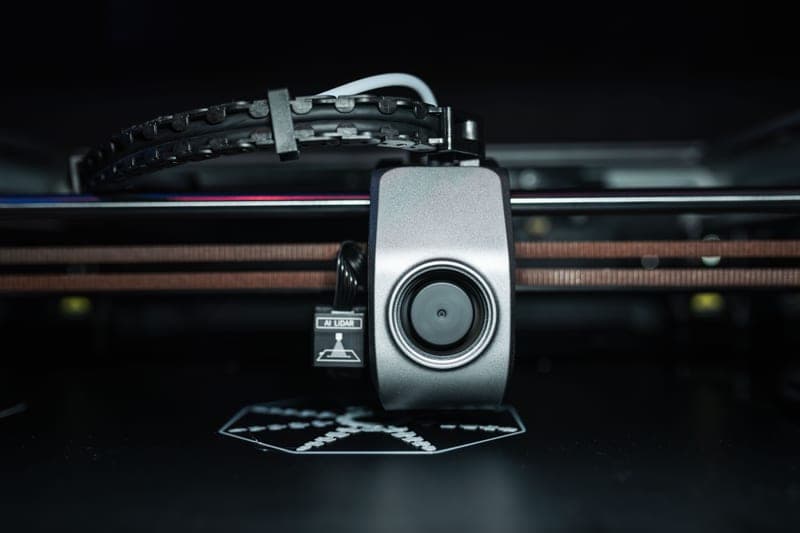 Bambu Lab Hotend with Hardened Steel Nozzle, 0.4 mm A spare complete hotend turns a clog into a five-minute module swap. | Best spare part to own before you need it The one purchase that has to happen before your first spool of anything carbon-filled | Check price on Amazon #ad We earn a commission · live price shown on Amazon |
| 6 |  BIQU Panda Door PC Upgrade Panel Polycarbonate where acrylic was, on the part of the machine that degrades fastest. | Best cheap replacement part Replacing a scratched or hazy P1S door with something that takes chamber heat better | Check price on Amazon #ad We earn a commission · live price shown on Amazon |
The distinction worth making
An upgrade changes what the printer can do. A hardened nozzle, an AMS, an enclosure.
An accessory keeps it doing what it already does. A spare plate, a spare hotend, filament storage, a rack to get four spools off your desk.
Accessories are consistently under-bought because they are boring, and they prevent more lost evenings than upgrades do. A second plate is a better purchase than a cooling duct for almost everyone.
How this page is ranked
- Does it prevent downtime? Weighted highest. A spare that keeps the machine printing is worth more than a part that marginally improves output.
- Does it solve a problem that is actually annoying you? Desk space and damp filament are real problems that get ignored because they are not glamorous.
- Does it fit your exact machine? Fitment is model-specific throughout this category.
- Who is it wrong for? On every entry.
What to own before anything goes wrong
| Item | Why | Cost of not having it |
|---|---|---|
| A second build plate | Plates get contaminated and gouged | Machine idle until you wash and dry one |
| A spare hotend assembly | Clogs and nozzle wear happen | An evening with a cleaning needle |
| Rechargeable desiccant + airtight tubs | Filament absorbs moisture continuously | Slowly worsening prints you cannot explain |
| A cheap hygrometer | Desiccant saturates silently | A sealed box that is doing nothing |
| Nozzle cleaning needles | Partial clogs are routine | Improvising with something that bends |
| A plastic scraper | Metal tools gouge PEI | A ruined plate |
| Rail grease | Dry rails are noisy and wear | A machine that gets louder every month |
Most of that list is cheap and dull. All of it is the difference between a thirty-minute fix and a week of downtime. The full spares argument.
The accessory most people need and do not buy
Filament storage. Not a dryer — storage. Sealed containers with desiccant hold filament at a usable humidity indefinitely at zero running cost, and they prevent the moisture problem that a dryer exists to fix.
The complete setup is one dryer plus several sealed containers: heat to dry, seal to store. The reason this gets skipped is that nobody enjoys buying plastic boxes. Storage options.
What to print rather than buy
Spool holders, tool racks, cable guides, filament guides, scraper holders, chamber thermometer mounts. All of them are free and all of them are organizational, which is exactly the category where printing works.
The one rule: anything structural or heat-exposed should be bought or printed in PETG or better. A PLA bracket in a warm chamber sags, slowly enough that you will not connect it to the material choice. Printed vs bought.
Where to go next
Upgrades that change capability, the cheap end specifically, and the maintenance that beats all of it.
Every pick in full
Stock photograph of this product class, not of this specific unit.
#ad We earn a commission · live price shown on Amazon
1. Best accessory
Bambu Lab Textured PEI Plate
A spare plate is the difference between a failed first layer costing 30 seconds or an evening.
The most useful thing you can own that is not a printer part. Powder-coated textured PEI on a 0.5 mm stainless base, forgiving about Z offset and cited as resisting warping on large models in ABS, PC and nylon.
Its value as an accessory is availability rather than performance. A contaminated plate needs washing and drying, and in the meantime the machine is idle.
What it gets right
- Powder-coated texture grips hard without glue stick and releases when cool, which is the whole job
- The 0.5 mm steel base is stiff enough that it does not lift at the corners under a hot bed
- Hides first-layer imperfections, so a slightly off Z offset is forgiving rather than a failure
What it does not
- The texture transfers to your first layer — wrong plate for anything whose bottom face is a show surface
- PEI surfaces are consumable; skin oils and over-aggressive scraping both shorten their life
- TPU can grip hard enough on textured PEI to tear the surface on removal
| Surface | Powder-coated textured PEI |
|---|---|
| Base | 0.5 mm stainless steel with enhanced magnetic adhesion |
| Stated strength | Resists warping on large models in ABS, PC and nylon |
Stock photograph of this product class, not of this specific unit.
#ad We earn a commission · live price shown on Amazon
2. Best value spare plate
BIQU PyroGrip Textured PEI Plate
Textured PEI at roughly half the official price, on the same mounting system.
Same surface technology and mounting as the official plate, cited at roughly half the price. That is what makes keeping two or three plates a reasonable decision rather than an expensive one.
No modification needed — it drops onto the magnetic bed you already have.
What it gets right
- Same surface technology and mounting as the official plate at a much lower price point
- Makes keeping two or three plates on the shelf a reasonable decision rather than an expensive one
- No adapter, no modification — it drops onto the magnetic bed you already have
What it does not
- PEI thickness and coating consistency vary more between third-party plates than within one brand's official line
- Expect to re-tune Z offset when you swap brands mid-queue
- Not a performance upgrade over the official plate — a price one
| Surface | Textured PEI |
|---|---|
| Mounting | Same mounting system as the official plate |
| Price positioning (cited) | Roughly half the official plate |
Stock photograph of this product class, not of this specific unit.
#ad We earn a commission · live price shown on Amazon
3. Best for reclaiming desk space
BIQU Panda Stack
An aluminum rack, because an A1 with AMS Lite on top takes over a desk.
The most under-discussed cost of multi-color printing is floor area, and a dual setup makes it genuinely unmanageable.
An aluminum alloy multi-layer rack for the A1 and A1 mini, with stated support for a dual AMS and ViViD setup. Aluminum rather than printed plastic matters: four loaded spools are heavy enough that a PLA frame flexes, and a warm room makes it worse.
Zero effect on print quality, and included because the problem is real and nothing else here addresses it.
What it gets right
- An A1 with AMS Lite takes over a desk; a vertical rack is the only real fix
- Aluminum alloy, so it does not flex under four loaded spools the way a printed frame does
- Supports a dual setup, which is where the desk problem becomes genuinely unmanageable
What it does not
- Pure organization — it will not improve a single print
- A1 and A1 mini only
- A printed riser costs you filament and an evening instead of money
| Type | Aluminum alloy multi-layer rack |
|---|---|
| Fits | Bambu Lab A1 and A1 mini |
| Supports | Dual AMS and ViViD setup |
Stock photograph of this product class, not of this specific unit.
#ad We earn a commission · live price shown on Amazon
4. Best filament storage
Polymaker PolyDryer
Sealed boxes reaching a cited 10-20% RH, which prevents the moisture problem rather than fixing it.
Passive sealed storage plus active drying, cited as reaching 10-20% RH, bought one box at a time. The philosophy is the right one: a spool that never gets damp never needs rescuing.
Cheap airtight containers with rechargeable desiccant do the storage half for less money and less neatly. Either way, add a cheap hygrometer — desiccant saturates silently.
What it gets right
- The modular box system means every spool lives sealed, which prevents the problem instead of fixing it
- A cited 10-20% RH is the number that matters, and it is a good one
- Cheap to start with one box and add more, instead of one large purchase
What it does not
- Buying enough boxes for a full filament shelf adds up past the price of a four-spool dryer
- Standard-temperature drying — not an engineering-filament answer
- Per-box storage takes more total shelf area than a stacked rack
| Approach (cited) | Passive sealed storage plus active drying |
|---|---|
| Humidity reached (cited) | 10-20% RH |
| Entry point (cited) | From a per-box price, boxes bought individually |
Stock photograph of this product class, not of this specific unit.
#ad We earn a commission · live price shown on Amazon
5. Best spare part to own before you need it
Bambu Lab Hotend with Hardened Steel Nozzle, 0.4 mm
A spare complete hotend turns a clog into a five-minute module swap.
Because Bambu supplies hotends as complete assemblies, a spare on the shelf means a stubborn clog or a worn nozzle is a swap rather than an evening with a cleaning needle. Deal with the removed one later, or not at all.
If you print any filled filament, the hardened version is what you want anyway. HRA 74 hardened steel, 0.4 mm, for the P1P and P1S.
What it gets right
- Abrasive filament rounds a stainless nozzle fast — with the worst materials, a single print can do it
- Comes as a complete assembly, so the swap is a module change rather than a nozzle extraction
- 0.4 mm keeps your existing print profiles valid
What it does not
- Hardened steel conducts heat slightly worse than stainless, so very high-flow PLA needs a small temperature bump
- Pointless if you only ever print plain PLA and PETG — stainless lasts for years on those
- P1P and P1S only; the A-series and H-series need their own part
| Nozzle | Hardened steel, 0.4 mm |
|---|---|
| Fits | P1P and P1S (model FAH001-N-1) |
| Hardness reference | Hardened steel is cited at HRA 74 |
| Supplied as | Complete hotend assembly |
Stock photograph of this product class, not of this specific unit.
#ad We earn a commission · live price shown on Amazon
6. Best cheap replacement part
BIQU Panda Door PC Upgrade Panel
Polycarbonate where acrylic was, on the part of the machine that degrades fastest.
The P1S door gets scratched and hazy faster than anything else on the machine. A polycarbonate panel tolerates chamber heat better than the acrylic it replaces.
Genuinely cheap, visible improvement, honest about its scope. P1 and X1 series only.
What it gets right
- Polycarbonate tolerates chamber heat better than the acrylic it replaces, which matters if you run ABS
- Fixes the one cosmetic part of a P1S that gets ruined fastest
- A genuinely cheap upgrade with a visible result
What it does not
- This is a door, not a chamber heater — it changes nothing about what you can print
- Pure quality-of-life on a machine that already works
- P1 and X1 series only
| Material | Polycarbonate |
|---|---|
| Fits | Bambu Lab P1 and X1 series |
| Stated benefit | Improved visibility and enclosure protection |
Questions people actually ask
What Bambu Lab accessories are actually worth buying?
A second build plate first, then a spare hotend assembly, then filament storage with desiccant and a cheap hygrometer. All three prevent downtime rather than adding capability, which is why they get under-bought - and why they prevent more lost evenings than upgrades do.
Do I need a second build plate?
It is the most useful accessory you can own. A contaminated or gouged plate stops the queue until you wash and dry it; with a spare that becomes a 30-second swap. A cheaper third-party textured plate on the same mounting system makes owning two reasonable.
What is the best way to store filament?
Airtight containers with rechargeable desiccant, plus a cheap hygrometer in each so you know when the desiccant is saturated. That maintains dryness indefinitely at no running cost. A dryer removes moisture; storage stops it coming back, and you want both.
Should I buy a filament rack?
If you have an A1 with an AMS Lite on top, the desk-space problem is real and a vertical rack is the only genuine fix. Aluminum rather than printed plastic matters, because four loaded spools flex a PLA frame, especially in a warm room. It will not improve a single print.
Which accessories should I print instead of buying?
Organizational ones: spool holders, tool racks, cable guides, filament guides, thermometer mounts. The rule is that anything structural or heat-exposed should be bought or printed in PETG or better, because a PLA part inside a warm chamber will sag eventually.
Sources
Read this next
- The best Bambu Lab upgradesUpgrades ranked by the problem each one solves, with the popular ones that fix nothing clearly marked as such.
- Cheap Bambu Lab upgrades worth buyingWhere the value actually is in the cheap end of the catalog, and the three free fixes that beat anything you can buy there.
- Spare parts worth having before you need themWhich spares to stock before a failure and which to order after, judged by how long the machine sits idle waiting.
- Maintenance that actually mattersThe five maintenance jobs that change print quality, in priority order, plus the consumables worth stocking before you need them.
- Filament dryer boxesHow per-spool sealed boxes differ from four-spool dryers, the humidity figure that matters, and where the modular approach stops scaling.
- The best build plates for a Bambu LabTextured, dual-texture or third-party - which plate to buy, and why owning two beats owning one good one.