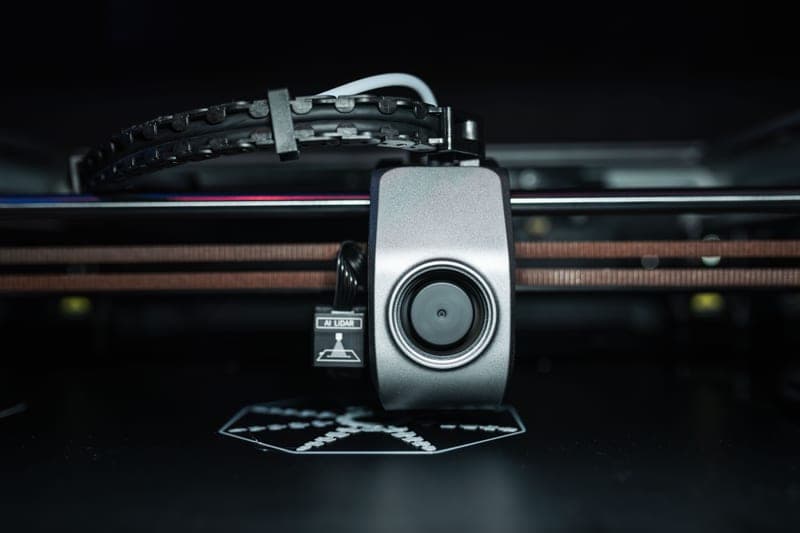
A nozzle costs less than a spool of filament and a build plate costs less than a failed weekend. Between them they cause most of the print faults people blame on the machine, and replacing the right one at the right time is the highest-return spending on this entire site.
Two questions settle almost everything in this section: what material are you running, and is your bottom surface a show face?
Hardened steel: who actually needs it
You need a hardened nozzle if you print anything abrasive. That means carbon-fiber-filled and glass-fiber-filled filament, metal-filled, wood-filled, and — the one that surprises people — glow-in-the-dark and some silk and marble PLAs. The glow pigment is strontium aluminate, which is genuinely hard, and glitter is glass. Those materials wear a stainless nozzle fast; with the worst of them a single print can do visible damage.
You do not need it for plain PLA, PETG, ABS, ASA or TPU. A stainless nozzle will run those for years. Buying hardened steel for a PLA-only workflow costs you a slight thermal-conductivity penalty for no benefit, which is a small loss but a real one.
The full material-by-material answer is on do I need a hardened nozzle, which covers the ten or so variants of that question in one place. If you want the hardness numbers, hardened steel is cited at HRA 74 and the tungsten carbide nozzle on the H2D Pro at HRA 90 — see hardened vs stainless.
Nozzle size matters more than nozzle material for most people
Most owners run 0.4 mm forever and that is a defensible default. The two reasons to change are specific:
0.6 mm for carbon-fiber filament and for functional parts where layer lines do not matter. The wider bore is the actual fix for chopped-fiber clogging, not just a speed increase. Hardened steel plus 0.6 mm is the standard combination for CF.
0.2 mm for miniatures and fine mechanical detail, at a large cost in print time and a real increase in clog risk.
The practical obstacle on a P1S is that changing nozzle means changing the hotend, which is enough friction that most people never do it. That is why a quick-change hotend is one of the better upgrades in the whole catalog — it turns nozzle diameter into a per-print decision. Nozzle sizes in detail.
Build plates: texture is a finish decision, not a quality one
Textured PEI is the right default for almost everything. It grips hard without glue, releases when cool, and it is forgiving about a slightly imperfect Z offset — which means fewer failed first layers. The trade is that its texture transfers to the bottom face of every print.
Smooth PEI gives a glossy bottom face and is noticeably less forgiving: Z offset and surface cleanliness both have to be right. A dual-texture plate gets you both surfaces on one sheet, which is the sensible purchase if some of your prints are display pieces. The plate roundup covers which to buy; textured vs smooth covers which to use.
Clogs, and when a nozzle is actually dead
A clog is a symptom, not a diagnosis. The cause is usually moisture (wet filament steams and carbonizes in the hotend), a heat creep problem, or debris from a previous material with a much higher print temperature. Replacing the nozzle without fixing the cause gets you a second clog.
The honest test for a worn nozzle: a rounded, widened tip prints lines wider than they should be and loses detail everywhere at once, rather than failing intermittently. Intermittent is a clog or a feed problem; uniformly poor is wear. Clog procedure and how long a nozzle lasts.
No. PETG is not abrasive and a stainless nozzle handles it for years. The materials that genuinely require hardened steel are the filled ones - carbon fiber, glass fiber, metal-filled, wood-filled - plus glow-in-the-dark, which contains hard strontium aluminate, and glitter-loaded silks, which contain glass.
What nozzle size should I use for carbon fiber filament?
0.6 mm, in hardened steel. Chopped carbon fiber clogs a 0.4 mm nozzle because the fiber lengths bridge the bore, so the wider opening is the real fix rather than just a speed gain. Every profile has to be re-sliced for the larger nozzle; it is not a drop-in change.
Why has my textured PEI plate stopped sticking?
Contamination, almost always from skin oils. Wash the plate with dish soap and hot water - isopropyl alcohol tends to smear oil around rather than remove it. If a proper wash does not restore adhesion, the PEI surface is worn and the plate needs replacing, which is normal: plates are consumables.
How long does a Bambu Lab nozzle last?
A stainless nozzle on plain PLA and PETG lasts a very long time, often years of hobby use. Abrasive filament changes the answer completely - a stainless nozzle can be visibly damaged by a single print in the worst materials, which is why hardened steel is the prerequisite rather than the upgrade for those. Wear shows as uniformly poor quality and over-wide lines, not as intermittent failures.
Is a third-party build plate as good as the official one?
The surface technology is often the same, and third-party plates typically mount on the same magnetic bed with no modification, which makes keeping two or three plates affordable. The practical catch is that PEI thickness and coating consistency vary more between brands than within one brand's line, so expect to re-check your Z offset when you swap plates mid-queue.