Filament Drying
Is a filament dryer worth it?
For some people it pays for itself in a month. For others it is a solution to a problem they do not have. Here is how to tell which you are.
By Michael W. · Published October 5, 2026
Some links here are Amazon affiliate links, so a purchase may earn this site a commission at no cost to you. It does not change what gets recommended or the order it appears in — how that works.
The honest answer
Yes, clearly, if you print PETG, TPU, nylon, polycarbonate or anything carbon-filled. Those materials absorb moisture noticeably and a dryer pays for itself in filament you stop throwing away.
Yes, if you live somewhere humid, even for PLA. In a humid climate PLA degrades on an open shelf.
Probably not, if you print only PLA in a dry room and use spools reasonably quickly. Spend the money on sealed storage instead, which prevents the problem.
Find out for free first: dry a suspect spool in an oven or a dehydrator and print the same part again. If it improves, you have your answer and a justified purchase.
What it actually saves you
Filament you would otherwise bin
The clearest case. A spool that has gone stringy and brittle is not ruined — it is wet, and it is recoverable. Without a dryer it goes in the bin or sits on a shelf being avoided. A few rescued spools cover the cost of a cheap dryer outright.
Failed prints
Harder to quantify and probably larger. A twenty-hour print that fails on moisture-driven under-extrusion costs filament, electricity and your time, and the frustration is disproportionate.
Diagnosis time
The least obvious saving and a real one. Moisture imitates half a dozen other faults convincingly, so without a dryer you tune retraction, change temperature, buy a nozzle and consider a printer. With one, you eliminate the variable in six hours and move on. The symptoms it imitates.
When it is not the right purchase
| Situation | Buy | Why |
|---|---|---|
| PLA only, dry room, quick turnover | Sealed boxes with desiccant | Prevention is cheaper than rescue, and PLA is only mildly hygroscopic |
| PETG or TPU, any climate | A cheap single-spool dryer | These materials go wet noticeably and recoverably |
| Multi-color printing | A four-spool unit, or an AMS 2 Pro | Drying one spool while three reabsorb does not match the workflow |
| Nylon, PC or PA-CF | A high-temperature unit (~110 C) | A 70 C ceiling cannot serve these at all |
| Enclosed Bambu machine, want both color and drying | AMS 2 Pro | Dries and prints from the same sealed box |
| Humid climate, anything | A dryer, plus sealed storage | Ambient humidity makes every material a candidate |
The cheap alternative, fairly stated
Airtight containers plus rechargeable desiccant plus a cheap humidity indicator. That maintains dryness indefinitely at no running cost, and for someone whose filament has never been wet it is the correct spend.
Its limitation is absolute: it cannot dry a spool that is already damp. Storage preserves a condition; it does not create one. So the complete cheap setup is one dryer plus several sealed tubs — dry when needed, store always.
Running cost, since nobody mentions it
A dryer is a heater. A unit cited at 100 W run occasionally is negligible; a 500 W unit run frequently is not nothing, and a heated unit left on permanently as storage is a continuous draw a sealed box does not have.
None of which changes the conclusion for hygroscopic materials. It does argue for heating to dry and sealing to store rather than running a dryer as a filament cupboard.
Where to go next
Which dryer if the answer is yes. Sealed storage if it is no. The free oven test if you are not sure.
What to buy
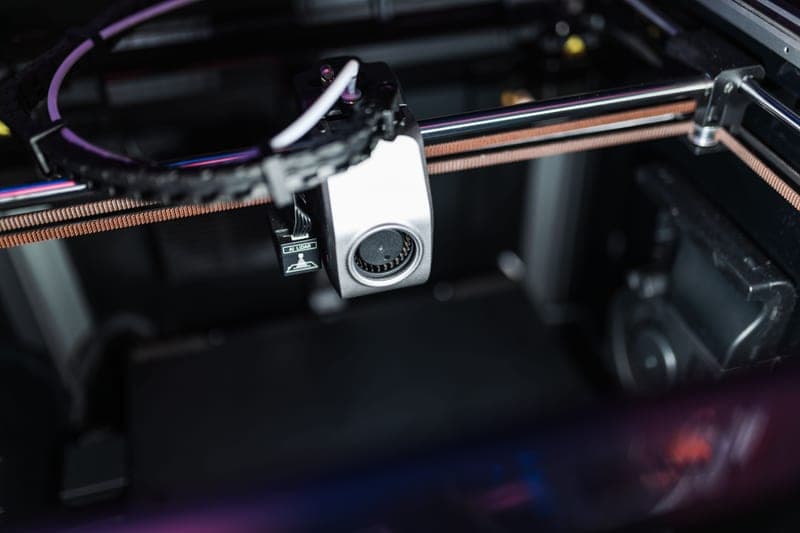
Stock photograph of this product class, not of this specific unit.
#ad We earn a commission · live price shown on Amazon
1. Buy this if the answer is yes
SUNLU FilaDryer S2
A cited 35-70 C range, one spool, cheap enough that a few rescued spools pay for it.
The cheapest unit that is a real dryer with controlled temperature rather than a warm box. A cited 35-70 C range covers PLA, PETG and TPU, and it is noted as quiet enough to run overnight.
At this price the arithmetic is simple: a handful of rescued spools covers it. That is what makes the answer yes for most people who print PETG or TPU at all.
What it gets right
- 35-70 C covers PLA, PETG and TPU, which is most of what actually goes wet in a hobby workshop
- Quiet enough to run overnight in a room you sleep in
- The cheapest entry point that is still a real dryer rather than a warm box
What it does not
- 70 C ceiling means nylon, PC and PA-CF are out of range
- One spool at a time, which does not fit a four-color job
- No printing from the unit, so a dried spool starts re-absorbing the moment it comes out
| Temperature range (cited) | 35-70 C |
|---|---|
| Capacity | One spool |
| Diameters | Supports all common filament diameters |
| Noted | Quiet enough for overnight drying |
Stock photograph of this product class, not of this specific unit.
#ad We earn a commission · live price shown on Amazon
2. Buy this if the answer is no
Polymaker PolyDryer
Sealed storage at a cited 10-20% RH, which prevents the problem instead of fixing it.
If you print PLA in a dry room, the dryer is not your purchase — storage is. Keeping spools sealed means they never become the problem a dryer solves.
Passive sealed storage plus active drying, cited as reaching 10-20% RH, bought one box at a time. Cheap airtight tubs with rechargeable desiccant do the same job less neatly for less money.
What it gets right
- The modular box system means every spool lives sealed, which prevents the problem instead of fixing it
- A cited 10-20% RH is the number that matters, and it is a good one
- Cheap to start with one box and add more, instead of one large purchase
What it does not
- Buying enough boxes for a full filament shelf adds up past the price of a four-spool dryer
- Standard-temperature drying — not an engineering-filament answer
- Per-box storage takes more total shelf area than a stacked rack
| Approach (cited) | Passive sealed storage plus active drying |
|---|---|
| Humidity reached (cited) | 10-20% RH |
| Entry point (cited) | From a per-box price, boxes bought individually |
Questions people actually ask
Is a filament dryer worth it?
Yes if you print PETG, TPU, nylon, polycarbonate or anything carbon-filled, because those absorb moisture noticeably and a dryer pays for itself in rescued filament. Yes in a humid climate even for PLA. Probably not if you print only PLA in a dry room and use spools quickly, where sealed storage is the better spend.
How do I know if I need a filament dryer?
Dry a suspect spool in a kitchen oven or a food dehydrator and print the same part again. If popping stops, stringing drops and the surface improves, moisture was your problem and a dryer is justified. If nothing changes, the money is better spent elsewhere.
Is a sealed box with desiccant good enough instead?
For keeping dry filament dry, yes, and it costs nothing to run. What it cannot do is dry a spool that is already damp - storage preserves a condition rather than creating one. The complete cheap setup is one dryer plus several sealed containers.
Does PLA need a dryer?
Usually not in a dry room with reasonable turnover, because PLA is only mildly hygroscopic. In a humid climate it does degrade on an open shelf, and the symptoms are the same rough surfaces and brittle parts as any other wet filament.
How much does running a filament dryer cost?
Depends on the heater and how you use it. A unit cited at 100 W run occasionally is negligible; a 500 W unit run often is not nothing, and leaving any heated unit on permanently as storage is a continuous draw. That argues for heating to dry and sealing to store.
Sources
Read this next
- The best filament dryers in 2026Dryer picks split by temperature range and capacity, because a 70 C unit and a 110 C unit are different products for different materials.
- How to dry filamentFour drying methods compared, the temperature each material wants, and the one method that does not work despite being widely suggested.
- How to tell if your filament is wetThe three near-conclusive signs of wet filament, the ambiguous ones, and the free test that settles it in one print.
- Filament dryer boxesHow per-spool sealed boxes differ from four-spool dryers, the humidity figure that matters, and where the modular approach stops scaling.
- Bambu Lab AMS 2 ProWhy active drying makes the AMS 2 Pro a different product from the original AMS, and the case for buying it instead of a new printer.