Printers
Upgrading from an A1 or A1 mini
One limitation defines this decision, and it is not bed size. The open frame is the ceiling, and there are only two ways past it.
By Michael W. · Published October 5, 2026
Some links here are Amazon affiliate links, so a purchase may earn this site a commission at no cost to you. It does not change what gets recommended or the order it appears in — how that works.
The verdict
The open frame is the limit, not the bed size. So there are exactly two routes forward:
- Add an enclosure. Cheap, imperfect. Gets you flame retardancy, dust exclusion, some quiet and fewer warped large PETG parts. Not reliable ABS.
- Move to an enclosed machine. Expensive, complete. The P2S for the same desk footprint, the H2S if you want the bed as well.
Buying a larger open-frame machine solves nothing — which is why the A2L is the wrong direction if materials are your motivation.
First, check it is actually the printer
A large share of A1 dissatisfaction is not the machine. Three things to rule out, all cheaper than any upgrade:
Wet filament
AMS Lite spools sit in open room air with no protection whatsoever. This is the single most common cause of A-series prints getting gradually worse, and the tell is a spool that printed well a month ago and prints badly now with nothing else changed. How to confirm.
A stainless nozzle on abrasive filament
"Can my A1 print carbon fiber" is really "do I have a hardened nozzle". A-series hardened hotends are cheap and they unlock every filled filament. Which filaments need one.
A contaminated plate
First-layer failures are overwhelmingly skin oils, fixed with dish soap and hot water. Adhesion troubleshooting.
If it is genuinely the open frame
| Add an enclosure | Buy an enclosed machine | |
|---|---|---|
| Cost | Low | High |
| ABS and ASA | Small parts sometimes; tall parts no | Yes |
| Chamber temperature | Passive, from bed heat only | Passive on P-series; actively heated on X2D |
| Dust exclusion | Yes | Yes |
| Noise | Somewhat quieter | Often louder than an open A1 |
| Filament protection | None — an enclosure is not a dry box | Sealed AMS available |
| Keeps the A1 | Yes | Yes, if you do not sell it |
| Motion | Still a bed slinger | CoreXY on the P-series and above |
Note the noise row. An enclosed machine is generally louder than an open A1, because there is an enclosure to resonate and a chamber fan. If noise matters to you, that is a real cost of moving.
What to do with the A1 afterwards
Keep it. Two machines printing beats one machine printing better: a long job stops blocking a short one, and an open-frame printer cools well for fast PLA while the enclosed one handles ABS.
Its resale value is low enough that selling recovers little and costs you throughput. The A1 mini in particular is the quietest machine in the lineup and the only one that can sensibly live in a room someone sleeps in. Running two printers.
Why the A2L is the wrong answer for most A1 owners
It is a larger open-frame machine with a blade cutter, released June 2026. If size is genuinely your complaint and you only print PLA and PETG, it is a legitimate choice.
But most A1 owners who shop for an upgrade want materials, and a bigger open frame shares the same material ceiling exactly. It also has almost no third-party accessory support yet. A1 vs A2L.
Where to go next
A1 vs P1S for the enclosure argument in detail. A1 enclosures for the cheap route. A1 mods for everything that fits the machine you have.
What to buy

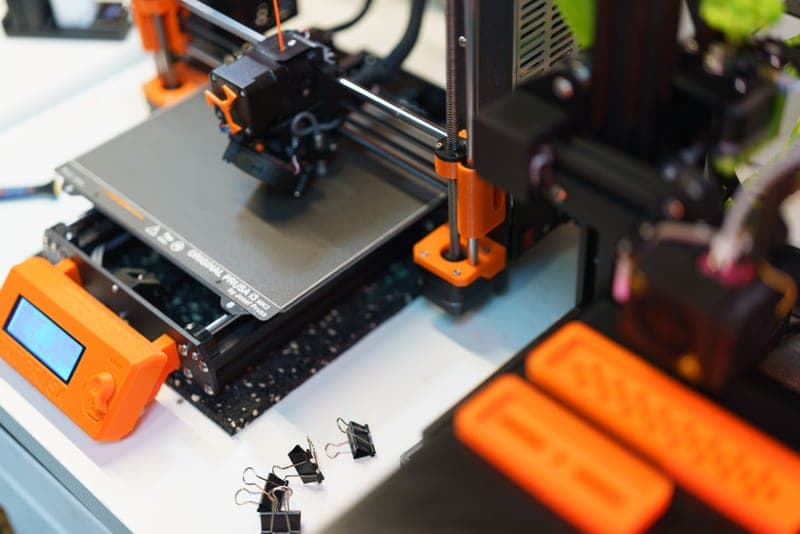
Stock photograph of this product class, not of this specific unit.
#ad We earn a commission · live price shown on Amazon
1. Best enclosed upgrade
Bambu Lab P2S
An enclosed CoreXY machine in roughly the same desk footprint, with a screen and quick-swap nozzle.
If the open frame is your limit, this is the straightforward answer: an enclosed CoreXY machine that keeps a desk footprint, with a touchscreen and a quick-swap nozzle as well.
Enclosed means ABS and ASA become realistic, CoreXY means tall fast prints improve, and a sealed AMS becomes available — which also fixes the AMS Lite moisture problem.
What it gets right
- Quick-swap nozzle turns a 0.4-to-0.6 change from a maintenance task into a between-prints decision
- A real touchscreen on the machine, so you are not opening an app to start a print
- Same footprint and roughly the same build area as the P1S, so your enclosure and shelf still work
What it does not
- If you have never once wished your P1S had a screen, this is not the upgrade you need
- Reported build volume is a 256 mm cube — the same class as the P1S, so it buys you nothing in size
- Your P1S-specific third-party parts may not carry over; check fitment per part, not per brand
| Released | October 9, 2025 |
|---|---|
| Type | Enclosed CoreXY, P1S successor |
| Over the P1S | Touchscreen and quick-swap nozzle |
| Build volume (reported) | 256 mm cube |
Stock photograph of this product class, not of this specific unit.
#ad We earn a commission · live price shown on Amazon
2. Cheapest route past the limit
Comgrow 3D Printer Enclosure
Flame retardancy, dust exclusion and temperature stabilization - real, and partial.
A fabric enclosure on an iron frame with a flame-retardant aluminum lining and a 600D Oxford shell. Cited benefits include dust reduction, noise reduction and temperature stabilization.
Realistic outcomes: fewer warped large PETG parts, no dust on the plate, somewhat quieter, and a flame-retardant barrier around an unattended machine. All four are worth having; none of them is ABS capability.
Measure the printer with the AMS Lite fitted before ordering.
What it gets right
- A flame-retardant lining on a machine that runs unattended overnight is the kind of upgrade you do not regret
- Stabilizes temperature enough to cut warping on large PETG parts, which is the realistic win here
- Collapses and stores, unlike an acrylic box
What it does not
- It reduces noise; it does not soundproof. Expect a difference, not silence
- Fabric and a passive frame will never give you a 60 C chamber — this is not an ABS solution
- Listed compatibility is written around Creality-sized machines, so measure your printer and your AMS before buying
| Type | Fabric enclosure tent with an iron frame |
|---|---|
| Interior | Flame-retardant aluminum lining |
| Outer shell | 600D Oxford fabric, waterproof and dustproof |
| Features cited | Dust reduction, noise reduction, temperature stabilization, tool pockets |
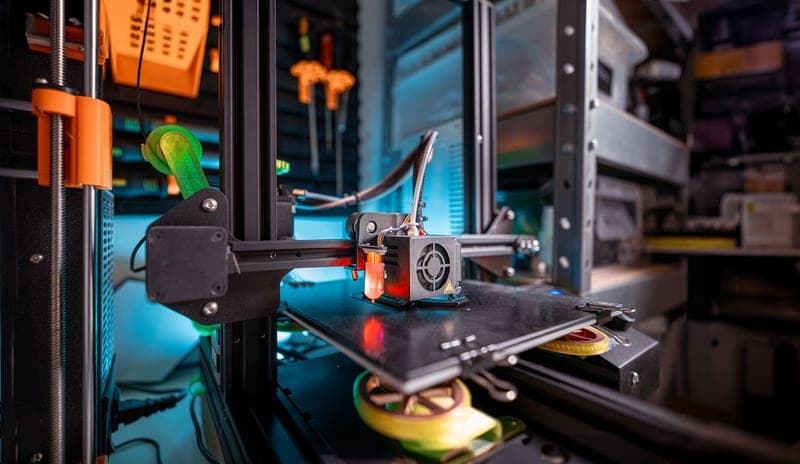
Stock photograph of this product class, not of this specific unit.
#ad We earn a commission · live price shown on Amazon
3. Best if you want size as well
Bambu Lab H2S
A reported 325 x 320 x 325 mm and enclosed, which solves both limits at once.
If you are already replacing the machine and size is also a frustration, this solves both in one step: enclosed, with a reported 325 x 320 x 325 mm bed.
Single nozzle, which keeps the cost and the maintenance down compared with the H2D. The practical constraint is where it goes, not what it costs.
What it gets right
- The large-format build area is the only thing a P1S genuinely cannot give you
- Single nozzle means one hotend to maintain instead of two
- Costs less than the H2D for the same reported footprint and near-identical bed size
What it does not
- No dual nozzle, so no support material in a different polymer and no two-color single-head workflow
- Large-format machines want floor or shelf space, not desk space
- If your prints all fit in 256 mm, you are paying for air
| Released | August 26, 2025 |
|---|---|
| Type | Large-format enclosed, single nozzle |
| Build volume (reported) | 325 x 320 x 325 mm |
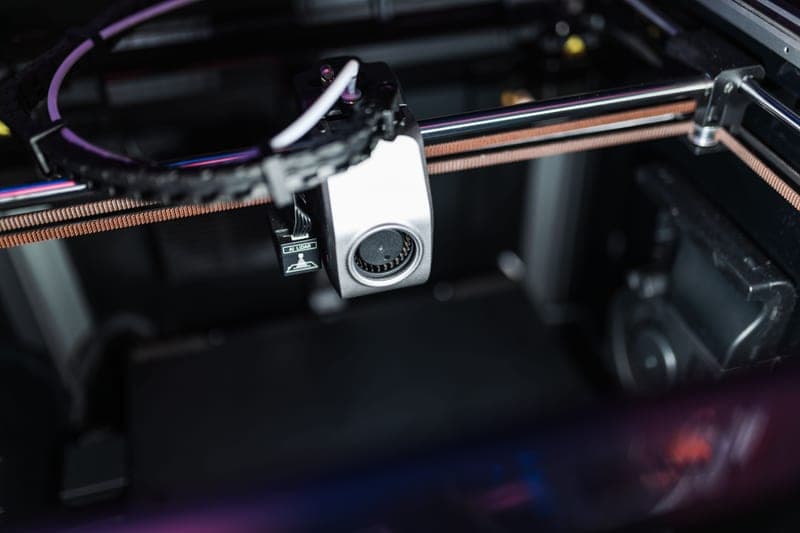
Stock photograph of this product class, not of this specific unit.
#ad We earn a commission · live price shown on Amazon
4. The cheap fix most A1 owners actually need
SUNLU FilaDryer S2
A cited 35-70 C range, because AMS Lite spools sit in open air with zero protection.
Before replacing anything, consider that a lot of A1 dissatisfaction is moisture. AMS Lite holds four spools in room air with no enclosure, humidity monitoring or drying, and prints degrade gradually in a way that is hard to attribute.
A cited 35-70 C range covers PLA, PETG and TPU — everything an A1 can print. Quiet enough to run overnight.
What it gets right
- 35-70 C covers PLA, PETG and TPU, which is most of what actually goes wet in a hobby workshop
- Quiet enough to run overnight in a room you sleep in
- The cheapest entry point that is still a real dryer rather than a warm box
What it does not
- 70 C ceiling means nylon, PC and PA-CF are out of range
- One spool at a time, which does not fit a four-color job
- No printing from the unit, so a dried spool starts re-absorbing the moment it comes out
| Temperature range (cited) | 35-70 C |
|---|---|
| Capacity | One spool |
| Diameters | Supports all common filament diameters |
| Noted | Quiet enough for overnight drying |
Questions people actually ask
Should I upgrade from my Bambu Lab A1?
Only if the open frame is genuinely your limit - which means you want ABS, ASA, polycarbonate or nylon. If it is, either add an enclosure (cheap, partial) or move to an enclosed machine (expensive, complete). If your complaint is print quality rather than materials, check filament dryness and plate cleanliness first.
Is the A2L a good upgrade from an A1?
Only if bed size is your actual complaint. The A2L is a larger open-frame machine, so it shares the A1's material ceiling exactly - a bigger version of the same limitation. Most A1 owners who shop for an upgrade want materials, which means an enclosure or an enclosed machine.
Should I buy an enclosure or a new printer for my A1?
An enclosure if ABS is occasional and you mainly want dust exclusion, flame containment and fewer warped large PETG parts. An enclosed machine if ABS and ASA are central, because a passive fabric box cannot reach the chamber temperature those materials want.
Should I sell my A1 if I buy an enclosed printer?
Usually no. Two machines printing beats one printing better - a long job stops blocking a short one, and the open-frame A1 cools well for fast PLA while the enclosed machine handles ABS. Resale recovers little and costs you throughput.
Why are my A1 prints getting worse?
Most likely moisture. AMS Lite holds four spools in open room air with no enclosure, humidity monitoring or drying, so filament degrades gradually. The signature is a spool that printed well a month ago and prints badly now with nothing else changed - the fix is a dryer and sealed storage, not a printer.
Sources
- Bambu Lab model list, release dates and descriptions - Wikipedia
- Reported build volumes, chamber temperatures and nozzle hardness - third-party lineup roundups captured October 2026
- Bambu Lab A1 enclosure options - All3DP
Read this next
- Bambu Lab A1 vs P1SThe A1 and P1S differ in one way that matters and several that do not. Which materials you print settles it in a sentence.
- Bambu Lab A1 vs A2LThe A2L adds bed size and a blade cutter over the A1 and shares its material ceiling. Who that suits and who it does not.
- Enclosures for the A1 and A1 miniFabric, purpose-built and DIY enclosure options for an A1, what each realistically delivers, and the measurement people get wrong.
- A1 and A1 mini mods worth doingA-series mods ordered by the problem each solves, why P-series parts do not fit, and the two problems specific to an open machine.
- AMS 2 Pro vs AMS LiteThe AMS 2 Pro fits enclosed machines and the AMS Lite fits the A-series. What each does, and the gap you have to fill on an A1.
- The best Bambu Lab printer to step up to in 2026One pick per upgrade situation, from the P1S owner who should keep their machine to the owner who genuinely needs the H2 build volume.