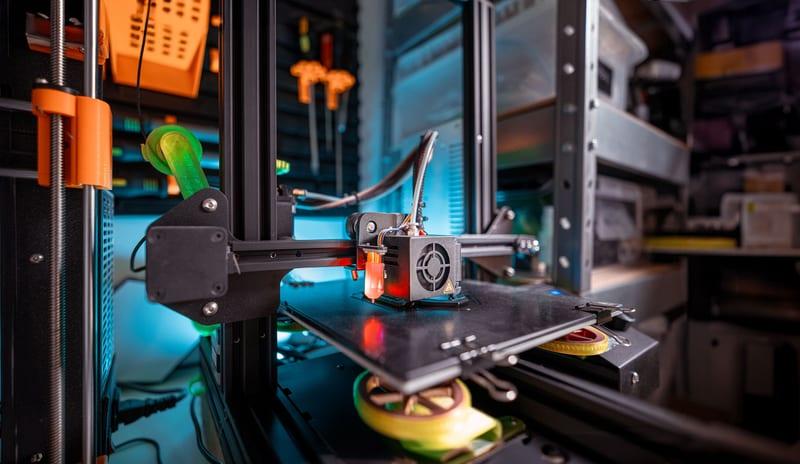
Best overall step-up
Bambu Lab H2D
The only machine here that is a different class, not a faster version of what you own.
Check price on Amazon
#ad We earn a commission · price as of November 23, 2026
For people who already own the printer
Expert upgrade advice for A1, A1 mini, P1S and X1C owners. Every pick is organized by the problem it solves — and about half the time the answer is an inexpensive part rather than a new printer.
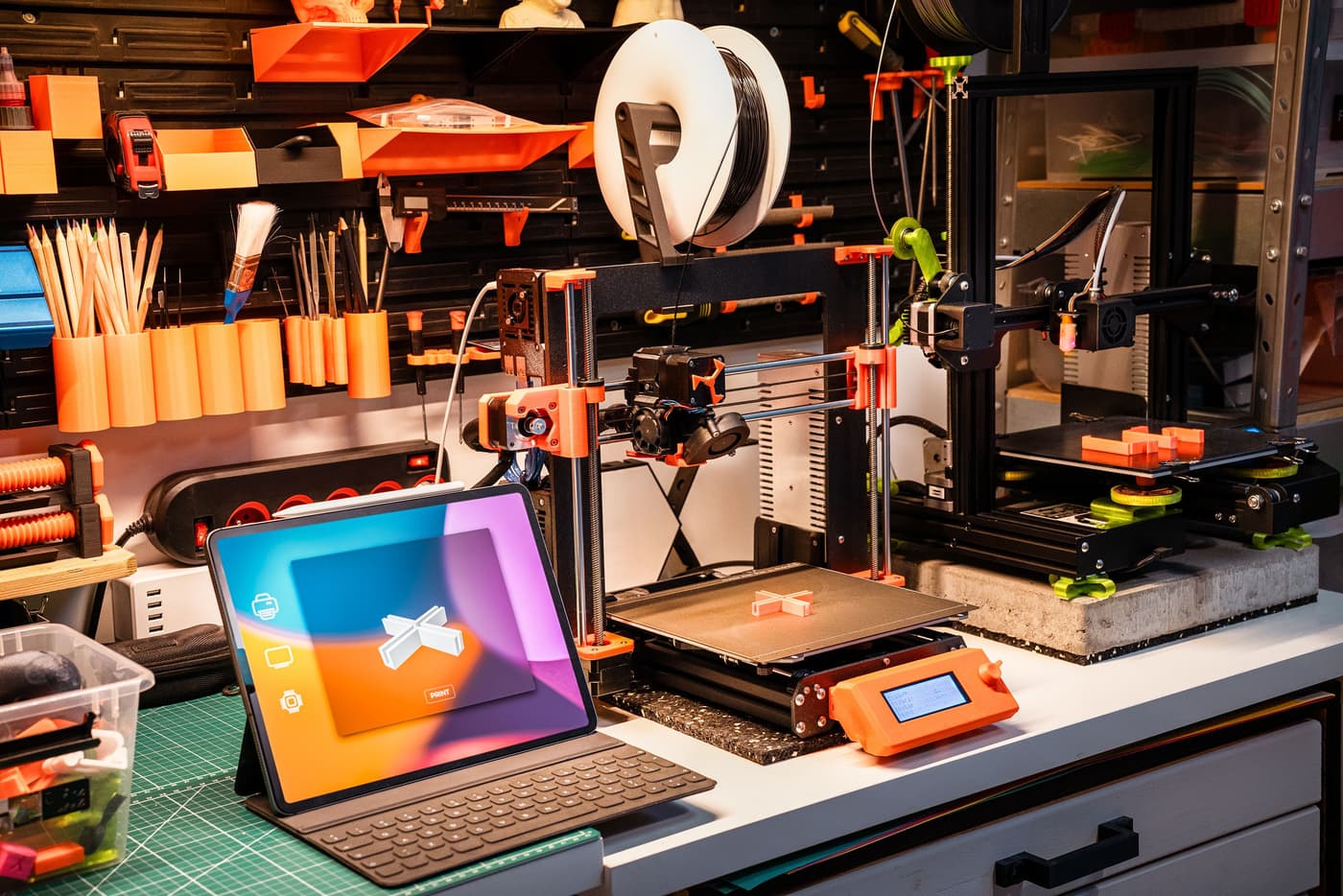
The top pick from every roundup on the site. Each one links to the comparison it won, where you will also find who it is wrong for.
Best overall step-up
The only machine here that is a different class, not a faster version of what you own.
#ad We earn a commission · price as of November 23, 2026
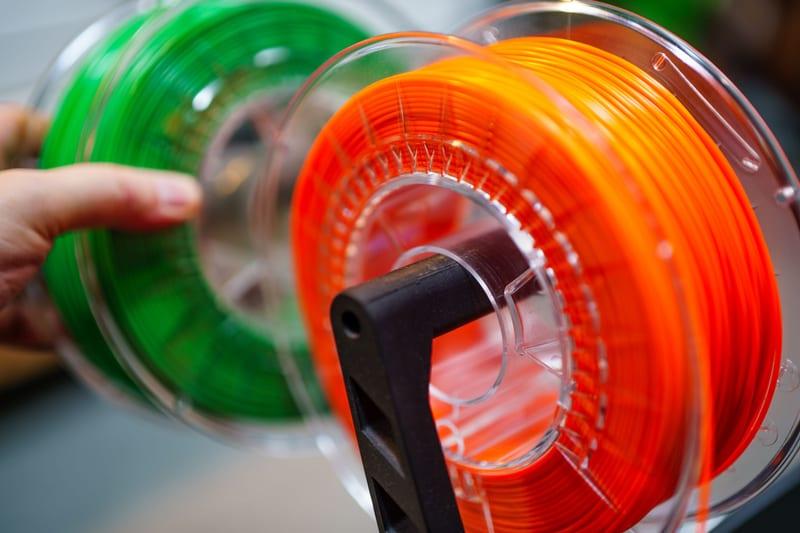
Best AMS upgrade
Four colors and active drying in one box, which is the whole reason it beats the original AMS.
#ad We earn a commission · price as of November 23, 2026
Best enclosure
The only enclosure for a Bambu machine designed by the manufacturer, and it fits exactly one printer.
#ad We earn a commission · price as of November 23, 2026

Best nozzle upgrade
The purchase that has to happen before your first spool of anything filled.
#ad We earn a commission · price as of November 23, 2026
Best build plate
The right default for almost everything, and the plate to replace first when adhesion goes.
#ad We earn a commission · price as of November 23, 2026

Best filament dryer
Four spools at once, which is the only capacity that matches a multi-color workflow.
Best overall upgrade
The most capability per dollar in the whole catalog, and the reason most P1S owners should not buy a printer.
#ad We earn a commission · price as of November 23, 2026
Best accessory
A spare plate is the difference between a failed first layer costing 30 seconds or an evening.
#ad We earn a commission · price as of November 23, 2026
Best cheap upgrade
Polycarbonate replacing acrylic on the part of a P1S that degrades fastest.
#ad We earn a commission · price as of November 23, 2026
Best gift
A spare build plate is the thing every owner needs and almost nobody buys themselves.
#ad We earn a commission · price as of November 23, 2026
Best for cosplay and props
The reported 325 x 320 x 325 mm bed removes more glue seams per dollar than anything else in the range.
#ad We earn a commission · price as of November 23, 2026

Best for a home desk
Open frame, four colors with AMS Lite, and the fewest reasons to annoy anyone else in the house.
Largest reported build volume
350 x 320 x 325 mm reported, and the only machine here with a second nozzle too.
#ad We earn a commission · price as of November 23, 2026

Biggest real throughput gain
A wider bore lays down more material per pass, which shortens prints more reliably than any model change.
#ad We earn a commission · price as of November 23, 2026
Best nozzle for carbon fiber
Hardened steel plus a 0.6 mm bore solves both carbon-fiber problems at once: wear and clogging.
#ad We earn a commission · price as of November 23, 2026
Best dryer for TPU
Four spools in the standard temperature band, which is exactly where TPU wants to be dried.
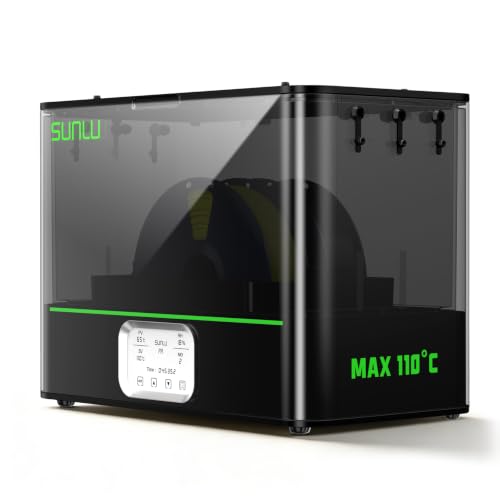
Best dryer for nylon
A cited 35-110 C range is the first figure on this page that is genuinely enough for nylon and PC.
#ad We earn a commission · price as of November 23, 2026

Best value in the lineup
The cheapest machine that can print ABS and ASA. Everything above it sells convenience; this is the last step that sells capability.
Best multicolor setup
The enclosed machine that takes the AMS 2 Pro, which is the only four-spool unit that also dries. That combination is the whole recommendation.

Best Panda upgrade
A 5-inch touchscreen powered from the printer's own USB port. This is the feature people buy a P2S for, at a fraction of a new machine.

Best P2S upgrade
A double-sided 257 x 257 mm plate explicitly listed for the P2S. The one mod that keeps a working machine working.
Best for miniatures and tabletop
An enclosed CoreXY frame is what a 0.2 mm nozzle needs: no bed-slinging ringing, no draft across a 15 mm part. The machine most readers here already own is also the right one.
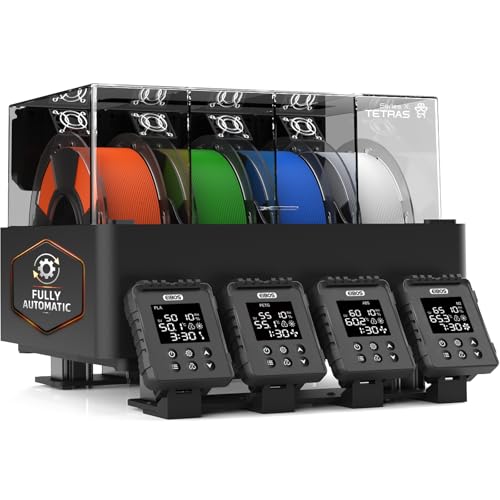
Best AMS mod
Active drying built around the AMS you already own rather than asking you to replace it. This is the only mod that fixes the original AMS's real defect.
Best upgrade kit
The kit that turns a bare P1S or X1C into a four-color machine with active drying. It is the one upgrade that changes what the printer does rather than how it feels.
#ad We earn a commission · price as of November 23, 2026

Best dryer for PLA
The cheapest unit worth owning, and for PLA that is not a compromise - a single spool held at a low, steady temperature is the entire job.
Best for carbon fiber
The only current machine here that arrives carbon-ready: hardened steel in the box, a 120 C bed and a published 65 C active chamber, at the same 300 C nozzle as everything else.
#ad We earn a commission · price as of November 23, 2026
Best under $500
The only enclosed machine under the line, at the full 256 mm cube. The enclosure is the one thing at this price that cannot be added later for pocket money.

Best dryer under $100
Up to 70 C from a 100 W heater, a timer that runs unlimited rather than forcing a restart, humidity monitoring, and it feeds the printer while it dries.
Best upgrade under $100
A 5-inch touchscreen for a printer that never had one, powered from the printer's own USB port and able to drive up to ten machines from one unit.
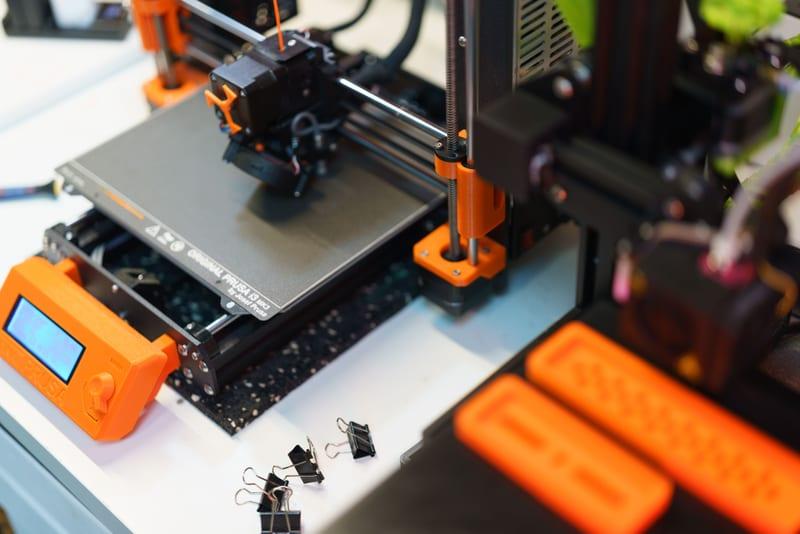
Best Bambu Lab alternative
Four independent toolheads on the same 256 mm cube a P1S prints. It changes material without purging the last one through a shared nozzle, which no AMS can do.
#ad We earn a commission · price as of November 23, 2026
Best Prusa alternative
The enclosed machine most Prusa shoppers are actually comparing against, at a 256 mm cube and a published 300 C nozzle.
Best AMS alternative
The only unit in this registry that adds automatic four-spool switching to a printer you already own, open source, sold as a DIY kit or assembled.
#ad We earn a commission · price as of November 23, 2026
Best plate for PETG
The default plate is also the correct PETG plate: it grips without glue at the published 60-80 C and releases a cooled part cleanly.
#ad We earn a commission · price as of November 23, 2026
Best K2 Plus alternative
The largest print space Bambu sells, at a stated 340 x 320 x 340 mm, with a single nozzle to maintain instead of two.
#ad We earn a commission · price as of November 23, 2026
Best hotend for flexibles
A complete 0.4 mm hotend assembly that keeps every existing profile valid, and covers abrasive filament at the same time.
#ad We earn a commission · price as of November 23, 2026
Best plate for ABS and ASA
A double-sided coated spring steel sheet that releases cooled parts without a scraper, across seven Bambu models - which is the actual ABS problem.

Best plate under $50
Two different surfaces on one sheet - smooth PEO on one face, textured PEI on the other - which is the most plate one purchase buys in this band.
Best dual-nozzle printer
Direct-drive dual nozzle plus the largest reported build area of the machines an enthusiast actually buys, and the only one here publishing an active chamber figure.
#ad We earn a commission · price as of November 23, 2026
Best enclosed printer
An enclosed CoreXY with an auxiliary cooling fan and an air filter - the machine that makes ABS and ASA realistic rather than aspirational.

Best A1 enclosure
A foldable fireproof fabric box with listed A1 fitment and no frame to build - the right purchase for a machine that runs unattended overnight.

Best cooling upgrade
A nylon printhead cover with an integrated duct that reshapes the air at the nozzle - a geometry fix for curling overhangs that slicer settings alone often cannot reach.
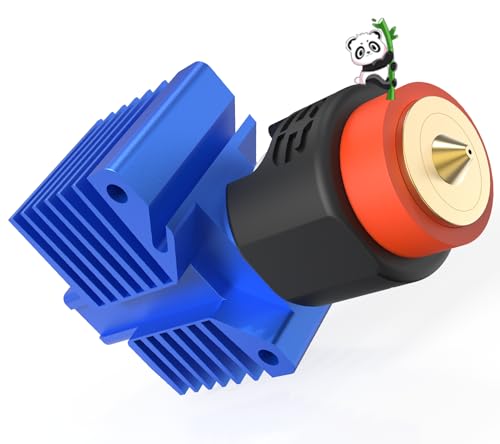
Best upgrade under $200
Quick-change nozzles by hand in seconds - the single feature people buy a whole new printer for, on the P1S they already own.
Best dryer under $300
A cited 35-110 C range with a 500 W PTC heater, which is the first figure on this page genuinely high enough for nylon, PC and the filled engineering materials.
#ad We earn a commission · price as of November 23, 2026
Best SUNLU alternative
The same four-spool capacity with a cited infinite timer, which turns a drying cycle into permanent heated storage.
Best AMS upgrade under $200
Four spools dried at once with a cited infinite timer, so the whole set you are about to load stays dry instead of taking turns.
Printers
You already own one. The question is not which printer to buy, it is whether a new machine fixes the thing that is actually bothering you — and usually it does not.
AMS & Color
The AMS is the best-value upgrade Bambu sells and the most misunderstood. Here is what each version does, which one fits your printer, and when a dryer is the better buy.
Enclosures
An enclosure is not a magic box. It traps heat, dust and some noise — and which of those three you care about completely changes what you should buy.
Nozzles & Plates
The two cheapest parts on the printer decide more about your print quality than anything else you could buy. Here is which one to change and when.
Filament Drying
Wet filament imitates six other faults convincingly. Drying is the cheapest thing you can do to a print, and the one most owners try last.
Upgrades
Most upgrade lists are shopping lists. This one is organized by the problem each part solves, because about half the popular upgrades fix nothing you have.
Every competitor in this niche writes for first-time buyers; one of them literally positions on being beginner-friendly. You already know what a nozzle is. Nothing here explains that.
There is no measurement rig behind this site and no benchmark data. You will never read 'in our testing' here, because it would not be true. What you get is published specs, cited, plus judgment.
A price typed into an article is wrong within a month, so none is. Every figure you see is read from Amazon's own data, refreshed daily and stamped with the date it was checked - and it vanishes rather than going stale.
A roundup where everything suits everyone is a catalog. The 'wrong for' line is mandatory on every recommendation on this site.
Printers
The P2S adds a touchscreen and a quick-swap nozzle and no build volume. When that is worth a new machine and when a far cheaper part does the same job.
Printers
The two reasons to replace a P1S and the four cheaper parts that cover everything else, with the arithmetic laid out.
Upgrades
The central symptom-to-cause table for the whole site, with the two free checks that resolve most problems before any purchase.
Nozzles & Plates
The one rule that answers this for every filament, plus a per-material table covering PETG, ABS, CF, silk, wood, marble and glow.
Textured PEI is the right default for PETG, and the real recommendation is a second, cheaper plate you are willing to dedicate to it. Five plates ranked, with the published temperatures that make the choice obvious.
The large-format alternatives to a Creality K2 Plus, split by whether you are buying the build volume, the heated chamber or the four-spool color - and what each one costs you in ecosystem.
Bambu lists exactly one nozzle as incompatible with TPU - the 0.2 mm stainless hotend. What that tells you about bore size, which hotend fits which machine, and why the plate matters more than the nozzle.
ABS and ASA need 90-100 C on the bed per Bambu's published table, and the A1 mini's published ceiling is 80 C. The plate that releases a shrunken ABS part, the official surface the temperatures describe, and the cheapest one that works.
Three registry plates carried a live price under $50 when this was checked. Which surface each one gives you, why the second plate matters more than the first, and the cheapest one that is still real PEI.
Four dual-toolhead machines, ranked by the problem each one actually solves: the H2D for most people, the X2D for a desk, the H2C for nozzle diameters, the Creator 5 for purge waste. Plus the honest case for buying one nozzle instead.
Ranked on what the chamber lets you print, not on price. The P1S for most people, the P2S for the screen and quick nozzle swaps, the H2D for the only published active chamber figure, and the Elegoo for a 350 C nozzle.
Which enclosure fits an A1 or A1 mini, which is large enough to hold the AMS Lite as well, and the honest limit: the A1 mini's published 80 C bed ceiling against the 90-100 C ABS asks for.
Four airflow parts ranked by the fault each one fixes: a nylon duct for curling overhangs, a magnetic turbo fan for more auxiliary flow on a P1S, a cross-flow fan for the A1, and the sensor that tells you whether cooling is your problem at all.
Quick-change nozzles, a vertical rack for an A1's spools, a chamber sensor, more airflow, and the hardened hotend that should be everyone's first purchase - all with live prices under $200 at the last check.
Six registry dryers carried a live price under $300 at the last check, and one of them reaches 110 C where the cheap units stop at 70. Which to buy for engineering filament, for an AMS, for four spools, and the cheapest one worth owning.
What SUNLU is known for, stated from its published figures, and three non-SUNLU dryers that match it on a stated strength or a lower price: an infinite-timer four-spool unit, a sealed per-spool box system, and active drying inside an AMS.
Five upgrades for an AMS workflow with live prices under $200, ordered by the failure they fix: four-spool drying, drying while the unit feeds, where an AMS Lite lives, sealed storage for the spools that are out, and the gear set that fixes a unit that has stopped feeding.
Three non-Bambu machines that are currently purchasable in the US, each ranked by the one thing it does that no Bambu in this site's registry does - and an honest accounting of the switching cost.
What Prusa is known for on its own published figures, and the four Bambu machines that answer the same brief - matched model for model, with the trade in each direction stated.
Plate & Spool is funded by Amazon affiliate commissions. If you buy something through a link here, this site earns a small commission at no extra cost to you. That is the entire business model — no sponsored reviews, no paid placements, no manufacturer supplying us with hardware in exchange for coverage.
It does not change what gets recommended. Several pages here conclude that the right answer is to keep the printer you own and spend a fifth of the money, which earns less than recommending a new machine would. That is the point.