Filament Drying
Which filaments your Bambu Lab can actually print
Three things decide what a printer can run: the chamber, the nozzle and whether you can keep the filament dry. Two of those are upgradable.
By Michael W. · Published October 5, 2026
Some links here are Amazon affiliate links, so a purchase may earn this site a commission at no cost to you. It does not change what gets recommended or the order it appears in — how that works.
The three things that decide it
- The chamber. ABS, ASA, polycarbonate and nylon want warm air around the whole part. An enclosure is the hardware requirement, and an actively heated chamber is better than a passive one. This is the hardest gate to remove.
- The nozzle. Filled and abrasive filament needs hardened steel. The cheapest gate to remove.
- Drying. Nylon, PC and PA-CF are gated by whether you can keep them dry as much as by the printer. Removable with a high-temperature dryer.
By machine
| Material | A1 / A1 mini | P1S / X1C / P2S | H-series / X2D |
|---|---|---|---|
| PLA | Yes | Yes | Yes |
| PETG | Yes | Yes | Yes |
| TPU | Yes (feed direct, not via AMS) | Yes (feed direct) | Yes |
| ABS | No — needs an enclosure | Yes | Yes |
| ASA | No — needs an enclosure | Yes, small parts reliably; tall parts split | Yes, best on an actively heated chamber |
| Polycarbonate | No | Marginal — needs heat and dryness | Yes |
| Nylon / PA | No | Marginal — needs heat and dryness | Yes |
| PLA-CF / PETG-CF | Upgrade — hardened nozzle | Upgrade — hardened nozzle | Upgrade — hardened nozzle |
| PA-CF | No | Marginal | Yes, with hardened nozzle and high-temp drying |
| Glow-in-the-dark | Upgrade — hardened nozzle | Upgrade — hardened nozzle | Upgrade — hardened nozzle |
| Wood / metal / marble filled | Upgrade — hardened nozzle | Upgrade — hardened nozzle | Upgrade — hardened nozzle |
"Marginal" is doing real work in that table. A passive-chamber P1S can print polycarbonate and nylon, and the results depend heavily on getting chamber warm-up, drying and cooling all correct. It is not a capability you should buy the machine for.
Why the chamber gate is the hard one
Because it cannot be retrofitted properly. A hardened nozzle is a part you fit. A dryer is a box you buy. A chamber is the machine.
A passive enclosure, like the P1S has, traps heat the bed produces and holds it above ambient. That is enough for ABS most of the time. An actively heated chamber — the X2D is reported at 65 C — sets and holds a temperature, which is what tall ASA parts need to stop splitting partway up.
A fabric enclosure on an open-frame machine is a partial version of the first. It is genuinely useful and it is not equivalent. Chamber temperature in full.
Why the nozzle gate is the cheap one
A hardened steel hotend costs a fraction of any machine and unlocks every filled filament on any printer. There is no reason to be gated by it.
And the rule is simple: if the filament contains filler harder than steel — carbon fiber, glass, metal, wood, glow pigment, glitter, mineral — you need hardened. If it does not, you do not. The per-material list.
Why drying is a gate at all
Because with nylon, polycarbonate and PA-CF, wet filament does not print badly — it fails. These materials absorb fast enough to ruin a print within a day of opening the bag, and a 70 C dryer cannot dry them properly.
So the honest statement for a P1S is: it can print nylon if you can keep the nylon dry, which needs a high-temperature dryer or an AMS HT. Without that, the capability is theoretical. Dryers by temperature.
Where to go next
The nozzle question, the chamber question, and which printer handles engineering materials best if you are deciding on hardware rather than parts.
What to buy
Stock photograph of this product class, not of this specific unit.
#ad We earn a commission · live price shown on Amazon
1. Widens the list the cheapest
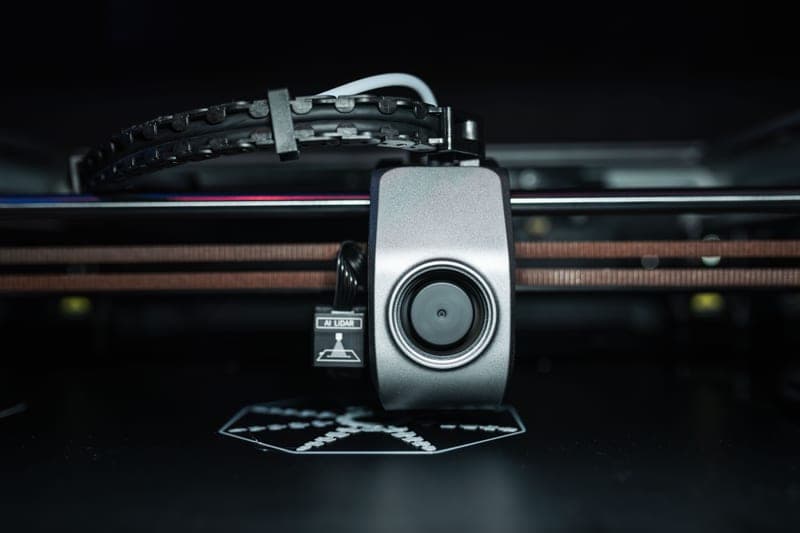
Bambu Lab Hotend with Hardened Steel Nozzle, 0.4 mm
Hardened steel unlocks every filled and abrasive filament on any machine, for very little.
Of the three gates, the nozzle is the cheapest to remove. A hardened steel hotend unlocks carbon-filled, glass-filled, metal, wood, glow and glitter filament on any machine that otherwise prints well.
Complete assembly in 0.4 mm for the P1P and P1S, which keeps existing profiles valid. A-series machines take their own part.
What it gets right
- Abrasive filament rounds a stainless nozzle fast — with the worst materials, a single print can do it
- Comes as a complete assembly, so the swap is a module change rather than a nozzle extraction
- 0.4 mm keeps your existing print profiles valid
What it does not
- Hardened steel conducts heat slightly worse than stainless, so very high-flow PLA needs a small temperature bump
- Pointless if you only ever print plain PLA and PETG — stainless lasts for years on those
- P1P and P1S only; the A-series and H-series need their own part
| Nozzle | Hardened steel, 0.4 mm |
|---|---|
| Fits | P1P and P1S (model FAH001-N-1) |
| Hardness reference | Hardened steel is cited at HRA 74 |
| Supplied as | Complete hotend assembly |
Stock photograph of this product class, not of this specific unit.
#ad We earn a commission · live price shown on Amazon
2. Removes the drying gate
SUNLU E2 FilaDryer
A cited 35-110 C range, which is the class nylon and polycarbonate actually need.
Engineering filament is gated as much by drying as by the printer. Nylon, PC and PA-CF absorb moisture fast enough to ruin a print within a day, and a 70 C dryer cannot serve them.
Cited at 35-110 C with a 500 W PTC heater, named for PA6-CF, PA12-CF, PC, ABS and ASA.
What it gets right
- 110 C is the first number on this page that is genuinely enough for nylon and PC
- A 500 W PTC heater gets to temperature fast instead of creeping there over an hour
- Doubles as an annealing oven, which is a second real use rather than a marketing bullet
What it does not
- Overkill and over-priced if PLA and PETG are all you print
- A 500 W heater is not a quiet, low-draw appliance
- Annealing shrinks and distorts parts — it is a technique to learn, not a button to press
| Temperature range (cited) | 35-110 C |
|---|---|
| Heater (cited) | 500 W PTC |
| Second function | Annealing as well as drying |
| Materials cited | PA6-CF, PA12-CF, PC, ABS, ASA |
Stock photograph of this product class, not of this specific unit.
#ad We earn a commission · live price shown on Amazon
3. Partly removes the chamber gate
Comgrow 3D Printer Enclosure
Temperature stabilization and flame retardancy on an open machine - partial, and honest about it.
The chamber is the hardest gate to remove and the only one a fabric enclosure addresses at all. Flame-retardant aluminum lining on an iron frame, with cited temperature stabilization and dust exclusion.
Realistic outcome: fewer warped large PETG parts, and small ABS parts becoming feasible. Tall ABS and ASA remain the hard case.
What it gets right
- A flame-retardant lining on a machine that runs unattended overnight is the kind of upgrade you do not regret
- Stabilizes temperature enough to cut warping on large PETG parts, which is the realistic win here
- Collapses and stores, unlike an acrylic box
What it does not
- It reduces noise; it does not soundproof. Expect a difference, not silence
- Fabric and a passive frame will never give you a 60 C chamber — this is not an ABS solution
- Listed compatibility is written around Creality-sized machines, so measure your printer and your AMS before buying
| Type | Fabric enclosure tent with an iron frame |
|---|---|
| Interior | Flame-retardant aluminum lining |
| Outer shell | 600D Oxford fabric, waterproof and dustproof |
| Features cited | Dust reduction, noise reduction, temperature stabilization, tool pockets |
Questions people actually ask
What filament can the Bambu Lab A1 print?
PLA, PETG and TPU reliably, plus the filled versions of those given a hardened nozzle. ABS, ASA, polycarbonate and nylon all want a warm chamber the open frame cannot provide, so treat those as out of scope rather than merely difficult.
Can the P1S print nylon?
Marginally, and the limit is as much drying as the printer. Nylon absorbs moisture fast enough to ruin a print within a day of opening the bag, and a standard 70 C dryer cannot dry it properly. With a high-temperature dryer or an AMS HT and careful chamber warm-up it is possible; it is not a reason to buy the machine.
What filaments can the A1 not print?
ABS, ASA, polycarbonate and nylon, because all four need warm air around the part and the A1 has no chamber. An aftermarket fabric enclosure helps with small parts and does not make these reliable.
Can the P1S print carbon fiber filament?
Yes, with a hardened steel nozzle - ideally 0.6 mm, because chopped fibers bridge and block a 0.4 mm bore. The stock stainless nozzle will be damaged quickly by filled filament, so fit the hardened hotend before the first spool rather than after.
What decides which filaments a printer can run?
Three things: the chamber, which gates ABS, ASA, PC and nylon; the nozzle, which gates every filled and abrasive filament; and whether you can keep the filament dry, which gates engineering materials in practice. The nozzle and the drying are cheap to fix; the chamber is the machine.
Sources
Read this next
- Do I need a hardened nozzle for this filament?The one rule that answers this for every filament, plus a per-material table covering PETG, ABS, CF, silk, wood, marble and glow.
- How to print ABS on a Bambu Lab printerThe four real causes of ABS failure in order, the warm-up step most people skip, and the cooling setting that works against you.
- The best Bambu Lab printer for ASAWhich machines handle ASA and ABS, why passive and active chambers differ, and the free technique to try before buying.
- The best filament dryers in 2026Dryer picks split by temperature range and capacity, because a 70 C unit and a 110 C unit are different products for different materials.
- Chamber temperature on a passive enclosureHow passive chamber heating works, the safe ways to raise it, the modifications to avoid, and when an actively heated machine is the real answer.