Upgrades
A1 and A1 mini mods worth doing
The A-series has a smaller aftermarket than the P-series and a clearer set of actual problems. Two of them are about where the spools live.
By Michael W. · Published October 5, 2026
Some links here are Amazon affiliate links, so a purchase may earn this site a commission at no cost to you. It does not change what gets recommended or the order it appears in — how that works.
What an A1 actually needs
- Somewhere for the spools to live. The AMS Lite on top of an A1 is the biggest practical annoyance with this machine, and a vertical rack is the fix.
- A dryer. AMS Lite spools sit in open air with no moisture protection, which is why A1 prints get gradually worse over months.
- A hardened nozzle, if you print filled filament. The cheapest capability upgrade available.
- An enclosure, if you want to try ABS — with realistic expectations.
Notice what is not on that list: performance parts. The A1 is a well-sorted machine whose limitations are structural rather than fixable.
Why most P-series mods do not fit
A-series and P-series parts are different catalogs. Hotends, cooling ducts, screens brackets and most structural parts are designed around a specific toolhead and chassis, and the A1 shares neither with a P1S.
Build plates are the main exception — several third-party plates list the A1 alongside the P-series, because the bed size and magnetic mounting are compatible. Everything else: check the fitment list against your exact model, and treat brand familiarity as no evidence at all.
The practical effect is a smaller aftermarket than the P1S enjoys, which is worth knowing before you go looking.
The two problems unique to an open machine
Open-air filament
AMS Lite holds four spools in room air with no enclosure, no humidity monitoring and no drying. In a dry room with PLA that is fine. With PETG or TPU, or in a humid climate, it is the reason prints get worse over weeks in a way that is hard to attribute.
The tell is a spool that printed well a month ago and prints badly now with nothing else changed. Confirming moisture.
Desk footprint
An A1 is compact. An A1 with four spools above it is not, and a dual setup is worse. This is a real daily annoyance that nobody mentions when recommending multi-color on an A-series machine, and a vertical rack is the only genuine fix.
What an A1 cannot be modded into
| Want | Possible? | What to do instead |
|---|---|---|
| Reliable ABS or ASA | No | An enclosure helps with small parts; an enclosed machine is the real answer |
| A heated chamber | No | That is the X2D |
| Larger build volume | No | The A2L for open-frame size, or the H-series enclosed |
| CoreXY speed on tall thin parts | No | The bed is the moving mass; this is kinematics |
| A sealed AMS with drying | No — AMS Lite only | A dryer plus sealed storage |
| Four colors without desk clutter | Partly | A vertical rack |
What to print instead of buying
The A-series is unusually well served by printed mods, because the open frame makes everything accessible and because a lot of the problems are organizational:
- Spool risers and light holders — print in PETG
- Cable guides and clips
- Tool racks and scraper holders
- Filament guides to tidy the path from a dryer
- Camera mounts
The one rule: a frame carrying four loaded spools is structural, and printed material creeps under sustained load in a warm room. Light risers print; heavy racks get bought. Printed vs bought.
Where to go next
Whether to upgrade the printer instead, enclosure options, and accessories that keep it printing.
What to buy
Stock photograph of this product class, not of this specific unit.
#ad We earn a commission · live price shown on Amazon
1. The one that solves the real A1 problem
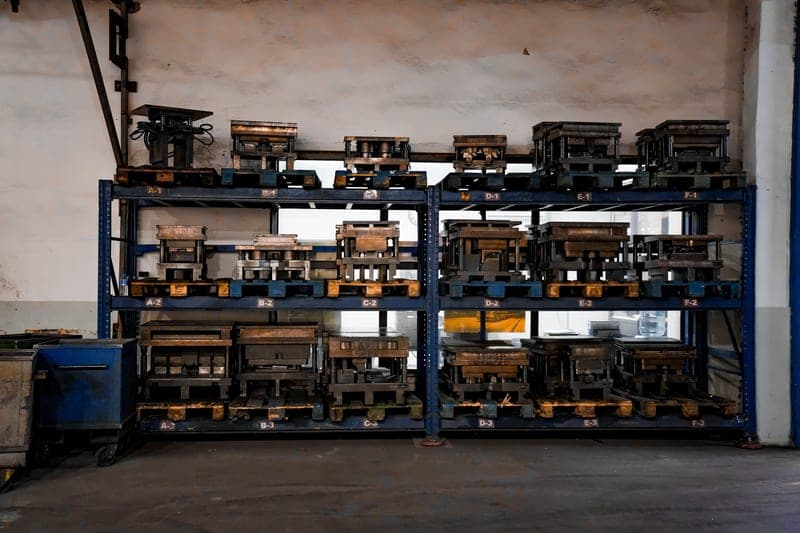
BIQU Panda Stack
An aluminum rack, because an A1 with AMS Lite on top owns your desk.
The most under-discussed cost of multi-color printing on an open machine is floor area. An A1 with four spools above it takes over a desk, and a dual setup is genuinely unmanageable.
Aluminum alloy multi-layer rack for the A1 and A1 mini, with stated support for a dual AMS and ViViD setup. Aluminum matters: four loaded spools flex a printed PLA frame, and a warm room makes it worse.
What it gets right
- An A1 with AMS Lite takes over a desk; a vertical rack is the only real fix
- Aluminum alloy, so it does not flex under four loaded spools the way a printed frame does
- Supports a dual setup, which is where the desk problem becomes genuinely unmanageable
What it does not
- Pure organization — it will not improve a single print
- A1 and A1 mini only
- A printed riser costs you filament and an evening instead of money
| Type | Aluminum alloy multi-layer rack |
|---|---|
| Fits | Bambu Lab A1 and A1 mini |
| Supports | Dual AMS and ViViD setup |
Stock photograph of this product class, not of this specific unit.
#ad We earn a commission · live price shown on Amazon
2. The one that fixes AMS Lite's gap
SUNLU FilaDryer S2
A cited 35-70 C range, because AMS Lite spools sit in open air with zero protection.
The AMS Lite is good at changing colors and offers no moisture protection whatsoever. On an A-series machine the honest total cost of multi-color is AMS Lite plus a dryer plus sealed storage.
A cited 35-70 C range covers PLA, PETG and TPU, which is everything an A1 can print anyway. Quiet enough to run overnight.
What it gets right
- 35-70 C covers PLA, PETG and TPU, which is most of what actually goes wet in a hobby workshop
- Quiet enough to run overnight in a room you sleep in
- The cheapest entry point that is still a real dryer rather than a warm box
What it does not
- 70 C ceiling means nylon, PC and PA-CF are out of range
- One spool at a time, which does not fit a four-color job
- No printing from the unit, so a dried spool starts re-absorbing the moment it comes out
| Temperature range (cited) | 35-70 C |
|---|---|
| Capacity | One spool |
| Diameters | Supports all common filament diameters |
| Noted | Quiet enough for overnight drying |
Stock photograph of this product class, not of this specific unit.
#ad We earn a commission · live price shown on Amazon
3. The one that widens what you can print
BIQU Panda Juicer Hotend
0.4 mm hardened steel for the A-series, which unlocks every filled filament.
A-series hotends are a different catalog from P-series ones, and this is the straightforward hardened option for an A1, A1 mini or H2D. Carbon fiber, glass fiber, metal, wood and glow-in-the-dark all require it.
Standard flow rather than high flow, so existing profiles stay close to right. Cheap enough to keep a spare, which is the real answer to a clog.
What it gets right
- Hardened steel at 0.4 mm covers abrasive filament on the A-series, which the stock stainless nozzle does not
- Cheap enough to keep a spare on the shelf, which is the actual answer to a clog at 2 a.m.
- Standard flow means your existing profiles stay close to right
What it does not
- Standard flow, so it is not a speed upgrade — do not buy it expecting one
- A third-party hotend on a machine under warranty is a decision, not a free lunch
- A-series and H2D fitment only; it will not fit a P1S
| Nozzle | 0.4 mm hardened steel |
|---|---|
| Fits | Bambu Lab A1, A1 mini and H2D |
| Positioning | Standard flow, for daily printing and maintenance |
Stock photograph of this product class, not of this specific unit.
#ad We earn a commission · live price shown on Amazon
4. The one that changes capability, partly
Comgrow 3D Printer Enclosure
Flame retardancy, dust exclusion and temperature stabilization - a real but partial fix.
The open frame is the A1's one real limitation, and this is the only mod on the page that addresses it at all. A flame-retardant aluminum-lined fabric enclosure on an iron frame, with a 600D Oxford shell, cited as waterproof and dustproof.
Realistic outcomes: fewer warped large PETG parts, no dust on the plate, somewhat quieter, and a flame-retardant barrier around an unattended machine. Not ABS capability.
Measure the printer with the AMS Lite fitted before ordering. That is where this purchase goes wrong.
What it gets right
- A flame-retardant lining on a machine that runs unattended overnight is the kind of upgrade you do not regret
- Stabilizes temperature enough to cut warping on large PETG parts, which is the realistic win here
- Collapses and stores, unlike an acrylic box
What it does not
- It reduces noise; it does not soundproof. Expect a difference, not silence
- Fabric and a passive frame will never give you a 60 C chamber — this is not an ABS solution
- Listed compatibility is written around Creality-sized machines, so measure your printer and your AMS before buying
| Type | Fabric enclosure tent with an iron frame |
|---|---|
| Interior | Flame-retardant aluminum lining |
| Outer shell | 600D Oxford fabric, waterproof and dustproof |
| Features cited | Dust reduction, noise reduction, temperature stabilization, tool pockets |
Stock photograph of this product class, not of this specific unit.
#ad We earn a commission · live price shown on Amazon
5. The marginal one, honestly
BIQU Panda Breeze Cross Flow Fan
A high-flow cross-flow fan with an LED, for the machine with least to gain from cooling.
Included and marked down deliberately. An A1 is open-frame and cools aggressively by design, so extra directed airflow has less to offer here than on an enclosed machine.
Where it does help: cleaner overhangs on tall parts. The integrated LED is genuinely useful for checking a first layer on an open machine, which is a small honest benefit. Plug-and-play, A1 fitment only.
What it gets right
- An A1 is open-frame and cools well already, so extra directed flow mostly shows up as cleaner overhangs on tall parts
- The integrated light genuinely helps a first-layer check on an open machine
- Plug-and-play on a machine that is easy to work on anyway
What it does not
- An open-frame A1 has the least to gain from more cooling of any machine in the lineup
- A1 fitment only
- Marginal on PLA, which is what most A1 owners print
| Type | High-flow cross-flow cooling fan with an LED light |
|---|---|
| Fits | Bambu Lab A1 printers |
| Install | Plug-and-play |
Questions people actually ask
What are the best Bambu Lab A1 mods?
A vertical rack to reclaim the desk space an AMS Lite takes up, a filament dryer because AMS Lite spools sit in open air with no protection, and a hardened nozzle if you print filled filament. An enclosure if you want to attempt ABS, with realistic expectations about what a passive fabric box delivers.
Do P1S upgrades fit the A1?
Mostly no. A-series and P-series parts are different catalogs - hotends, ducts and screen brackets are designed around a specific toolhead and chassis. Build plates are the main exception, since several third-party plates list the A1 alongside the P-series. Always check the fitment list for your exact model.
Can I mod an A1 to print ABS?
Not reliably. An aftermarket enclosure improves things for small parts and is worth having for dust and flame containment, but a passive fabric box traps bed heat rather than creating chamber heat. If ABS matters more than occasionally, an enclosed machine is the honest answer.
Does the A1 need a cooling fan upgrade?
It has the least to gain of any machine in the lineup, because an open frame already cools aggressively. The realistic benefit is cleaner overhangs on tall parts, and the integrated light on some units is genuinely useful for checking a first layer. Most A1 owners should spend the money elsewhere.
Why do my A1 prints get worse over time?
Almost certainly moisture. AMS Lite holds spools in open room air with no enclosure, humidity monitoring or drying, so filament degrades gradually. The tell is a spool that printed well a month ago and prints badly now with nothing else changed - the fix is a dryer and sealed storage.
Sources
Read this next
- Upgrading from an A1 or A1 miniThe A1's one real limit, the two routes past it, and why a bigger open-frame machine is the wrong direction.
- Enclosures for the A1 and A1 miniFabric, purpose-built and DIY enclosure options for an A1, what each realistically delivers, and the measurement people get wrong.
- The best Bambu Lab accessoriesThe accessories that actually earn shelf space - spares, storage and the parts that prevent downtime rather than add capability.
- Bambu Lab AMS LiteWhat the AMS Lite does well on an A1 or A1 mini, the moisture gap it leaves open, and the two things to buy alongside it.
- Printed vs bought upgradesThe rule that decides printed versus bought, the PLA-in-a-warm-chamber trap, and which parts must never be printed.
- The best filament dryers in 2026Dryer picks split by temperature range and capacity, because a 70 C unit and a 110 C unit are different products for different materials.