AMS & Color
Running TPU through an AMS
Soft filament and a long guided path fight each other. Here is why, what helps, and the setup most owners settle on.
By Michael W. · Published October 5, 2026
Some links here are Amazon affiliate links, so a purchase may earn this site a commission at no cost to you. It does not change what gets recommended or the order it appears in — how that works.
Can you run TPU through a Bambu AMS?
Not reliably through the standard four-spool path. Soft filament buckles rather than advancing when pushed along a long guided route, and the usual symptom is a failed load or a jam rather than a bad print.
What most owners do instead: feed TPU directly into the extruder, bypassing the AMS. It works, it is free, and it is what the shape of the problem recommends.
If TPU is routine for you: consider a unit designed around difficult materials rather than fighting the color-changer.
Why soft filament behaves differently
A filament path pushes filament from behind. Rigid filament transmits that push along its length like a rod. Soft filament compresses, and past a certain force it buckles sideways instead of moving forward — the same way a thin rubber rod does if you push it down a tube.
The longer the path and the more bends in it, the lower the force at which that happens. A four-spool AMS has a long path with several direction changes by design, because it has to reach four spools. That is not a defect; it is the geometry the function requires.
Direct feeding removes almost all of the path. That is why it works and why it is the standard answer.
Diagnosing which TPU problem you have
| Symptom | Likely cause | Fix |
|---|---|---|
| Load fails, or filament jams at a bend | Buckling in the path | Feed direct instead of through the AMS |
| Under-extrusion that worsens through the print | Extruder gears slipping on soft filament | Inspect gears; replace if worn |
| Brittle TPU that snaps when bent | Moisture — TPU absorbs readily | Dry the spool before printing |
| Stringing and blobs everywhere | Moisture, or retraction set for rigid filament | Dry first, then reduce retraction distance |
| Print detaches from a textured plate, tearing the surface | TPU grips textured PEI hard | Use a smooth plate, or a release agent |
Settings that matter more with TPU than with anything else
Print slowly. Soft filament needs time for the extruder force to translate into movement rather than compression. This is the single biggest lever.
Reduce retraction. Long retractions on an elastic material pull the filament back and then let it spring forward, which produces inconsistent extrusion. Less retraction, more conservative speed.
Dry it. TPU is one of the most hygroscopic common materials, and brittle TPU is wet TPU almost without exception. How to tell.
Mind the plate. TPU can grip textured PEI hard enough to tear the surface on removal. A smooth plate is the safer surface for flexible parts — textured vs smooth.
The practical setup
Most Bambu owners with an AMS end up running three colors of PLA or PETG through the unit and keeping TPU as a direct-feed material, loaded by hand when needed. That is not a workaround that failed — it is the configuration the geometry suggests, and it costs nothing.
If that annoys you enough to spend money, the gear set is the cheap fix for slip and a single-spool unit is the considered fix for material handling. Both are above.
What to buy

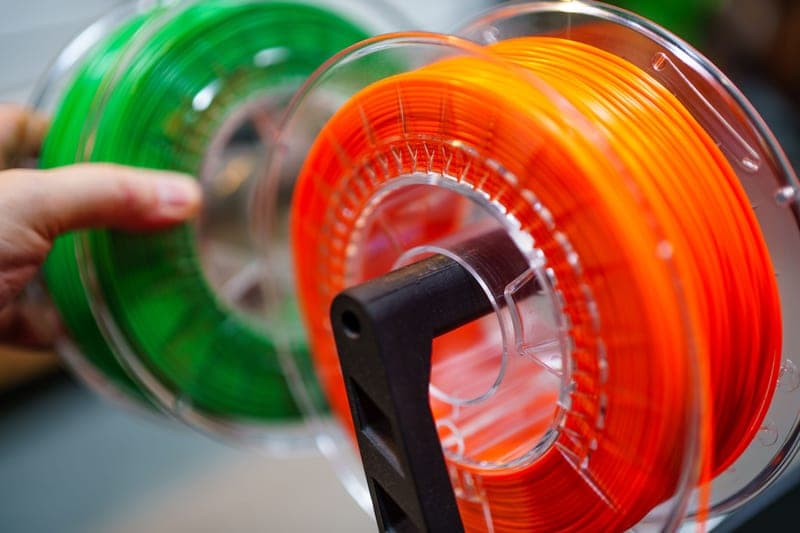
Stock photograph of this product class, not of this specific unit.
#ad We earn a commission · live price shown on Amazon
1. Best fix for TPU slipping
BIQU Panda Claw Extruder Gear Set
Hardened coated gears grip soft filament better than a worn stock set, with stated TPU support.
Golden nano-coated hardened steel gears for the X1, P1 and A1 series, with stated support for PLA, PETG, TPU and ABS. The improved grip is specifically where TPU benefits, because soft filament deforms under a worn gear instead of advancing.
Diagnose first. Gear slip looks like under-extrusion that gets worse as the print goes on. Path buckling looks like a failed load or a jam at a specific point. Those are different faults and only the first one is fixed here.
What it gets right
- Extruder gears are a wear item, and a worn set causes under-extrusion that looks like six other faults
- Hardened and coated gears grip TPU better than the stock set, which is the common TPU-slipping complaint
- Fits X1, P1 and A1 — one part number for most of the lineup
What it does not
- This is a repair for a real symptom, not an upgrade to buy preemptively
- An extruder teardown is the most intimidating job on the machine for a first-timer
- If your gears are not worn, new gears will change nothing
| Material | Golden nano-coated hardened steel gears |
|---|---|
| Fits | Bambu X1, P1 and A1 series |
| Materials supported | PLA, PETG, TPU, ABS |
| Stated benefit | Improved grip, fewer jams |
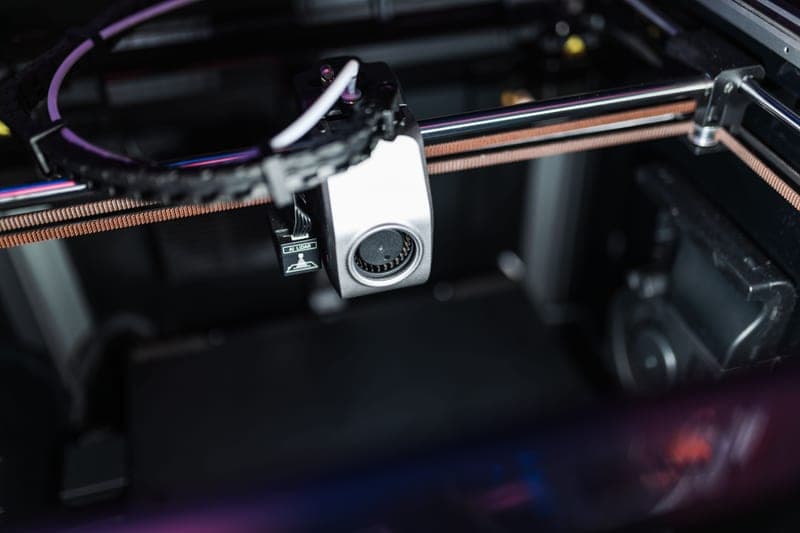
Stock photograph of this product class, not of this specific unit.
#ad We earn a commission · live price shown on Amazon
2. Best unit for difficult materials
Bambu Lab AMS HT
A single-spool unit built around materials that need more care, with active high-temperature drying.
If TPU is a material you print regularly rather than occasionally, a single-spool unit designed around harder-to-handle materials is a more honest fit than forcing it through a four-spool path.
Verify material support for your exact filament and printer before buying — this is a specialized unit and the compatibility details matter more than usual.
What it gets right
- Dries at a higher temperature than the AMS 2 Pro, which is what nylon and PC actually need
- Prints directly from the dryer, so there is no window where a dried spool sits absorbing moisture again
- Single spool is the right shape for engineering filament, which you rarely want four of
What it does not
- One spool. If multi-color is the goal, this is the wrong unit entirely
- Costs real money for a capability a standalone high-temp dryer also delivers
- Only worth it if you print materials that genuinely need the extra heat
| Type | Single-spool material system |
|---|---|
| Headline feature | High-temperature active drying |
Questions people actually ask
Can the Bambu AMS handle TPU?
Not reliably through the standard four-spool path. Soft filament compresses and buckles when pushed along a long guided route with bends, and the usual symptom is a failed load or a jam. Most owners feed TPU directly into the extruder instead, which works fine.
Why does my TPU keep jamming?
If it jams at a bend or fails to load, it is buckling in the path - feed it direct. If extrusion thins out progressively through a print, the extruder gears are slipping on the soft filament and may be worn. If the filament snaps when you bend it, it is wet and needs drying.
What is the Bambu Lab TPU assist module for?
Filament-path assistance for flexible material is the general category, and compatibility is specific to printer and unit. Before buying anything in this category, check the stated material support and fitment for your exact machine, because this is where wrong purchases happen.
Does TPU need a hardened nozzle?
No. Plain TPU is not abrasive, so a stainless nozzle handles it indefinitely. Filled TPU variants are a different matter - anything with carbon fiber or glass in it needs hardened steel regardless of the base polymer.
Which build plate is best for TPU?
A smooth one, generally. TPU can grip textured PEI hard enough to tear the plate surface when you remove the part, which damages a consumable you would rather keep. A smooth plate releases flexible parts more kindly.
Sources
Read this next
- AMS not loading filamentThe four real causes of an AMS feed failure in diagnostic order, three of which cost nothing and take minutes.
- Bambu Lab AMS HTWhat high-temperature active drying is for, why single-spool is the right shape for engineering filament, and when a dryer beats it.
- Textured PEI vs smooth PEITextured for grip and forgiveness, smooth for a glossy bottom face. Which to use per print, and the dual-texture middle ground.
- How to tell if your filament is wetThe three near-conclusive signs of wet filament, the ambiguous ones, and the free test that settles it in one print.
- Which filaments your Bambu Lab can actually printA per-machine compatibility table, the three things that actually gate material choice, and which of them you can buy your way past.