Filament Drying
Drying filament in an AMS
Two of the four AMS units dry. The other two monitor or do nothing at all, and knowing which you own saves a wasted purchase.
By Michael W. · Published October 5, 2026
Some links here are Amazon affiliate links, so a purchase may earn this site a commission at no cost to you. It does not change what gets recommended or the order it appears in — how that works.
Which AMS units dry, and which do not
| Unit | Drying | Fits |
|---|---|---|
| AMS 2 Pro | Active drying | Enclosed P-series and X-series |
| AMS HT | Active, high temperature | Check fitment for your model |
| AMS (original) | None — humidity monitoring only | Enclosed P-series and X-series |
| AMS Lite | None — open air | A1 and A1 mini only |
If you own the original AMS, it tells you the filament is damp and does nothing about it. If you own an AMS Lite, the spools are in room air. Both cases need a separate dryer.
Why drying in the unit beats drying beside it
A standalone dryer removes moisture, and then the spool comes out and sits in room air for the whole print. For PLA over four hours that is irrelevant. For nylon over twenty hours it can undo the entire drying cycle, so the print finishes with wetter filament than it started.
Drying inside the unit you feed from closes that window. It is the single most useful property a drying system can have with hygroscopic materials, and it is the reason an AMS 2 Pro is often the better buy than a dryer for a P-series owner. The reabsorption gap in detail.
What drying in an AMS will not do
Reach nylon and polycarbonate temperatures
Standard active drying is in the same class as a 70 C standalone unit: fine for PLA, PETG and TPU, not enough for nylon, PC or PA-CF. For those you want the high-temperature single-spool unit or a dedicated high-temperature dryer. That comparison.
Fix a spool that has been damp for months
Filament that has absorbed enough water to become brittle has undergone a chemical change through hydrolysis, not just picked up surface moisture. Drying restores printability to a degree and does not restore the polymer. Severely degraded filament produces weak parts even after drying.
Help if you leave spools loaded and unused
A sealed unit is good storage, not perfect storage, and drying runs when you ask it to. A spool that has sat loaded and unused for months should be dried before a critical print rather than assumed to be fine because it was in the box.
Practical notes for each unit
AMS 2 Pro: run a drying cycle when you load a spool that has been off the machine, not only when something goes wrong. It is the difference between the unit maintaining a condition and rescuing one.
AMS HT: single spool, so plan around it — it is the unit for the one engineering material in your workflow, running alongside a four-spool unit for colors.
Original AMS: the sealed enclosure genuinely keeps filament drier than open air, so it is not doing nothing. It just cannot recover a wet spool. Pair it with a standalone dryer.
AMS Lite: open air, so treat spools as exposed. Dry before printing anything hygroscopic and store spools sealed between projects rather than leaving four loaded on top of the printer. AMS Lite in detail.
Where to go next
The AMS 2 Pro in full, AMS HT versus a dryer, and how to confirm moisture is the problem before you buy any of it.
What to buy
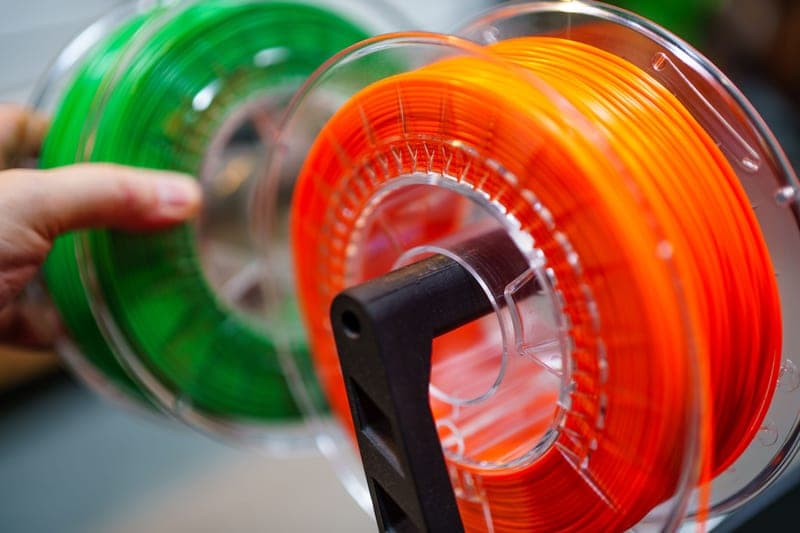
Stock photograph of this product class, not of this specific unit.
#ad We earn a commission · live price shown on Amazon
1. The one that dries four spools
Bambu Lab AMS 2 Pro
Active drying plus four colors, feeding the printer without the filament leaving the box.
Four spools, sealed, with active drying, humidity monitoring and RFID logging. This is the unit that makes drying-in-the-AMS a real feature rather than a marketing phrase.
What it does that no standalone dryer can: the spool you dried is the spool feeding the printer, so there is no window where it sits reabsorbing moisture during a long job.
What it gets right
- Active drying means the spool you print from is the spool you dried — no transfer step, no re-absorption window
- Four colors on a machine you already own, for a fraction of a new printer
- RFID logging removes the single most common cause of a ruined multi-color print: the wrong material profile
What it does not
- Four-color printing wastes filament on every tool change; the purge tower is real and it is not small
- If you only print single-color PLA, you are buying a dryer with a filament changer attached
- Needs the space beside or above the printer that your shelf may not have
| Type | Four-spool automatic material system |
|---|---|
| Headline feature | Active filament drying |
| Inherits | Humidity monitoring and RFID logging from the original AMS |
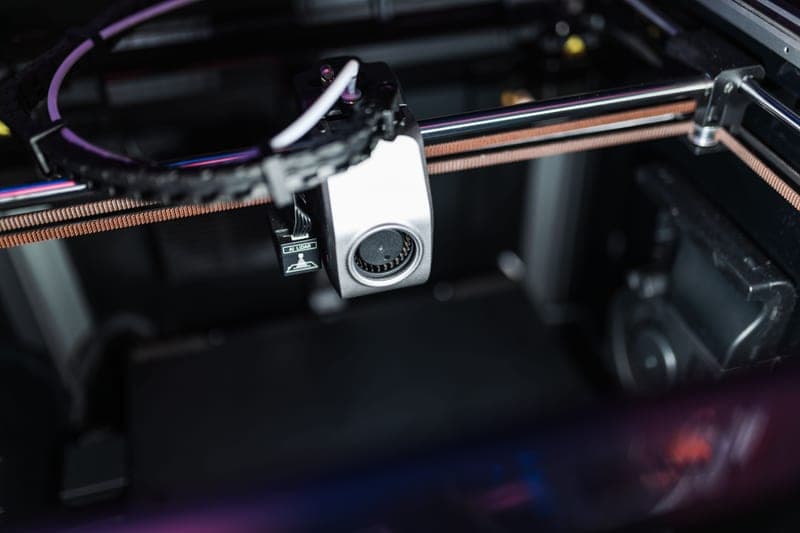
Stock photograph of this product class, not of this specific unit.
#ad We earn a commission · live price shown on Amazon
2. The one that dries hot
Bambu Lab AMS HT
Single spool, high-temperature active drying, which is what nylon and PC actually need.
High-temperature active drying in a single-spool unit. That combination is right for nylon, polycarbonate and carbon-filled nylon — materials that need more heat than standard active drying provides and which you rarely want four of.
Verify fitment and stated material support for your exact printer before buying; this is a specialized unit.
What it gets right
- Dries at a higher temperature than the AMS 2 Pro, which is what nylon and PC actually need
- Prints directly from the dryer, so there is no window where a dried spool sits absorbing moisture again
- Single spool is the right shape for engineering filament, which you rarely want four of
What it does not
- One spool. If multi-color is the goal, this is the wrong unit entirely
- Costs real money for a capability a standalone high-temp dryer also delivers
- Only worth it if you print materials that genuinely need the extra heat
| Type | Single-spool material system |
|---|---|
| Headline feature | High-temperature active drying |
Stock photograph of this product class, not of this specific unit.
#ad We earn a commission · live price shown on Amazon
3. The add-on for AMS owners
EIBOS Tetras
Active drying designed around the AMS you already own, rather than replacing it.
Cited as best for Bambu Lab AMS owners, with active drying that reuses the AMS you own. If drying was the only reason you were looking at upgrading to a 2 Pro, price this first.
The trade is more components in the filament path, which is more places a feed problem can start.
What it gets right
- Built around the fact that you already own an AMS, rather than asking you to replace it
- Active drying while the AMS feeds the printer closes the gap between drying and printing
- Cheaper than an AMS 2 Pro upgrade if drying is the only reason you were considering one
What it does not
- Its whole value proposition depends on you owning a compatible AMS — verify fitment for your exact unit
- If you do not have an AMS, a plain four-spool dryer is simpler and cheaper
- More parts in the filament path is more places for a feed problem to start
| Positioning (cited) | Best for Bambu Lab AMS owners |
|---|---|
| Approach (cited) | Active drying that reuses the AMS you own |
Questions people actually ask
Can the AMS dry filament?
The AMS 2 Pro and AMS HT dry actively. The original AMS has humidity monitoring without drying, and the AMS Lite is open-air with neither. If you own one of the latter two, you need a separate dryer.
How do I dry filament in an AMS 2 Pro?
Run a drying cycle from the printer's controls when you load a spool that has been off the machine, rather than only when something goes wrong. Because the unit feeds the printer from inside the sealed box, the spool you dried is the spool you print from - which is the main advantage over a standalone dryer.
Can I dry nylon in an AMS 2 Pro?
Not properly. Standard active drying is in the same class as a 70 C standalone unit, which covers PLA, PETG and TPU but is not hot enough for nylon, polycarbonate or PA-CF. Those need the high-temperature AMS HT or a dedicated high-temperature dryer.
Does the AMS Lite keep filament dry?
No. It is an open-air unit with no enclosure and no heater, so spools sit in room air at ambient humidity. Dry hygroscopic filament before printing and store spools sealed between projects rather than leaving four loaded on the printer.
Will drying fix filament that has gone brittle?
Partly. Filament brittle enough to snap has usually undergone hydrolysis, which is a chemical change rather than surface moisture - drying restores printability to a degree but not the original polymer, so parts may still be weaker than they should be.
Sources
Read this next
- Bambu Lab AMS 2 ProWhy active drying makes the AMS 2 Pro a different product from the original AMS, and the case for buying it instead of a new printer.
- AMS HT vs a filament dryerThe reabsorption gap explained, and whether it justifies an AMS HT over a standalone high-temperature dryer for your print mix.
- Printing while dryingWhat the reabsorption gap costs per material, which units let you print from them, and when closing the gap is worth paying for.
- The best filament dryers in 2026Dryer picks split by temperature range and capacity, because a 70 C unit and a 110 C unit are different products for different materials.
- Bambu Lab AMS LiteWhat the AMS Lite does well on an A1 or A1 mini, the moisture gap it leaves open, and the two things to buy alongside it.