Nozzles & Plates
Hardened steel vs stainless steel nozzles
One number decides this, and it is not a nozzle spec - it is whether your filament contains anything harder than the nozzle.
By Michael W. · Published October 5, 2026
Some links here are Amazon affiliate links, so a purchase may earn this site a commission at no cost to you. It does not change what gets recommended or the order it appears in — how that works.
The verdict
Does your filament contain filler? Carbon fiber, glass fiber, metal, wood, glow pigment, glitter, mineral. If yes, hardened steel. If no, stainless is correct and will last years.
That is the entire decision. Nozzle material is determined by what passes through it, not by how much you want to spend or how serious you are.
Carbide (HRA 90) is a third option that only makes sense when filled filament is your default material and nozzle replacement is a recurring cost.
The hardness numbers, and what they mean
| Material | Cited hardness | Best for | Weakness |
|---|---|---|---|
| Stainless steel | Softest of the three | PLA, PETG, ABS, ASA, unfilled TPU | Destroyed quickly by abrasive filler |
| Hardened steel | HRA 74 | All filled and abrasive filament | Slightly lower thermal conductivity than stainless |
| Tungsten carbide | HRA 90 | Constant abrasive load, print farms | Harder means more brittle — a crash chips it |
The scale is Rockwell A, and the figures above are the ones cited in our sources rather than measured here. What matters practically is the ordering and the size of the gap: carbide's advantage over hardened steel is substantial, and hardened steel's advantage over stainless on abrasive filament is the difference between working and not.
Why brass does not appear on this page
Because the stock Bambu nozzle is stainless, and brass is largely a legacy of other printer ecosystems. If you have read brass-versus-hardened advice elsewhere, the principle transfers — softer metal, destroyed faster by filler — but the specific comparison does not apply to these machines.
What hardened steel costs you
Slightly lower thermal conductivity. The nozzle transfers heat to the filament marginally less efficiently. At normal speeds this is invisible. At the extreme high-flow end it can show as slight under-extrusion, and a few degrees more nozzle temperature resolves it.
A little more money. Modest, and irrelevant against the cost of replacing a stainless nozzle after one spool of PLA-CF.
Nothing else. It is not worse at PLA, not less precise, and not harder to fit — the Bambu part comes as a complete hotend assembly either way.
What carbide costs you
Brittleness. This is the real trade. Harder materials chip rather than deform, so a nozzle crash into a lifted print or a stray blob is a more expensive failure than it would be with steel.
Price, for a benefit most people do not use. The hardness advantage shows up as a longer replacement interval under constant abrasive load. If you print filled filament occasionally, you will not reach the interval where it pays back. H2D vs H2D Pro is where that calculation lives.
The practical setup most people end up with
One hardened hotend as the permanent fit. That covers every material, including the non-abrasive ones, at the cost of a negligible thermal penalty. It is simpler than swapping based on material and it means you can never accidentally run PLA-CF through a stainless nozzle — which is the mistake this whole page exists to prevent.
If you do want to swap, a quick-change hotend makes that practical. Without one, the friction means it will not happen.
The two machines, side by side
Stock photograph of this product class, not of this specific unit.
#ad We earn a commission · live price shown on Amazon
1. Buy this if you print anything filled
Bambu Lab Hotend with Hardened Steel Nozzle, 0.4 mm
HRA 74 hardened steel, supplied as a complete assembly, in the diameter you already use.
Hardened steel is the standard answer for abrasive filament and it is cited at HRA 74. For anyone running carbon fiber, glass fiber, metal-filled, wood-filled or glow-in-the-dark filament, this is where the decision ends.
The slight thermal-conductivity penalty against stainless is real and almost never matters, except at the extreme high-flow end where a few degrees more nozzle temperature compensates.
What it gets right
- Abrasive filament rounds a stainless nozzle fast — with the worst materials, a single print can do it
- Comes as a complete assembly, so the swap is a module change rather than a nozzle extraction
- 0.4 mm keeps your existing print profiles valid
What it does not
- Hardened steel conducts heat slightly worse than stainless, so very high-flow PLA needs a small temperature bump
- Pointless if you only ever print plain PLA and PETG — stainless lasts for years on those
- P1P and P1S only; the A-series and H-series need their own part
| Nozzle | Hardened steel, 0.4 mm |
|---|---|
| Fits | P1P and P1S (model FAH001-N-1) |
| Hardness reference | Hardened steel is cited at HRA 74 |
| Supplied as | Complete hotend assembly |
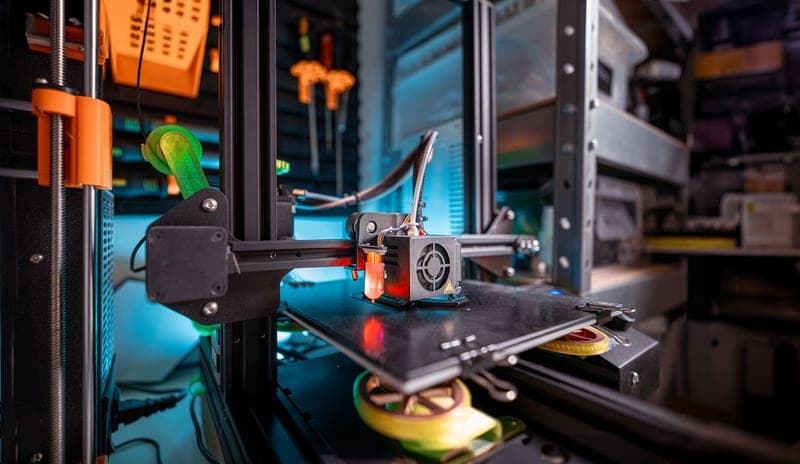
Stock photograph of this product class, not of this specific unit.
#ad We earn a commission · live price shown on Amazon
2. Where carbide actually belongs
Bambu Lab H2D Pro
Tungsten carbide at HRA 90, which changes maintenance intervals rather than print quality.
Tungsten carbide is cited at HRA 90, against hardened steel's HRA 74. The H2D Pro ships with one, and that is the context in which carbide makes sense: a machine running filled filament as its default material, where nozzle replacement has become a recurring running cost.
Listed here to answer the question rather than to recommend the purchase. For almost everyone, hardened steel is the correct and much cheaper answer.
What it gets right
- A tungsten carbide nozzle at HRA 90 against hardened steel's HRA 74 changes abrasive-filament maintenance intervals outright
- Enterprise networking matters the moment you are running more than two machines
- Same reported print hardware as the H2D, so nothing is traded away for the Pro badge
What it does not
- For a single hobby machine the Pro premium buys features you will never configure
- Carbide nozzles are harder but more brittle than steel — a crash is more expensive
- Overkill unless abrasive filament is most of what you print
| Released | August 11, 2025 |
|---|---|
| Positioning | Enterprise |
| Nozzle | Tungsten carbide (HRA 90, against HRA 74 for hardened steel) |
| Print hardware | Reported same as H2D, plus enterprise networking |
Questions people actually ask
Hardened steel or stainless steel nozzle?
Hardened steel if your filament contains filler - carbon fiber, glass fiber, metal, wood, glow pigment, glitter or mineral. Stainless if it does not, in which case it will last years. The filament decides, not how much you want to spend.
How much harder is hardened steel than stainless?
Hardened steel is cited at HRA 74, and tungsten carbide at HRA 90 for comparison. We do not publish a wear-life multiplier against stainless, because measuring that needs a controlled test this site has not run. The practical point is that abrasive filler visibly damages stainless and does not visibly damage hardened steel on the same timescale.
Does a hardened nozzle print worse than stainless?
Marginally differently rather than worse. Hardened steel conducts heat slightly less well, so very high-flow printing may want a few degrees more nozzle temperature. At normal speeds the difference is invisible.
Should I just fit a hardened nozzle permanently?
That is what most people sensibly do. It covers every material including the non-abrasive ones, at the cost of a negligible thermal penalty, and it removes the risk of accidentally running filled filament through a stainless nozzle - which is the expensive mistake.
Is a tungsten carbide nozzle worth it?
Only if filled filament is your default material and nozzle replacement has become a recurring cost, which in practice means a print farm. Carbide is cited at HRA 90 against hardened steel's HRA 74, and the trade is brittleness - a nozzle crash chips carbide where it would deform steel.
Sources
- Bambu Lab hardened steel nozzle and hotend upgrade for the P1S - Bambu Lab wiki
- Hardened steel (HRA 74) and tungsten carbide (HRA 90) hardness figures - third-party lineup roundups captured October 2026
Read this next
- The Bambu Lab hardened steel nozzleWhat hardened steel at HRA 74 is for, which filaments require it, and why the complete-assembly format matters for fitting it.
- Do I need a hardened nozzle for this filament?The one rule that answers this for every filament, plus a per-material table covering PETG, ABS, CF, silk, wood, marble and glow.
- How long a nozzle lasts, and how to tell when it is doneThe difference between a worn nozzle and a clogged one, what actually wears a nozzle, and when to replace rather than clean.
- Bambu Lab H2D vs H2D ProThe Pro's tungsten carbide nozzle at HRA 90 and enterprise networking are a running-cost argument. For one hobby machine, buy the H2D.
- The best nozzles and hotends for a Bambu LabHardened steel, quick-change or a second diameter - which nozzle upgrade matches your filament and your machine, with who each is wrong for.