Printers
The best Bambu Lab printer for home use
A printer that lives in a bedroom, a lounge or a shared office is judged on noise, fumes and footprint. Those are different criteria from the ones a workshop uses.
By Michael W. · Published October 6, 2026
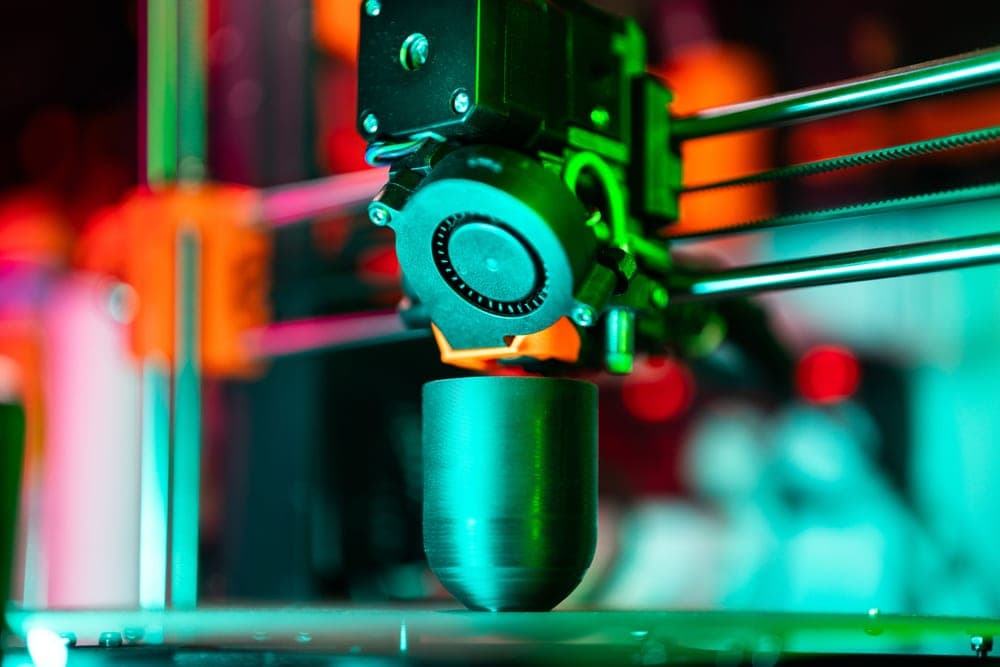
Some links here are Amazon affiliate links, so a purchase may earn this site a commission at no cost to you. It does not change what gets recommended or the order it appears in — how that works.
Quick picks
Tap any row to jump to the full write-up. Prices and stock live on Amazon, never here.
| # | Product | Best for | Price |
|---|---|---|---|
| 1 | 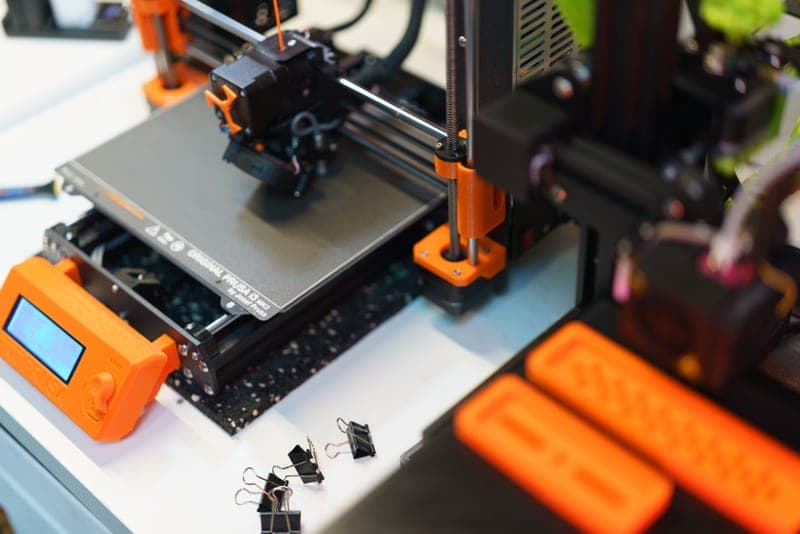 Bambu Lab A1 Open frame, four colors with AMS Lite, and the fewest reasons to annoy anyone else in the house. | Best for home use overall The owner who wants a bigger bed and four colors without paying for an enclosure they would not use | Check price on Amazon #ad We earn a commission · live price shown on Amazon |
| 2 | 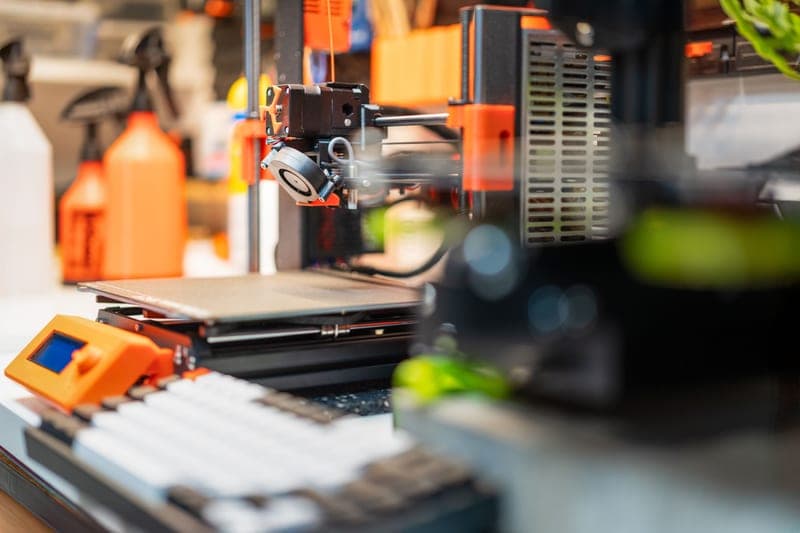 Bambu Lab P2S An enclosure and a filter contain most of what makes a printer unwelcome indoors, plus a screen you can reach. | Best enclosed machine for a house The P1S owner whose actual complaint is the nozzle swap and the missing screen | Check price on Amazon #ad We earn a commission · live price shown on Amazon |
| 3 | Bambu Lab A1 mini The smallest footprint in the lineup and the machine I would put in a room someone sleeps in. | Best for a bedroom or shared desk The smallest footprint in the lineup, and the one you keep as a second machine rather than replace | Check price on Amazon #ad We earn a commission · live price shown on Amazon |
| 4 | Bambu Lab P1S The enclosed machine most people in this hobby own, and still the sensible one to buy if the P2S premium is not worth two features to you. | Best value enclosed machine The machine most people reading this site already own, and the one most of them should keep | Check price on Amazon #ad We earn a commission · live price shown on Amazon |
The short answer
For a printer that lives in a house, the Bambu Lab A1 is the best pick: open frame so there is no chamber fan running for hours, excellent at the PLA and PETG that do not smell, and AMS Lite support for four colors. If the desk is the constraint, the A1 mini is the same proposition smaller.
If you want ABS or ASA indoors, you need the enclosure and the filter, which means the P2S — or the P1S if a touchscreen and a quick-swap nozzle are not worth a premium to you. Open-frame machines cannot do those materials well, and that is a physics limit rather than a tuning problem.
The three things that decide this, and speed is not one of them
Every machine in this lineup is fast enough that speed stopped being a differentiator two generations ago. What actually determines whether a printer is tolerable in a home is a different list.
1. Noise, over hours rather than in a spec
A print is not a thirty-second event. It is four hours of stepper movement, part cooling and — on an enclosed machine printing ABS — a chamber fan. Enclosed machines are quieter in a room than open ones at comparable settings because the panels absorb mid-frequency noise, but they also run more fans. We do not publish decibel figures because we have no way to measure them and nobody we fetched states them in a form we would quote. What actually reduces printer noise is the practical page.
2. What the material smells like
PLA smells faintly sweet. PETG smells of almost nothing. ABS and ASA produce a styrene smell that most households notice immediately and some people react to. This is the single biggest reason to keep ABS work on an enclosed, filtered machine, and the reason an open-frame printer in a bedroom should be a PLA and PETG printer.
3. Footprint, including the spools
The printer is not the whole footprint. An A1 with an AMS Lite takes up substantially more desk than an A1, because the spools sit in the open beside it. An enclosed machine with an AMS stacks it on top instead, which uses height rather than width. Measure for the combination you intend to end up with, not for the box.
What a home printer actually costs beyond the printer
The purchase is not the spend. Budget, in rough order of how soon you will want each one:
- Filament storage. Sealed boxes with desiccant, or a dryer. This is the item that prevents the most failed prints per dollar.
- A second build plate. A failed first layer should not stop the queue while a plate cools and gets washed. Which plates.
- A hardened nozzle, the moment anything carbon-filled, glow-in-the-dark or glitter-loaded enters the house. Abrasive filament rounds a stainless nozzle fast.
- Four colors, if you want them — AMS Lite on the A-series, AMS or AMS 2 Pro on the enclosed machines. The AMS section covers which.
Models and what they are, by release date
| Model | Released | Type |
|---|---|---|
| A1 mini | September 2023 | Open-frame bed slinger, smallest footprint |
| A1 | December 2023 | Open-frame bed slinger, two-tower gantry |
| P1S | July 2023 | Enclosed CoreXY, auxiliary fan and filter |
| P2S | October 2025 | Enclosed CoreXY, touchscreen, quick-swap nozzle |
| X1C | May 2022 | Enclosed CoreXY, lidar bed leveling, hardened nozzle |
What I have and have not run
I own and use Bambu hardware, and the judgments here about the A-series and P-series come from that ownership. I have not run a P2S; what is written about it is published specification and reasoning, labeled as such. There is no test lab behind this site and no measurement rig — in particular, no noise figure anywhere on this site is ours. How this works in full.
Every pick in full
Stock photograph of this product class, not of this specific unit.
#ad We earn a commission · live price shown on Amazon
1. Best for home use overall
Bambu Lab A1
Open frame, four colors with AMS Lite, and the fewest reasons to annoy anyone else in the house.
For a printer that shares a room with people, the A1 is the machine I would put there. Open-frame bed slingers are simpler, and the two-tower gantry on the A1 is more rigid than the single-upright designs it is usually grouped with. It takes an AMS Lite, so four-color printing is an add-on rather than a different purchase.
The reason it suits a house is what it does not do. It does not need a filtered enclosure because the materials it is good at — PLA and PETG — do not produce the styrene smell that makes ABS a garage material. There is no chamber to heat, so there is less fan noise sustained over a long print.
Its ceiling is exactly that same openness. The day you want ABS or ASA, you are adding an enclosure or changing machine. Know that going in and the A1 is the right first printer to live indoors.
What it gets right
- Larger build area than the A1 mini for very little extra money or desk space
- The two-tower gantry is noticeably more rigid than a single-upright bed slinger
- AMS Lite in the combo makes four-color PLA and PETG genuinely practical
What it does not
- Still open-frame — this is the single thing that will eventually make you upgrade
- Bed slinger kinematics mean it will never match a CoreXY machine on tall, fast prints
- No active chamber heating, so ABS and ASA warp without an aftermarket enclosure
| Released | December 14, 2023 |
|---|---|
| Type | Open-frame bed slinger, two-tower gantry |
| Multi-color | AMS Lite (4 spools, open air) |
Stock photograph of this product class, not of this specific unit.
#ad We earn a commission · live price shown on Amazon
2. Best enclosed machine for a house
Bambu Lab P2S
An enclosure and a filter contain most of what makes a printer unwelcome indoors, plus a screen you can reach.
If the printer has to live indoors and you still want ABS or ASA on the menu, the enclosed machine is not optional. The P2S is the current enclosed CoreXY, the P1S successor, and it adds the two things a P1S owner tends to miss: a touchscreen on the machine and a quick-swap nozzle.
For home use specifically, the enclosure is doing three jobs at once. It holds chamber heat so parts do not warp, it contains most of the smell with the filter, and it muffles the machine — an enclosed printer is noticeably quieter in a room than an open one at the same speeds.
Reported build volume is a 256 mm cube, the same class as a P1S, so this is not a bigger-prints purchase. If you already own a P1S and your only complaints are the screen and the nozzle swap, read P1S vs P2S before spending — a third-party screen delivers one of them for a fraction.
What it gets right
- Quick-swap nozzle turns a 0.4-to-0.6 change from a maintenance task into a between-prints decision
- A real touchscreen on the machine, so you are not opening an app to start a print
- Same footprint and roughly the same build area as the P1S, so your enclosure and shelf still work
What it does not
- If you have never once wished your P1S had a screen, this is not the upgrade you need
- Reported build volume is a 256 mm cube — the same class as the P1S, so it buys you nothing in size
- Your P1S-specific third-party parts may not carry over; check fitment per part, not per brand
| Released | October 9, 2025 |
|---|---|
| Type | Enclosed CoreXY, P1S successor |
| Over the P1S | Touchscreen and quick-swap nozzle |
| Build volume (reported) | 256 mm cube |
Stock photograph of this product class, not of this specific unit.
#ad We earn a commission · live price shown on Amazon
3. Best for a bedroom or shared desk
Bambu Lab A1 mini
The smallest footprint in the lineup and the machine I would put in a room someone sleeps in.
The A1 mini is the answer when the constraint is the desk rather than the budget. It is the smallest machine in the range, it is intended for small objects, and it is the one I would be happiest having on a desk in a bedroom or a shared office.
It also takes an AMS Lite, so the multi-color capability is not reserved for the bigger machines. For keychains, organizers, miniature bases, tabletop terrain and the general run of small printed-thing projects, nothing in the lineup is a better fit per square centimeter of desk.
The limit is literal. Small bed, small parts. If you find yourself splitting prints in the first month, the full-size A1 is the machine you wanted, and the gap in price between them is smaller than the gap in capability. A1 vs A1 mini.
What it gets right
- The quietest machine in the lineup by a wide margin, because there is no enclosure resonating
- AMS Lite support means four-color printing on the cheapest printer Bambu sells
- Small enough to sit on a desk you also work at
What it does not
- Open frame, so ABS and ASA are off the table without an aftermarket enclosure
- The smallest build area in the range — large single-piece prints need splitting
- No enclosure means no chamber temperature, so warping on anything but PLA and PETG
| Released | September 20, 2023 |
|---|---|
| Type | Open-frame bed slinger |
| Intended use | Printing small objects |
| Multi-color | AMS Lite (4 spools, open air) |
Stock photograph of this product class, not of this specific unit.
#ad We earn a commission · live price shown on Amazon
4. Best value enclosed machine
Bambu Lab P1S
The enclosed machine most people in this hobby own, and still the sensible one to buy if the P2S premium is not worth two features to you.
The P1S is the machine most readers of this site already own, and that is not an accident: enclosed CoreXY, auxiliary cooling and an air filter at a price that made it the default. For home use it does the enclosure job — heat, smell, noise — as well as its successor does.
What you give up against the P2S is a touchscreen and a quick-swap nozzle. Neither changes a printed part. If you have never stood in front of a printer wishing for a screen, that is a saving rather than a compromise.
The honest caveat is that it is the older machine in an actively moving lineup, so compare current listings carefully — a P2S at a small premium is a better buy than a P1S at a small discount. Either way, add a hardened nozzle before your first abrasive spool.
What it gets right
- The enclosure plus auxiliary fan is what makes ABS and ASA realistic rather than aspirational
- Still the best-supported machine in the range for third-party upgrades — screens, hotends, plates, ducts
- Fast enough that the P2S's speed gain is not the reason to replace it
What it does not
- No touchscreen as shipped, which is why the Panda Touch exists
- No quick-swap nozzle: a nozzle change is a hotend job, not a 30-second one
- Passive chamber only — it holds heat, it does not make heat
| Released | July 13, 2023 |
|---|---|
| Type | Enclosed CoreXY |
| Over the P1P | Enclosure, auxiliary cooling fan and air filter |
| Multi-color | AMS and AMS 2 Pro (4 spools, expandable) |
Questions people actually ask
What is the best Bambu Lab printer for home use?
The A1. It is open-frame so there is no chamber fan running for hours, it is good at exactly the materials that do not smell (PLA and PETG), and it takes an AMS Lite for four-color work. If desk space is the constraint, the A1 mini is the same proposition in the smallest footprint in the lineup.
Can you keep a 3D printer in a bedroom?
Yes, with two conditions: use an open-frame machine and print PLA or PETG only. ABS and ASA produce a styrene smell most households notice immediately, so that work belongs on an enclosed, filtered machine. Also keep filament in sealed boxes rather than loose, because a bedroom is usually more humid than a workshop.
Is an enclosed printer quieter than an open one?
In a room, generally yes - the panels absorb mid-frequency noise from the motion system. The trade is that enclosed machines run more fans, including a chamber fan on hot materials. We do not publish decibel figures for any machine because we have no way to measure them and will not estimate one.
Do I need an enclosure for a Bambu Lab A1 at home?
Not for PLA and PETG, which is what an open-frame machine is best at. You need one if you want ABS or ASA, because those warp without a warm chamber. An aftermarket fabric enclosure narrows that gap and also cuts dust and noise, but it does not fully close it compared with a purpose-built enclosed machine.
How much should I budget beyond the printer?
Plan for filament storage first (sealed boxes with desiccant, or a dryer) because that prevents the most failed prints per dollar. Then a second build plate so a failed first layer does not stop the queue, then a hardened nozzle before the first abrasive spool, then multi-color hardware if you want it.
Sources
- Bambu Lab model list, release dates and model descriptions - Wikipedia
- Reported build volumes and chamber temperatures - third-party lineup roundups captured October 2026 (3dprinting.com, precwise.com, innoaddi.com)
Read this next
- The best Bambu Lab printer to step up to in 2026One pick per upgrade situation, from the P1S owner who should keep their machine to the owner who genuinely needs the H2 build volume.
- Bambu Lab A1 vs A1 miniWhat the A1's larger bed and two-tower gantry buy over the A1 mini, and why neither machine solves the limit that actually matters.
- Bambu Lab P1S vs P2SThe P2S adds a touchscreen and a quick-swap nozzle and no build volume. When that is worth a new machine and when a far cheaper part does the same job.
- Making a Bambu Lab printer quieterNoise reduction in order of effectiveness: the surface first, damping second, enclosure third - and why the usual order is backwards.
- Enclosures for the A1 and A1 miniFabric, purpose-built and DIY enclosure options for an A1, what each realistically delivers, and the measurement people get wrong.
- Is a filament dryer worth it?Who a dryer genuinely pays for, who should buy sealed storage instead, and the free test that settles it before you spend.