Upgrades
Printed vs bought upgrades
One rule covers nearly every case: organizational parts print, structural and heat-exposed parts get bought. The failure mode is slow enough that nobody connects it.
By Michael W. · Published October 5, 2026
Some links here are Amazon affiliate links, so a purchase may earn this site a commission at no cost to you. It does not change what gets recommended or the order it appears in — how that works.
The rule
Print it if the part is organizational: it holds, guides, mounts, stores or tidies, and nothing depends on it keeping its exact shape under heat or load.
Buy it if the part is structural or heat-exposed: it carries load, sits near the hotend, lives inside a warm chamber, or needs a material property FDM cannot deliver.
The trap: PLA inside a warm chamber sags. Slowly — over weeks — which is exactly why nobody connects the failure to the material choice.
Print these
| Part | Material | Note |
|---|---|---|
| Spool holders and risers (light) | PETG | PLA is fine outside a warm chamber; PETG is safer |
| Tool racks and hex-key holders | PLA | Nowhere near heat |
| Cable guides and clips | PETG | Some sit close to warm areas |
| Filament guides | PETG | Low load, mild heat exposure |
| Scraper and tool holders | PLA | Pure organization |
| Chamber thermometer mounts | PETG or ABS | Inside the chamber by definition |
| Drawer and bin organizers | PLA | Off the machine entirely |
| Camera mounts (external) | PETG | Light load, outside the chamber |
Everything in that table is free, useful and genuinely among the best upgrades for the machine. A printer that prints its own organization is the hobby working as intended.
Buy these
| Part | Why not printed |
|---|---|
| Cooling ducts | Sits beside a 250 C hotend in a warm chamber. PLA deforms and airflow changes. |
| Hotend components | Thermal and mechanical requirements no FDM part meets. |
| Extruder gears | Hardened, coated steel. Not a printable item. |
| Build plates | Needs a magnetic steel base and a PEI coating. |
| Door and window panels | Needs transparency and heat tolerance together. |
| Heavy spool racks | Structural load plus a warm room equals creep in any printed material. |
| Anything electrical | Not a category to improvise in. |
| Enclosure frames | Structural, and flame retardancy matters around an unattended machine. |
Why PLA creeps, and why it is insidious
PLA softens at a low temperature relative to other common filaments. Inside a warm chamber it does not melt or fail visibly — it slowly deforms under load. A bracket holding a panel sags a millimeter over a month, then another.
The reason this catches people is the timescale. A part that failed immediately would be obviously wrong. A part that quietly changes shape over weeks produces a printer that gradually works less well, and the printed part is the last thing anyone suspects.
PETG is the minimum for anything in or near the chamber, and ABS or ASA is better if you can print them. Printing ABS.
The borderline cases, judged
Spool holders
Print for one or two spools outside the chamber. Buy if it is a frame carrying four loaded spools and an AMS, because that is structural.
Camera mounts
Print if external and holding something light. Buy if it mounts inside the chamber.
Enclosure brackets
Print in PETG or better and accept that they are load-bearing in a warm space. This is the most common place DIY enclosures fail slowly. DIY enclosures.
Riser feet and damping mounts
Print the cups, buy the damping. A printed cup holding a squash ball or a sorbothane pad is a legitimate and well-known approach. Noise reduction.
Where to go next
Upgrades worth buying, P1S mods and A1 mods for per-machine lists that mark which is which.
The two machines, side by side
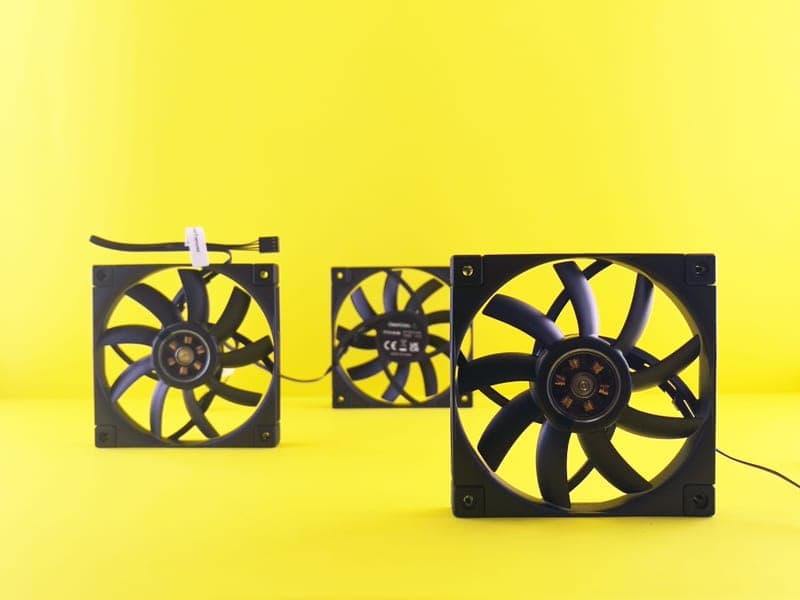
Stock photograph of this product class, not of this specific unit.
#ad We earn a commission · live price shown on Amazon
1. Buy this one, do not print it
BIQU Panda Jet Cooling Fan Duct
MJF nylon, because a printed PLA duct beside the hotend sags.
The clearest example of the rule. Printed cooling ducts are everywhere online, and the ones printed in PLA deform slowly next to a 250 C hotend inside a warm chamber. The deformation changes airflow, which is the opposite of the intended effect.
MJF nylon construction solves exactly that. Fits the Bambu X1/P1 hotends and the Panda Revo series.
What it gets right
- Directing air all the way around the nozzle is a real geometry fix for curling overhangs
- MJF nylon tolerates chamber heat far better than a printed PLA duct would
- Cheap, and it addresses a fault that slicer settings alone often cannot
What it does not
- More cooling on ABS and ASA causes layer splitting — this helps PLA and PETG, and can hurt the others
- Changing airflow invalidates your tuned profiles; re-test overhangs after fitting
- X1/P1 and Panda Revo fitment only
| Type | Omni-directional cooling duct |
|---|---|
| Material | MJF nylon |
| Fits | Bambu Lab X1/P1 hotends and the Panda Revo series |
| Targets | Nozzle-area airflow, bridges, overhangs |
Stock photograph of this product class, not of this specific unit.
#ad We earn a commission · live price shown on Amazon
2. Buy if you load it heavily
BIQU Panda Stack
Aluminum alloy, because four loaded spools flex a printed frame in a warm room.
A borderline case, which makes it instructive. A printed spool riser for one or two spools is fine. A frame carrying four loaded spools plus an AMS is structural, and printed PETG flexes where aluminum does not — especially in a warm room.
Aluminum alloy multi-layer rack for the A1 and A1 mini, with stated support for a dual setup.
What it gets right
- An A1 with AMS Lite takes over a desk; a vertical rack is the only real fix
- Aluminum alloy, so it does not flex under four loaded spools the way a printed frame does
- Supports a dual setup, which is where the desk problem becomes genuinely unmanageable
What it does not
- Pure organization — it will not improve a single print
- A1 and A1 mini only
- A printed riser costs you filament and an evening instead of money
| Type | Aluminum alloy multi-layer rack |
|---|---|
| Fits | Bambu Lab A1 and A1 mini |
| Supports | Dual AMS and ViViD setup |
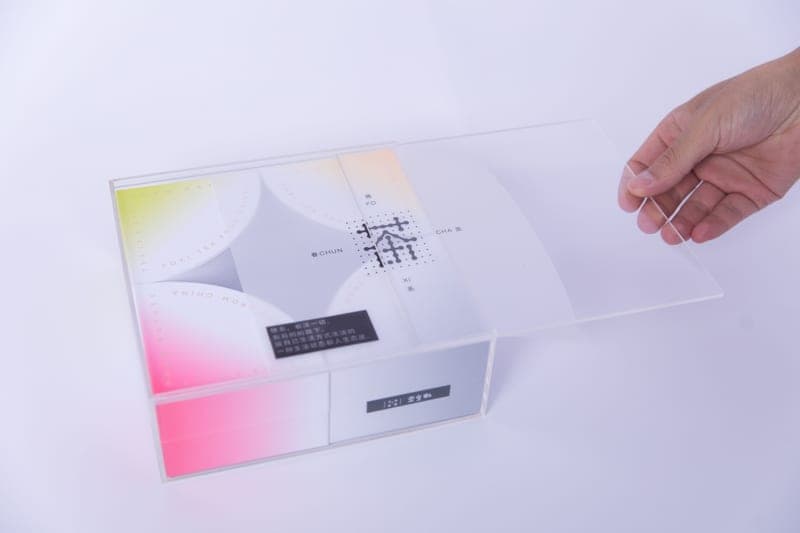
Stock photograph of this product class, not of this specific unit.
#ad We earn a commission · live price shown on Amazon
3. Cannot be printed at all
BIQU Panda Door PC Upgrade Panel
A transparent heat-tolerant panel is not something an FDM printer makes.
Included because it marks the hard boundary. Some parts are not printable in principle: this one needs to be transparent and heat-tolerant, and an FDM printer makes neither.
Polycarbonate panel for the P1 and X1 series, replacing the acrylic that hazes.
What it gets right
- Polycarbonate tolerates chamber heat better than the acrylic it replaces, which matters if you run ABS
- Fixes the one cosmetic part of a P1S that gets ruined fastest
- A genuinely cheap upgrade with a visible result
What it does not
- This is a door, not a chamber heater — it changes nothing about what you can print
- Pure quality-of-life on a machine that already works
- P1 and X1 series only
| Material | Polycarbonate |
|---|---|
| Fits | Bambu Lab P1 and X1 series |
| Stated benefit | Improved visibility and enclosure protection |
Questions people actually ask
Which Bambu Lab upgrades can I print myself?
Organizational ones: spool holders, tool racks, cable guides, filament guides, scraper holders, thermometer mounts, drawer organizers. The rule is that anything that holds, guides, mounts or tidies can be printed, and anything structural or heat-exposed should be bought.
Why should I not print cooling ducts in PLA?
Because a duct sits beside a 250 C hotend inside a warm chamber, and PLA deforms slowly under those conditions. The deformation changes airflow, which is the opposite of what you fitted it for - and it happens over weeks, which is why nobody connects the fault to the material.
What material should I print printer parts in?
PETG as the minimum for anything in or near the chamber, and ABS or ASA if you can print them. PLA is fine for parts that live away from heat - tool racks, drawer organizers, external mounts. PLA inside a warm chamber creeps under load.
Is printing upgrades actually cheaper?
In money, yes. In total cost, not always - it takes filament, print time and often an evening of iteration when the first version does not fit. For organizational parts nobody sells, it is clearly worth it. For a cheap bought part, it depends on whether you enjoy the process.
Can I print a build plate or a hotend?
No. A build plate needs a magnetic steel base with a PEI coating, and a hotend has thermal and mechanical requirements no FDM part meets. Extruder gears, electrical parts and transparent heat-tolerant panels are in the same category - not printable in principle rather than merely difficult.
Sources
Read this next
- The best Bambu Lab upgradesUpgrades ranked by the problem each one solves, with the popular ones that fix nothing clearly marked as such.
- P1S mods worth doingP1S modifications ordered by the problem each solves, with the popular ones that change nothing clearly marked.
- A1 and A1 mini mods worth doingA-series mods ordered by the problem each solves, why P-series parts do not fit, and the two problems specific to an open machine.
- Building your own enclosureHow to build a working enclosure cheaply, the ventilation rule that is not optional, and the three mistakes that make DIY worse than nothing.
- The best Bambu Lab accessoriesThe accessories that actually earn shelf space - spares, storage and the parts that prevent downtime rather than add capability.