Printers
Bambu Lab H2D Pro
Same reported print hardware as an H2D, plus enterprise networking and a nozzle that outlives hardened steel. A print-farm machine, not a hobby one.
By Michael W. · Published October 5, 2026
Some links here are Amazon affiliate links, so a purchase may earn this site a commission at no cost to you. It does not change what gets recommended or the order it appears in — how that works.
Who the H2D Pro is for
A shop or print farm where abrasive filament is the default material and more than two machines need managing. For those two conditions the Pro premium is a consumables and administration saving.
For a single hobby machine, buy the H2D and put the difference into a dryer, spare plates and spare hotends.
What HRA 90 versus HRA 74 means in practice
Hardness on the Rockwell A scale, as cited by the sources below. Hardened steel sits at HRA 74 and is the standard answer for abrasive filament. Tungsten carbide at HRA 90 is substantially harder, and the practical consequence is replacement interval: a nozzle that lasts several times longer under the same abrasive load.
Whether that matters is a volume question, not a quality one. Carbon-filled filament wears a hardened steel nozzle slowly and a stainless one fast. If you print filled material every day, carbide is a running-cost argument. If you print it occasionally, a hardened steel hotend on any machine is the correct and much cheaper answer — hardened versus stainless in detail.
The honest limits
Print quality is reported the same as an H2D. Nothing here makes a better part. It makes the same part with less maintenance overhead and better fleet management.
Carbide is harder but more brittle. A crash into a print or a collision with a stray blob is a more expensive failure than it would be with steel.
Enterprise networking needs configuring to be worth anything. If you are not going to set it up, you are paying for a feature list.
Overkill unless abrasive filament dominates. This is the summary of all of the above.
How it compares
H2D vs H2D Pro is the decision page, and printers for a print farm covers whether one Pro or three cheaper machines is the better shape for production.
What to buy
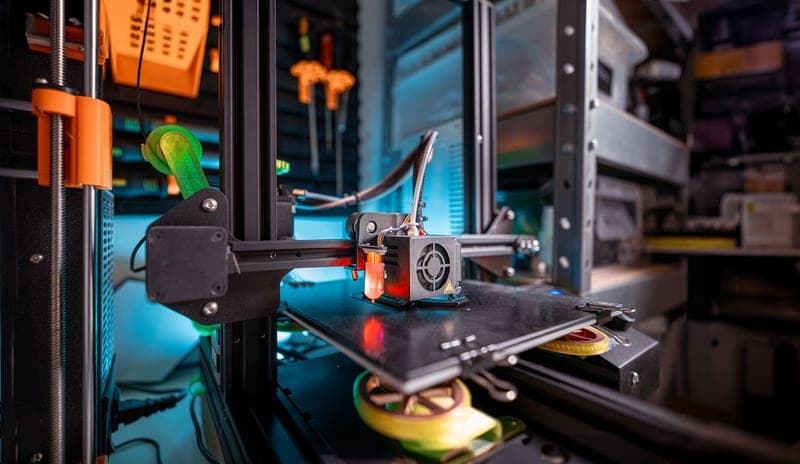
Stock photograph of this product class, not of this specific unit.
#ad We earn a commission · live price shown on Amazon
1. Best for a print farm
Bambu Lab H2D Pro
A consumables and fleet-management machine. Print quality is reported the same as an H2D.
Released August 2026 as the enterprise variant, carrying what is reported as the same print hardware as the H2D plus enterprise networking and a tungsten carbide nozzle. The nozzle is cited at HRA 90 against hardened steel's HRA 74.
That hardness gap is the real argument. If carbon-filled filament is your default material rather than an occasional job, nozzle replacement is a recurring cost and carbide changes the interval outright rather than incrementally. Enterprise networking stops being a bullet point the moment you are managing more than two machines.
For one printer in a garage it is the wrong purchase, and carbide being harder also makes it more brittle — a nozzle crash is a more expensive mistake.
What it gets right
- A tungsten carbide nozzle at HRA 90 against hardened steel's HRA 74 changes abrasive-filament maintenance intervals outright
- Enterprise networking matters the moment you are running more than two machines
- Same reported print hardware as the H2D, so nothing is traded away for the Pro badge
What it does not
- For a single hobby machine the Pro premium buys features you will never configure
- Carbide nozzles are harder but more brittle than steel — a crash is more expensive
- Overkill unless abrasive filament is most of what you print
| Released | August 11, 2025 |
|---|---|
| Positioning | Enterprise |
| Nozzle | Tungsten carbide (HRA 90, against HRA 74 for hardened steel) |
| Print hardware | Reported same as H2D, plus enterprise networking |
Questions people actually ask
Is the H2D Pro worth it over the H2D?
Only in a print farm or a shop. The Pro carries what is reported as the same print hardware plus enterprise networking and a tungsten carbide nozzle cited at HRA 90 against hardened steel's HRA 74. Those are a fleet-management and consumables argument, not a print-quality one, so a single hobby machine gains nothing from the premium.
How much longer does a tungsten carbide nozzle last?
Longer, and we do not publish a multiplier because we have not measured one - there is no test rig behind this site. What is citable is the hardness difference: HRA 90 for carbide against HRA 74 for hardened steel. Treat it as a materially longer interval under abrasive load rather than a specific number.
Do I need carbide nozzles for carbon fiber filament?
No. Hardened steel is the standard and sufficient answer for carbon-filled filament, and it is what the official Bambu hardened hotend uses. Carbide is for the case where filled filament is most of what you print and nozzle replacement has become a recurring running cost.
Is the H2D Pro's print quality better than the H2D's?
Reported as the same print hardware, so expect the same parts. What differs is enterprise networking and nozzle material. Anyone presenting the Pro as a quality upgrade is describing a badge, not a specification.
Sources
- Bambu Lab model list, release dates and model descriptions - Wikipedia
- Reported build volumes, chamber temperatures and positioning - third-party lineup roundups captured October 2026 (3dprinting.com, precwise.com, innoaddi.com)
Read this next
- Bambu Lab H2D vs H2D ProThe Pro's tungsten carbide nozzle at HRA 90 and enterprise networking are a running-cost argument. For one hobby machine, buy the H2D.
- Bambu Lab H2DWhat the H2D's dual nozzle and large bed genuinely change, the size of the price jump, and the test for whether you need it.
- Printers for a print farm or small businessOne big machine or several cheap ones, what actually matters at volume, and the fleet-control part nobody mentions.
- Hardened steel vs stainless steel nozzlesHardened steel at HRA 74 versus stainless versus carbide at HRA 90 - which material your filament requires, and what each costs you.
- Spare parts worth having before you need themWhich spares to stock before a failure and which to order after, judged by how long the machine sits idle waiting.