Printers
Bambu Lab X1C vs H2S
A former flagship against a current large-format machine. One has the smarter sensors; the other has the only thing you cannot add to a printer after the fact.
By Michael W. · Published October 11, 2026
Some links here are Amazon affiliate links, so a purchase may earn this site a commission at no cost to you. It does not change what gets recommended or the order it appears in — how that works.
The verdict
Buy the H2S if your prints do not fit. The registry carries a reported 325 x 320 x 325 mm build volume against the X1C's 256 mm class, and build volume is the only specification on this page that cannot be added later.
Buy the X1C used, if lidar and the aluminum enclosure appeal. Lidar bed leveling and first-layer inspection are capabilities no P-series machine has, and the hardened nozzle is in the box.
Buy neither new at flagship money. The X1 series launched in May 2022 and has been superseded twice, by the H2D in March 2025 and the X2D in April 2026.
Side by side
| X1-Carbon | H2S | |
|---|---|---|
| Series released | X1 series, May 24, 2022 | August 26, 2025 |
| Type | Enclosed CoreXY with lidar bed leveling | Large-format enclosed, single nozzle |
| Build volume | Not asserted - 256 mm class | Reported 325 x 320 x 325 mm |
| Machine dimensions | Not asserted | Not asserted |
| Enclosure | Aluminum | Enclosed large-format chassis |
| Nozzle in the box | Hardened steel | Standard - hardened is a purchase |
| First-layer inspection | Yes, lidar | No |
| Screen | 5-inch touchscreen | Current-generation H2 interface |
| Nozzles | One | One |
| Superseded by | H2D (March 2025), X2D (April 2026) | Current generation |
| Third-party parts | Deep - shares the P1/X1 catalog | Thin - H2 platform is newer |
Lidar is better than it sounds, and narrower
First-layer inspection is the X1C's genuine edge, and it is worth understanding what it does and does not do. It checks that the first layer went down as intended, which is where a large proportion of failed prints are decided. On a twenty-hour single-piece part that is real insurance.
What it does not do is improve the rest of the print, fix adhesion on a dirty plate, or substitute for a correct Z offset. A washed plate and a tuned first layer get a P-series machine most of the way to the same place for nothing — why prints do not stick is the free version of this upgrade.
Large format costs more than the sticker
A bigger bed is not just a bigger number. It wants a bigger plate, which is a consumable rather than a fitting. It wants somewhere to live that is not a desk. And a part that fills a 325 mm bed takes a long time, which makes reliability matter more than it did — a failure at hour eighteen is a different kind of annoying.
That argues for the same two boring purchases as always: a spare plate so a bad first layer does not stop the queue, and dry filament so the failure modes you are debugging are real ones. Wet filament symptoms covers the second.
The case for neither
If you own a working P1S or P2S, this comparison may be the wrong one. The X1C's hardened nozzle is a cheap part you can buy today. Its lidar is insurance you can partly replace with a clean plate and a good first layer. And the H2S's bed only matters if your prints do not fit. Spend a fraction of either machine on the upgrades that fix named complaints and you will notice more of it, more often.
What this page is and is not based on
Release dates come from the Wikipedia model list cited below. Feature and build-volume rows come from this site's product registry, whose spec provenance is documented in the registry file. Nothing above was measured by this site, we have not run either machine, and two cells are deliberately empty because no source we fetched published the figure. How we review explains the standard. No price appears in this copy.
The two machines, side by side
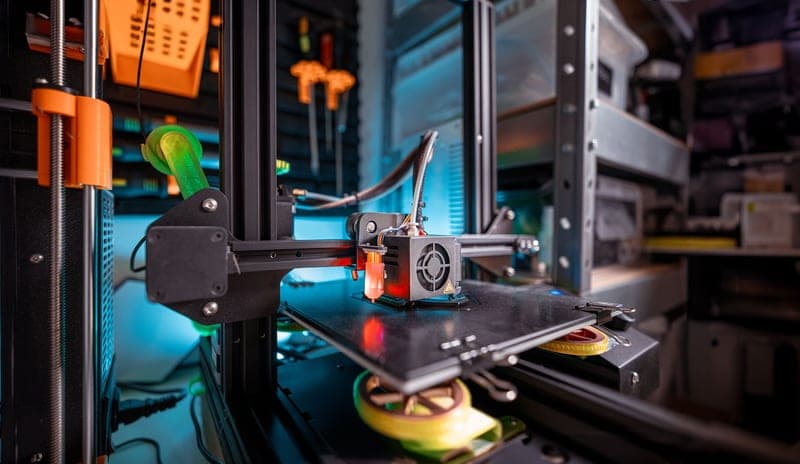
Stock photograph of this product class, not of this specific unit.
#ad We earn a commission · price as of October 10, 2026
1. Best if the bed is the bottleneck
Bambu Lab H2S
A reported 325 x 320 x 325 mm build volume with one nozzle to maintain. The only reason to pick either machine that no accessory can replicate.
Build volume is the one specification that cannot be upgraded, and that single fact decides most of this comparison. The registry carries a reported 325 x 320 x 325 mm build volume for the H2S against the 256 mm class the X1C belongs to. If you have been splitting models, nothing the X1C does compensates.
The H2S is also the current-generation machine, released August 2025 against the X1 series' May 2022. That matters for support horizon and for resale rather than for print quality, but it matters. Single nozzle means one hotend to clear, one set of calibrations and one thing wearing against abrasive filament.
What you give up is the X1C's sensors. No lidar first-layer inspection, and the hardened nozzle is a purchase rather than a standard fitting — a cheap one, but a purchase. H2D versus H2S is the page if you are also weighing the dual-nozzle version.
What it gets right
- The large-format build area is the only thing a P1S genuinely cannot give you
- Single nozzle means one hotend to maintain instead of two
- Costs less than the H2D for the same reported footprint and near-identical bed size
What it does not
- No dual nozzle, so no support material in a different polymer and no two-color single-head workflow
- Large-format machines want floor or shelf space, not desk space
- If your prints all fit in 256 mm, you are paying for air
| Released | August 26, 2025 |
|---|---|
| Type | Large-format enclosed, single nozzle |
| Build volume (reported) | 325 x 320 x 325 mm |
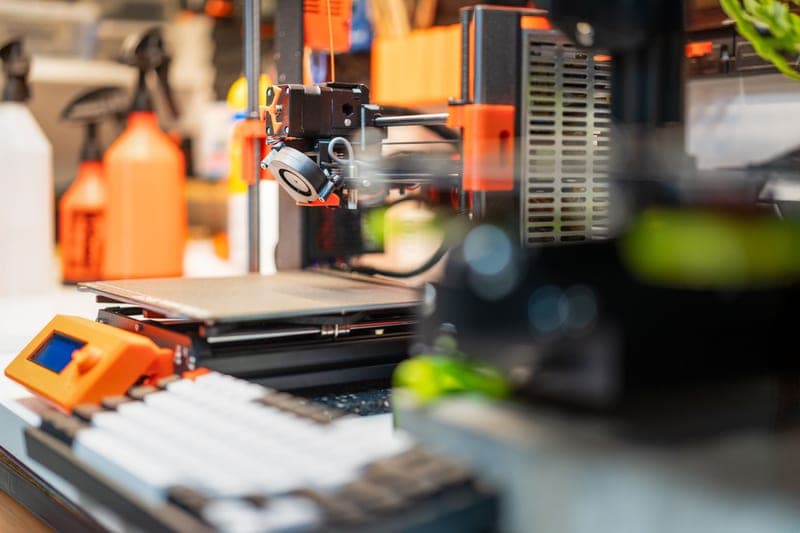
Stock photograph of this product class, not of this specific unit.
#ad We earn a commission · price as of October 10, 2026
2. Best as a used buy with the smarter sensors
Bambu Lab X1-Carbon
Lidar bed leveling and first-layer inspection, an aluminum enclosure and a hardened steel nozzle in the box - none of which the P-series has.
The X1C is a genuinely good machine and the case for it is specific. Lidar bed leveling and first-layer inspection are capabilities no P-series machine has, and they matter most on the prints that are most expensive to fail: tall, long, single-piece parts where a bad first layer wastes a day.
It also ships with a hardened steel nozzle, which means abrasive filament is a day-one capability rather than a purchase, and the aluminum enclosure holds chamber heat better than the P1S's panels. For ABS and ASA work in a cold room, that is a real difference rather than a marketing one.
The reasons to be careful: it is single nozzle where the top of the range is now dual, it has been superseded twice, and we assert no build volume or machine dimension for it because no fetched source published one. Buy it used, from a seller who has run it, and it is excellent value. X1C versus P1S covers that case in detail.
What it gets right
- Ships with a hardened steel nozzle, so abrasive filament is a day-one capability rather than a purchase
- Lidar bed leveling and first-layer inspection, which the P-series does not have
- An aluminum enclosure holds chamber heat better than the P1S's panels
What it does not
- It is not the current flagship and has not been since March 2025 — buying it new at flagship money is a mistake
- The H2D and X2D both exceed it, so resale value is on a downward path
- Single nozzle, where the current top of the range is dual
| Series | X1, released May 24, 2022 |
|---|---|
| Type | Enclosed CoreXY with lidar-based bed leveling |
| X1-Carbon spec | Aluminum enclosure, hardened steel nozzle, auxiliary cooling fan |
| Screen | 5-inch touchscreen |
| Superseded by | H2D (March 2025) and X2D (April 2026) |

#ad We earn a commission · price as of October 10, 2026
3. What closes the gap on a P-series machine
Bambu Lab Hotend with Hardened Steel Nozzle, 0.4 mm
A complete hardened steel hotend assembly for the P1S, P1P and X1 family. The X1C's abrasive-filament advantage, bought for the price of a filament order.
Worth knowing before you weigh the X1C's standard hardened nozzle too heavily: hardened steel is a cheap, available part. The registry entry is a complete hotend assembly listed for the P1S, P1P, X1C and X1 Carbon, cited at HRA 74 for the steel, which turns a nozzle swap into a module change rather than a nozzle extraction.
That removes one of the three reasons to choose an X1C, which leaves lidar and the aluminum enclosure as the real differentiators. The hardened hotend page covers fitment across the lineup, including the parts for the A-series and H-series.
What it gets right
- Abrasive filament rounds a stainless nozzle fast — with the worst materials, a single print can do it
- Comes as a complete assembly, so the swap is a module change rather than a nozzle extraction
- 0.4 mm keeps your existing print profiles valid
What it does not
- Hardened steel conducts heat slightly worse than stainless, so very high-flow PLA needs a small temperature bump
- Pointless if you only ever print plain PLA and PETG — stainless lasts for years on those
- P-series and X1 only; the A-series and H-series need their own part
| Nozzle | Hardened steel, 0.4 mm |
|---|---|
| Fits | P1S, P1P, X1C and X1 Carbon (model FAH001-N-1) |
| Hardness reference | Hardened steel is cited at HRA 74 |
| Supplied as | Complete hotend assembly |
Questions people actually ask
Is the X1C or the H2S the better printer?
They answer different questions. The H2S has the bigger bed - the registry carries a reported 325 x 320 x 325 mm build volume - and build volume is the only thing here that cannot be added later. The X1C has lidar bed leveling, first-layer inspection, an aluminum enclosure and a hardened steel nozzle in the box, which no P-series machine has. If your prints fit in a 256 mm cube, the X1C's sensors are worth more than the H2S's bed.
Is a used X1C a better buy than a new H2S?
If your parts already fit a 256 mm bed, quite possibly. Used, the X1C gives you lidar, an aluminum enclosure and a hardened nozzle for well under current-generation money. Bought new at flagship money it is poor value: the X1 series launched in May 2022 and both the H2D and X2D have superseded it.
Does the H2S have lidar first-layer inspection?
No. Lidar bed leveling and first-layer inspection are the X1C's distinguishing sensors. On any machine without them, a washed plate and a correctly tuned Z offset get you most of the way to the same reliability for nothing.
Does the H2S come with a hardened nozzle?
The registry does not list one as standard, where the X1-Carbon's spec includes a hardened steel nozzle. Hardened steel is a cheap part either way, so treat it as a line item rather than a reason to choose a machine - just check fitment, because the H2 series, the P/X series and the A series all take different hotends.
How much bigger is the H2S bed than the X1C bed?
The registry carries a reported 325 x 320 x 325 mm build volume for the H2S, and the X1C sits in the 256 mm class. We do not assert an exact X1C figure because no source we fetched published one - check the manufacturer's current spec sheet if a specific millimeter matters to your part.
Sources
- Bambu Lab model list and release dates - Wikipedia, retrieved 2026-10-11
- Build volumes and feature rows for the X1-Carbon, X2D, H2S, H2D, H2D Pro, H2C and A2L, and for every AMS unit, come from this site's product registry, whose spec provenance is documented in content/products.ts - no figure is asserted that a manufacturer or a cited third party did not publish
Read this next
- Bambu Lab X1C vs P1SLidar, an aluminum enclosure, a hardened nozzle and a touchscreen separate the X1C from the P1S. Worth it used; not worth it at old flagship prices.
- Bambu Lab X1C vs H2DThe H2D replaced the X1C as flagship in March 2025: a reported 350 x 320 x 325 mm bed and a dual nozzle against lidar and a hardened nozzle in the box.
- Bambu Lab H2D vs H2STwo machines on one chassis. The beds are nearly the same; the difference is one nozzle, and most people will not use the second.
- Which Bambu Lab printer has the largest print areaThe H2D holds the largest reported figure at 350 x 320 x 325 mm - with the full table, the models we will not estimate, and the test for whether you need it.
- The Bambu Lab hardened steel nozzleWhat hardened steel at HRA 74 is for, which filaments require it, and why the complete-assembly format matters for fitting it.
- The best Bambu Lab printer for the moneyRanked by capability per dollar rather than by price. The P1S wins because the enclosure is the only jump that changes what you can print.