Upgrades
X1C mods worth doing
Most Bambu mod lists are written for a P1S. On an X1C, a third of them solve problems the machine never had - here is the list that is actually yours.
By Michael W. · Published October 6, 2026
Some links here are Amazon affiliate links, so a purchase may earn this site a commission at no cost to you. It does not change what gets recommended or the order it appears in — how that works.
The short answer
Half of every Bambu mod list is irrelevant on an X1C, because the X1C already has the things those mods add: a 5-inch touchscreen, a hardened steel nozzle as standard, an aluminum enclosure that holds chamber heat, and lidar bed leveling with first-layer inspection.
What is actually worth doing, in order: a quick-change hotend so nozzle diameter becomes a per-print choice, a second build plate so a dirty plate never stops the queue, an omni-directional cooling duct if your overhangs curl, and new extruder gears if — and only if — you have symptoms of a worn set.
What the X1C already has, and the mods it therefore does not need
This is the part most mod lists get wrong, because they are written for the machine most people own rather than for this one.
| X1C has as standard | So this common mod is pointless |
|---|---|
| 5-inch touchscreen | A third-party Panda Touch screen |
| Hardened steel nozzle | The hardened-nozzle upgrade, as a first purchase |
| Aluminum enclosure | Panel and door upgrades aimed at the P1 series |
| Lidar bed leveling and first-layer inspection | Add-on first-layer camera mods |
| Auxiliary cooling fan | The auxiliary fan retrofit |
That is a third of the usual list gone. It is also why an X1C owner should be particularly suspicious of "best Bambu Lab upgrades" pages that do not say which machine they are for — including, to be fair, the need to read our own general roundup with the same filter.
The one X1C mod nobody frames correctly
A quick-change hotend is usually sold as a convenience. On an X1C it is closer to a capability, and the reason is the lidar. The machine is already measuring your first layer and telling you about it, which means the feedback loop for trying a different nozzle diameter is tight. Pair that with a nozzle you can change in seconds and you actually will.
The practical pattern: 0.6 mm for functional parts and bulk shells, 0.4 mm for anything with detail, 0.2 mm occasionally for miniatures. Most owners of any machine never do this because the swap is a task. On an X1C the swap is the only part that was missing. Which size for which job has the detail.
Mods that are wrong for an X1C specifically
More cooling, if you print ABS or ASA
The X1C's aluminum enclosure holds chamber heat better than the P1S's panels, which is one of the genuine reasons to own one. Adding auxiliary cooling to a machine whose advantage is heat retention is working in two directions at once. If overhangs on PLA are your problem, the duct earns its place; if ASA layer adhesion is your problem, the duct makes it worse.
A screen
The X1C has one. A third-party display on an X1C buys multi-printer control from a single unit, which is a print-farm argument rather than a single-machine one — see printers for a print farm if that is actually your situation.
Anything that implies the machine is current
Worth saying plainly, because it affects spending decisions. The X1C has not been the top of the range since the H2D launched in March 2025, and the X2D followed in April 2026. That does not make it a bad machine — it makes it a well-equipped machine whose resale value is on a downward path, which is an argument for spending on consumables rather than on deep hardware mods. X1C vs X2D has that argument in full.
Maintenance, which matters more on the oldest machine in the lineup
The X1 series launched in May 2022. A machine that has been printing since then has worn belts, worn extruder gears and lubricant that has gone. None of that is dramatic and all of it shows up as print quality rather than as an error message, which is why it gets diagnosed as a settings problem.
The honest order of operations on an older X1C: service it, then decide what to mod. A maintenance kit and the spare parts worth having are the pages for that, and both are cheaper than any upgrade on this one.
What this is and is not based on
The X1C specification above is attributed to Wikipedia; the fitment lists for the third-party parts are attributed to the OpenELAB upgrade guide. Judgments about which mods are worth doing are editorial — this site has no test lab, no measurement rig and no benchmark data, and how we review states that plainly. Verify fitment against your own machine before ordering any third-party part; the Panda line spans several printer generations.
What to buy
Stock photograph of this product class, not of this specific unit.
#ad We earn a commission · live price shown on Amazon
1. The one that changes how you print
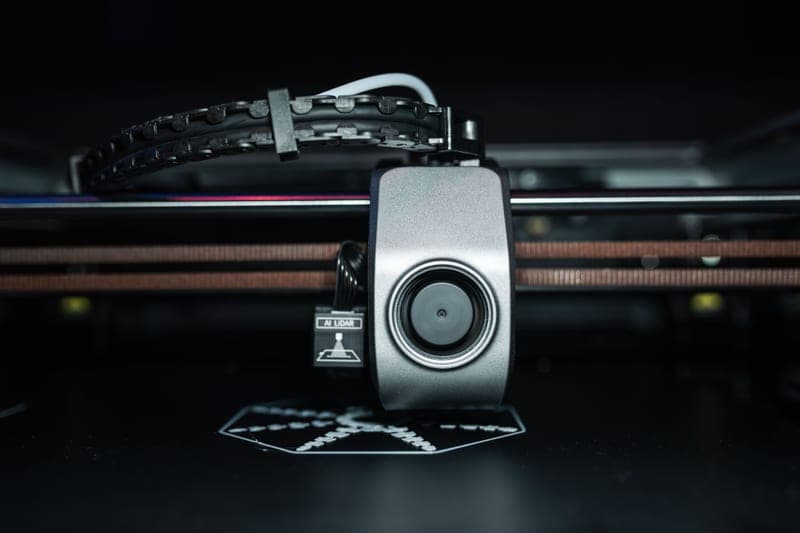
BIQU Panda Revo Hotend
Quick-change nozzles turn bore diameter into a per-print decision, which is the X1C's one real workflow gap.
The X1C ships with a hardened steel nozzle, so the usual first mod on a P-series machine is already done. What it does not have is a quick-swap hotend, and that is the gap worth closing — the Revo system changes nozzles by hand in seconds.
The reason that matters is behavioral rather than mechanical. Most owners never use a 0.2 mm nozzle for detail or a 0.6 mm for bulk because changing it is a job. Remove the friction and nozzle diameter becomes something you pick per print, which is a bigger change to your output than any fan or duct on this page. It fits the X1C, P1S and P1P, and the high-flow geometry is a genuine throughput gain on large single-color prints.
The trade is that you are now off the official hotend, which makes a support conversation harder, Revo nozzles cost more per nozzle than Bambu's own, and flow calibration has to be redone. See the nozzle roundup for the alternatives.
What it gets right
- Revo nozzles change by hand in seconds — this is the single feature people buy a P2S for
- High-flow geometry is a genuine throughput gain on large single-color prints
- Turns nozzle diameter into a per-print choice instead of a maintenance decision
What it does not
- You are now off the official hotend, so a Bambu support conversation gets harder
- Revo nozzles cost more per nozzle than Bambu's own
- Flow calibration has to be redone; do not expect your old profiles to be exactly right
| System | E3D Revo quick-change nozzle |
|---|---|
| Fits | Bambu Lab P1S, P1P and X1C |
| Positioning | High-flow, high-speed |
Stock photograph of this product class, not of this specific unit.
#ad We earn a commission · live price shown on Amazon
2. The one that stops the queue stalling
BIQU Panda Double-CryoGrip Buildplate
A second plate at 257 x 257 mm, fitting five Bambu models, so a cooling plate never blocks the next print.
The X1C's lidar first-layer inspection makes a bad first layer visible, which is useful and also a little demoralizing: you now know precisely when a plate needs washing. A second plate means the answer is swap and carry on rather than stop, cool, wash, dry and restart.
At 257 x 257 mm with fitment across the P1P, P1S, P2S, X1C and A1, it survives your next printer too, and it is priced to be the second plate rather than the showcase one.
Two cautions. A third-party surface means re-doing Z offset and probably first-layer flow, and coated steel is not PEI, so adhesion behavior differs by material — expect a learning print or two. The published temperature table for PEI is a starting point rather than a transfer.
What it gets right
- Fits five different Bambu models, so it survives your next printer
- Priced to be the second plate, which is what actually keeps a machine printing
- Textured coating releases cooled parts cleanly without a scraper
What it does not
- A third-party surface means re-doing your Z offset and probably your first-layer flow
- Coated steel is not PEI — adhesion behavior differs by material, so expect a learning print or two
- Nothing here is an upgrade over a healthy official plate; it is a spare
| Surface | Textured coated steel sheet |
|---|---|
| Size | 257 x 257 mm |
| Fits | Bambu Lab P1P, P1S, P2S, X1C and A1 |
Stock photograph of this product class, not of this specific unit.
#ad We earn a commission · live price shown on Amazon
3. The one that changes printed output
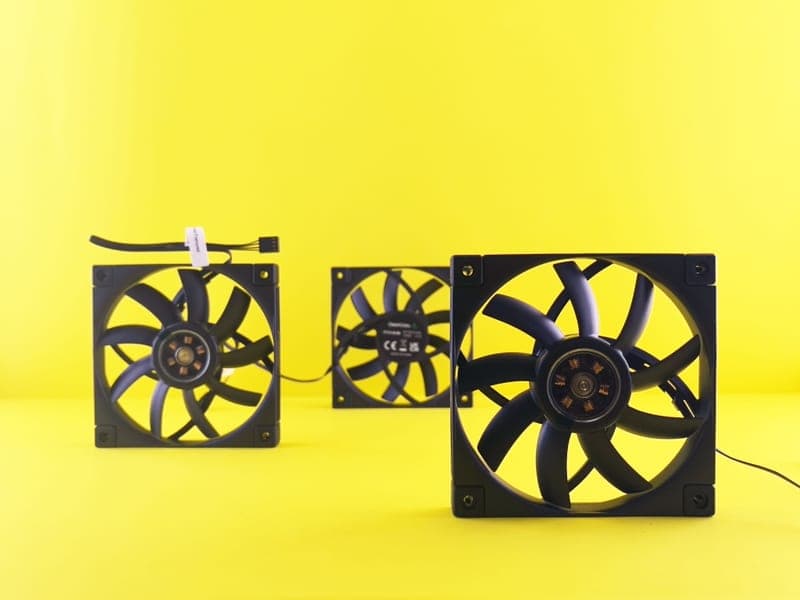
BIQU Panda Jet Cooling Fan Duct
Omni-directional cooling at the nozzle is a geometry fix for curling overhangs that slicer settings cannot deliver.
Of everything on this page, this is the one most likely to change what comes off the bed. Directing air all the way around the nozzle rather than from one side is a real fix for overhangs and bridges that curl no matter what you do in the slicer, and it fits the X1 and P1 hotends as well as the Panda Revo series.
MJF nylon construction matters on an X1C in particular, because the aluminum enclosure holds chamber heat better than the P1S panels do. A printed PLA duct in that chamber is a part that slowly deforms; nylon is not.
The warning is material-specific and important. On ABS and ASA, extra cooling causes layer splitting, and the X1C is one of the better machines in the range for those materials. Fitting this and then printing ASA is working against yourself — and changing airflow invalidates your tuned profiles, so re-test overhangs after fitting.
What it gets right
- Directing air all the way around the nozzle is a real geometry fix for curling overhangs
- MJF nylon tolerates chamber heat far better than a printed PLA duct would
- Cheap, and it addresses a fault that slicer settings alone often cannot
What it does not
- More cooling on ABS and ASA causes layer splitting — this helps PLA and PETG, and can hurt the others
- Changing airflow invalidates your tuned profiles; re-test overhangs after fitting
- X1/P1 and Panda Revo fitment only
| Type | Omni-directional cooling duct |
|---|---|
| Material | MJF nylon |
| Fits | Bambu Lab X1/P1 hotends and the Panda Revo series |
| Targets | Nozzle-area airflow, bridges, overhangs |
Stock photograph of this product class, not of this specific unit.
#ad We earn a commission · live price shown on Amazon
4. The repair that gets misdiagnosed as six other faults
BIQU Panda Claw Extruder Gear Set
Hardened coated extruder gears, for a machine old enough that the stock set may genuinely be worn.
The X1C is the oldest machine in the current lineup — the X1 series launched in May 2022 — and that changes which parts are plausibly worn. Extruder gears are a wear item, and a worn set causes under-extrusion that presents as a partial clog, a bad profile, wet filament or a failing hotend.
Hardened, coated gears also grip TPU better than the stock set, which is the common complaint behind flexible filament slipping instead of feeding. Fitment covers the X1, P1 and A1 series.
This is a repair for a real symptom, not a preventive upgrade. Check the print-quality fault list before you order, because wet filament and a clogged nozzle look identical from the outside and are far cheaper to rule out.
What it gets right
- Extruder gears are a wear item, and a worn set causes under-extrusion that looks like six other faults
- Hardened and coated gears grip TPU better than the stock set, which is the common TPU-slipping complaint
- Fits X1, P1 and A1 — one part number for most of the lineup
What it does not
- This is a repair for a real symptom, not an upgrade to buy preemptively
- An extruder teardown is the most intimidating job on the machine for a first-timer
- If your gears are not worn, new gears will change nothing
| Material | Golden nano-coated hardened steel gears |
|---|---|
| Fits | Bambu X1, P1 and A1 series |
| Materials supported | PLA, PETG, TPU, ABS |
| Stated benefit | Improved grip, fewer jams |
Questions people actually ask
What mods are worth doing on a Bambu Lab X1C?
A quick-change hotend, so nozzle diameter becomes a per-print choice rather than a maintenance job. A second build plate, so a dirty plate never stops the queue. An omni-directional cooling duct if your overhangs curl on PLA. And new extruder gears if you have symptoms of a worn set, which is plausible on a machine this old.
Does an X1C need a hardened nozzle upgrade?
No - it ships with a hardened steel nozzle as standard, which is one of the real advantages of the machine over the P-series. Abrasive filament is a day-one capability rather than a purchase. What it lacks is a quick-swap mechanism, which is the upgrade worth considering instead.
Should I put a Panda Touch screen on an X1C?
Not for the screen - the X1C already has a 5-inch touchscreen. The only reason to add a third-party display is multi-printer control from one unit, which is a print-farm argument rather than a single-machine one.
Is the X1C still worth upgrading in 2026?
It is worth maintaining and worth consumables. It is less obviously worth deep hardware mods, because it stopped being the flagship when the H2D launched in March 2025 and the X2D followed in April 2026, so its resale value is on a downward path. Service it, keep spares, and spend on filament and plates rather than on brackets.
Will extra cooling improve my X1C prints?
It depends entirely on your materials. On PLA, an omni-directional duct is a genuine geometry fix for curling overhangs. On ABS and ASA it makes layer splitting worse - and the X1C's aluminum enclosure holding chamber heat is specifically why it is good at those materials, so you would be working against the machine's main strength.
Sources
Read this next
- The best Bambu Lab upgradesUpgrades ranked by the problem each one solves, with the popular ones that fix nothing clearly marked as such.
- P1S mods worth doingP1S modifications ordered by the problem each solves, with the popular ones that change nothing clearly marked.
- Maintenance that actually mattersThe five maintenance jobs that change print quality, in priority order, plus the consumables worth stocking before you need them.
- Bambu Lab X1C vs X2DWhat four years changed between the X1C and the X2D, and why the X1C is still a reasonable buy at the right price.
- The best nozzles and hotends for a Bambu LabHardened steel, quick-change or a second diameter - which nozzle upgrade matches your filament and your machine, with who each is wrong for.
- Bambu Lab nozzle sizes explainedWhat 0.2, 0.4, 0.6 and 0.8 mm nozzles are each for, what changing costs in re-slicing, and why friction stops most people switching.