Printers
Bambu Lab X1C vs X1E
This comparison has an answer most pages like it will not give you: the whole X1 series stopped production on 31 March 2026. The difference still matters, because it tells you which replacement you need.
By Michael W. · Published October 24, 2026
Some links here are Amazon affiliate links, so a purchase may earn this site a commission at no cost to you. It does not change what gets recommended or the order it appears in — how that works.
The verdict
Both machines ceased production on 31 March 2026. 3D Printing Industry reports the X1, X1 Carbon and X1E all ended production on that date, with no new stock to be produced and the X2D named as the replacement. Authorized distributors may still have remaining units under full warranty.
The difference, while they were sold, was the chamber. MatterHackers lists the X1E with an actively heated chamber to 60 C, a 320 C nozzle, three-stage filtration and enterprise networking. 3DPrinterGear lists the X1-Carbon at a 300 C nozzle with no heated chamber published.
Build volume was identical. Both are 256 x 256 x 256 mm, both 389 x 389 x 457 mm. If you hoped one printed bigger parts, neither did.
If you own either, keep it. Support, spare parts and firmware patches run through March 2031. An AMS and a plate are a better use of the money than a panic replacement.
Side by side
| X1-Carbon | X1E | X2D (the replacement) | |
|---|---|---|---|
| Status | Production ended 2026-03-31 | Production ended 2026-03-31 | Released 2026-04-14 |
| Build volume | 256 x 256 x 256 mm | 256 x 256 x 256 mm | 256 x 256 x 260 mm, single-nozzle mode |
| Nozzle ceiling | 300 C | 320 C | 300 C |
| Nozzle supplied | Hardened steel, all-metal extruder | Hardened steel included | Not published by a source we fetched |
| Bed ceiling | 120 C | 120 C at 110 V | Not published by a source we fetched |
| Heated chamber | Not published by a source we fetched | Actively heated to 60 C | Reported to 65 C |
| Filtration | Not published by a source we fetched | G3 pre-filter, H12 HEPA, activated carbon | Triple-stage |
| Nozzles | One | One | Two |
| Machine size | 389 x 389 x 457 mm | 389 x 389 x 457 mm, without AMS | Not published by a source we fetched |
| Weight | 14 kg | 16 kg, without AMS | Not published by a source we fetched |
| Screen | Not published by a source we fetched | 5-inch 720p touchscreen | Not published by a source we fetched |
| Camera | Not published by a source we fetched | 1920 x 1080 | Not published by a source we fetched |
| Networking | Not published by a source we fetched | WPA2-Enterprise, 802.1X, network kill switch | Not published by a source we fetched |
| AMS | AMS and AMS 2 Pro fit it | AMS supported | AMS supported |
What the X1E actually added
An actively heated chamber, which is not the same as an enclosure
This was the headline and it is still the most misunderstood row on the table. Every enclosed Bambu machine in the X1 and P series retains heat: the bed and the hotend put warmth into a closed box and the panels keep it there. The X1E made heat, to a chamber temperature MatterHackers lists at up to 60 C.
The difference shows on tall parts in ABS, ASA and PC. In a passive box, the air near the bed is warm and the air near the top of a 200 mm part is not, so the part contracts unevenly as it grows. A regulated chamber removes that gradient. What temperature an enclosure reaches is the honest version of what passive retention gets you, and ABS shrinkage is the failure mode it is fighting.
A 320 C nozzle instead of 300 C
Twenty degrees sounds like rounding and occasionally is not. A material whose manufacturer publishes a nozzle range above your machine's ceiling is arithmetic, not a tuning problem. PPS-CF's published range of 310-340 C is the clean example: an X1E listed at 320 C overlaps it and a 300 C machine does not touch it.
Be careful how much weight that carries. The materials most owners actually print — PLA, PETG, TPU, ABS, ASA and PA6-CF at its published 260-300 C — all sit inside a 300 C range already. What a 300 C Bambu machine can and cannot print works through that material by material.
Filtration and enterprise networking
MatterHackers lists a G3 pre-filter, an H12 HEPA filter and granulated coconut-shell activated carbon, plus WPA2-Enterprise authentication, 802.1X network access control, Ethernet and a network kill switch for both Wi-Fi and Ethernet. These are the rows that explain who the X1E was built for: a machine that had to pass an IT review and sit in a shared room, not a hobby bench. If none of that describes your situation, you were never the buyer.
What discontinued actually means for an owner
Production ending is not the same as a machine going dark, and the published terms here are better than most. 3D Printing Industry reports spare parts, technical assistance and firmware security patches continuing through March 2031, with remaining distributor stock sold under full warranty.
Practically, that means an X1C or X1E you own today is a machine with roughly four and a half more years of parts behind it, on a platform with the deepest third-party shelf in desktop printing. The registry's own read on the X1-Carbon is that it is a used-market buy rather than a flagship, and that resale is on a downward path — which is an argument for keeping and upgrading it, not for replacing it in a hurry.
The one thing that does change is buying new. Paying flagship money for a machine that stopped production in March 2026 is the mistake this page exists to prevent. The best-value pick is the current-production answer, and the full roundup covers the rest of the range.
Which replacement you need depends on which one you wanted
You wanted an X1C. You wanted an enclosed 256 mm CoreXY with a screen. The P2S is that machine in current production, with a quick-swap nozzle and a published 110 C bed. X1C versus P2S is the direct comparison.
You wanted an X1E for the chamber. The X2D reports a 65 C heated chamber, higher than the X1E's published 60 C, in the same build-volume class. X1C versus X2D covers the generational jump.
You wanted an X1E for the 320 C nozzle. This is the one case with no clean in-family answer, because the X2D launch coverage gives 300 C. Outside the range, a published 350 C machine exists — P1S versus the Elegoo Centauri Carbon covers that trade, ecosystem cost included.
You wanted an X1E for the filtration or the networking. Nothing in the current consumer range is published as a like-for-like replacement for G3 plus H12 HEPA plus activated carbon and 802.1X. The X2D's triple-stage filtration is the closest published claim.
What this page is and is not based on
The production end date of 31 March 2026 for the X1, X1 Carbon and X1E, the support window through March 2031, the note on remaining distributor stock and the naming of the X2D as the replacement all come from 3D Printing Industry, published 22 April 2026 and retrieved 24 October 2026. X1E specifications — the 256 mm cube, 320 C nozzle, hardened steel nozzle included, 120 C plate at 110 V, 60 C heated chamber, G3 plus H12 HEPA plus activated carbon filtration, 389 x 389 x 457 mm and 16 kg without the AMS, the 5-inch 720p screen, the 1920 x 1080 camera and the WPA2-Enterprise, 802.1X and kill-switch rows — come from the MatterHackers X1E listing retrieved 24 October 2026, which also showed the product unavailable. X1-Carbon figures come from the 3DPrinterGear X1 Carbon listing, same date, which showed it out of stock. X2D figures come from the launch coverage cited below plus registry spec rows. P2S figures come from the 3DJake P2S listing retrieved 11 October 2026. I have not run an X1E, and nothing here was measured: there is no test lab behind this site, no chamber thermocouple and no particle counter, which is why every number carries a source and the rows nobody published are left empty. See how we review. No price appears in prose.
The two machines, side by side
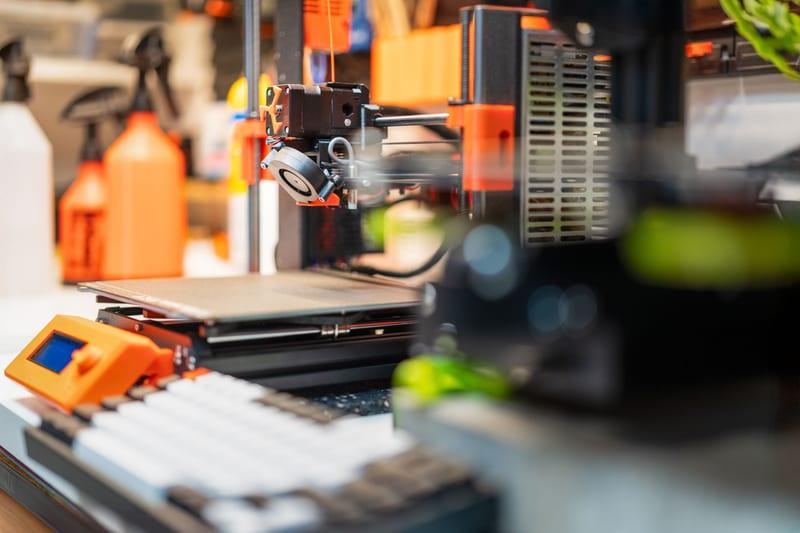
Stock photograph of this product class, not of this specific unit.
#ad We earn a commission · price as of November 20, 2026
1. What to buy instead of either
Bambu Lab X2D
The named replacement for the X1 series, with a reported 65 C heated chamber - the X1E's headline capability - plus dual nozzles the X1E never had.
If you arrived here choosing between an X1C and an X1E, this is the machine that answers both. 3D Printing Industry reports the X2D as the stated replacement for the X1 series, and the registry records it as an enclosed dual-nozzle CoreXY released 14 April 2026 with a reported 65 C heated chamber.
That chamber figure is the important one. An actively heated chamber was the single capability that separated an X1E from an X1C, and the X2D reports a higher one. The launch coverage cited below also gives a 256 x 256 x 260 mm volume in single-nozzle mode, a 300 C nozzle, noise below 50 dB and triple-stage filtration.
Two honest costs. The nozzle ceiling in that coverage is 300 C, below the X1E's published 320 C, so if a material's published range sits between those two numbers the X2D is a step back. And it is a 2026 machine, so the third-party shelf is thin compared with a P-series. H2D versus X2D is the comparison to read if the bed size is what you are weighing, and X1C versus X2D takes the generational step head on.
What it gets right
- Dual nozzle without stepping up to the H2 footprint — two materials on a desk-sized machine
- A reported 65 C heated chamber is a real capability jump over any passive P-series enclosure
- Newest filtration and thermal hardware in the smaller form factor
What it does not
- Released April 2026, so third-party part support is thin compared with the P1S
- Same reported 256 mm build volume as a P1S — this is a capability upgrade, not a size one
- I have not run one. What follows anywhere on this site about the X2D is specification and reasoning, not observation
| Released | April 14, 2026 |
|---|---|
| Type | Enclosed CoreXY, dual nozzle |
| Improvements cited | Air filtration, thermal management and speed |
| Build volume (reported) | 256 mm cube |
| Chamber (reported) | Heated to 65 C |

2. Best value replacement
Bambu Lab P2S
An enclosed 256 mm cube with a touchscreen and a quick-swap nozzle, at a published 300 C and 110 C. The sensible landing spot if the chamber was never the point.
Most people who shortlisted an X1E did not need it. They wanted an enclosed CoreXY with a screen, and the X1E was simply the most expensive version of that on the shelf. 3DJake lists the P2S at a 256 x 256 x 256 mm build volume, a 300 C nozzle, a 110 C bed and 392 x 406 x 478 mm at 14.9 kg, with no active chamber heater.
Against a used X1C it trades lidar bed inspection and the aluminum enclosure for a quick-swap nozzle, a current warranty and a machine that is still in production. Against an X1E it gives up the heated chamber, the 320 C nozzle and the enterprise networking entirely.
The bed is worth one line: the P2S's published 110 C is 10 C hotter than the P1S's, which helps tall ABS adhere even without chamber heating. P1S versus P2S has the full in-family comparison, and X1C versus P2S is the direct swap.
What it gets right
- Quick-swap nozzle turns a 0.4-to-0.6 change from a maintenance task into a between-prints decision
- A real touchscreen on the machine, so you are not opening an app to start a print
- Same footprint and roughly the same build area as the P1S, so your enclosure and shelf still work
What it does not
- If you have never once wished your P1S had a screen, this is not the upgrade you need
- Reported build volume is a 256 mm cube — the same class as the P1S, so it buys you nothing in size
- Your P1S-specific third-party parts may not carry over; check fitment per part, not per brand
| Released | October 9, 2025 |
|---|---|
| Type | Enclosed CoreXY, P1S successor |
| Over the P1S | Touchscreen and quick-swap nozzle |
| Build volume (reported) | 256 mm cube |
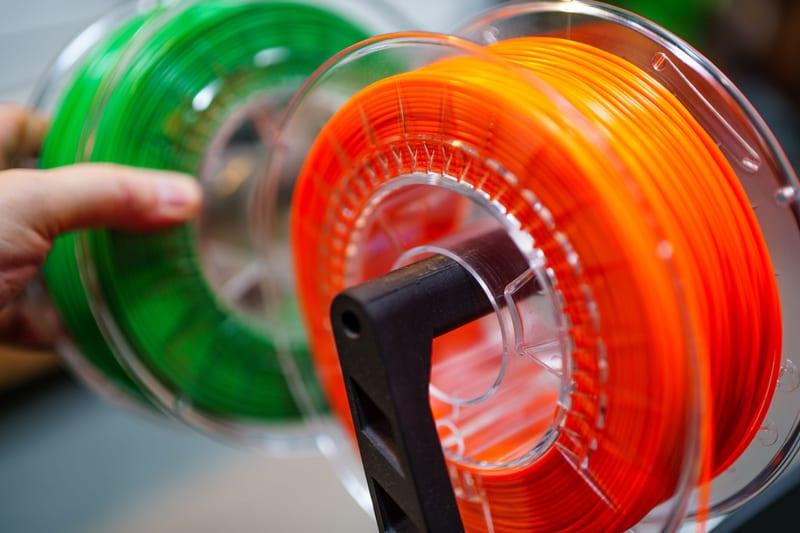
Stock photograph of this product class, not of this specific unit.
#ad We earn a commission · price as of November 20, 2026
3. The part that keeps an X1C worth owning
Bambu Lab AMS 2 Pro
Four spools with active drying, and the kit lists the X1C as compatible. Discontinued does not mean unsupported - parts and firmware run to March 2031.
The most common reason to read an X1C versus X1E comparison is that you already own one of them and are wondering whether you are stranded. You are not. 3D Printing Industry reports support for the X1 series — spare parts, technical assistance and firmware security patches — continuing through March 2031.
So the sensible move for most X1C owners is to spend on the machine rather than replace it. The AMS 2 Pro Upgrade Kit lists P1P, P1S, X1C and X1E compatibility, and the registry records the unit as a four-spool system whose headline feature is active filament drying.
Stated plainly: four-color printing purges filament on every tool change and the tower is real, and the unit needs space beside or above the printer. AMS 2 Pro compatibility and the filament buffer covers which kit variant to order, and X1C mods worth doing is the rest of the list.
What it gets right
- Active drying means the spool you print from is the spool you dried — no transfer step, no re-absorption window
- Four colors on a machine you already own, for a fraction of a new printer
- RFID logging removes the single most common cause of a ruined multi-color print: the wrong material profile
What it does not
- Four-color printing wastes filament on every tool change; the purge tower is real and it is not small
- If you only print single-color PLA, you are buying a dryer with a filament changer attached
- Needs the space beside or above the printer that your shelf may not have
| Type | Four-spool automatic material system |
|---|---|
| Headline feature | Active filament drying |
| Inherits | Humidity monitoring and RFID logging from the original AMS |
Questions people actually ask
What is the difference between the Bambu Lab X1C and the X1E?
The chamber, the nozzle ceiling and the networking. MatterHackers lists the X1E with an actively heated chamber to 60 C, a 320 C maximum nozzle, G3 pre-filter plus H12 HEPA plus activated carbon filtration, WPA2-Enterprise authentication, 802.1X access control and a network kill switch. 3DPrinterGear lists the X1-Carbon at a 300 C nozzle with no heated chamber published. Build volume was identical at 256 x 256 x 256 mm, and so was the 389 x 389 x 457 mm body.
Is the Bambu Lab X1E discontinued?
Yes. 3D Printing Industry reports that the X1, X1 Carbon and X1E all ceased production on 31 March 2026, with no new stock to be produced, and names the X2D as the replacement. Authorized distributors may still carry remaining units under full warranty, and support including spare parts, technical assistance and firmware security patches continues through March 2031.
Is the X1 Carbon discontinued too?
Yes - the same report covers all three X1 machines, with production ending 31 March 2026. That is worth knowing before you pay new-flagship money for one: the registry's read is that the X1-Carbon is now a used-market buy whose resale value is on a downward path, not a current flagship.
Should I still buy an X1C in 2026?
Only at used-market money, and only with your eyes open. Production ended in March 2026, so a new unit is remaining stock rather than current product. The upside is real: the deepest third-party parts shelf in desktop printing, AMS 2 Pro compatibility, lidar bed leveling the P-series does not have, and published support through March 2031. At flagship pricing it is the wrong purchase; the current-production equivalents are the P2S and the X2D.
What replaced the Bambu Lab X1E?
3D Printing Industry names the X2D as the replacement for the X1 series. For the X1E's defining feature it is a genuine successor: the registry records a reported 65 C heated chamber against the X1E's published 60 C, and the X2D adds a second nozzle. The one row where it is a step back is the nozzle ceiling - the launch coverage gives 300 C against the X1E's 320 C.
Does a heated chamber matter if I already have an enclosure?
It matters for tall parts in ABS, ASA and PC. An enclosure retains the heat the bed and hotend produce, so the air near the bed is warm and the air near the top of a tall part is not - and that gradient is what makes a part contract unevenly and split. An actively heated chamber holds a set temperature instead, which removes the gradient rather than reducing it.
Is there a Bambu Lab X2C?
No. The X2 series launched with the X2D, a dual-nozzle machine, in April 2026. If the search suggestion brought you here looking for a single-nozzle successor to the X1-Carbon, the current-production machine to compare is the P2S.
Will my X1C still get firmware updates?
3D Printing Industry reports support continuing through March 2031, covering spare parts, technical assistance and firmware security patches. That is the published commitment; it does not promise new features, so treat it as a security and parts window rather than ongoing development.
Does the AMS 2 Pro still fit a discontinued X1C?
Yes. The AMS 2 Pro Upgrade Kit listing gives compatibility as P1P, P1S, X1C and X1E, and the end of production does not change fitment. For most X1C owners that is the better use of money than replacing a machine that still has a parts and firmware window running to 2031.
Sources
- The Bambu Lab X1, X1 Carbon and X1E ceased production on 2026-03-31; support including spare parts, technical assistance and firmware security patches continues through March 2031; authorized distributors may still carry remaining units under full warranty but no new stock will be produced; the X2D is named as the replacement - 3D Printing Industry, published 2026-04-22, retrieved 2026-10-24
- X1E build volume (256 x 256 x 256 mm), 320 C maximum nozzle with a hardened steel nozzle included, 120 C build plate at 110 V, actively heated chamber to 60 C, G3 pre-filter plus H12 HEPA plus granulated coconut-shell activated carbon filtration, dimensions 389 x 389 x 457 mm and 16 kg without the AMS, 5-inch 720p touchscreen, 1920 x 1080 camera, AMS support, and the WPA2-Enterprise, 802.1X and network kill switch features - MatterHackers X1E listing, retrieved 2026-10-24. The same page reports the product currently unavailable, which is why the X1E carries no buy row on this page
- X1-Carbon build volume (256 x 256 x 256 mm), 300 C maximum nozzle, all-metal extruder with a hardened steel nozzle, 120 C maximum bed, 389 x 389 x 457 mm, 14 kg and "500+ mm/s" maximum speed, together with an Out of Stock status - 3DPrinterGear X1 Carbon listing, retrieved 2026-10-24
- X2D launch, build volume 256 x 256 x 260 mm in single-nozzle mode, nozzle to 300 C, chamber to 65 C, noise below 50 dB, dual nozzles, enclosed temperature-controlled chamber with triple-stage air filtration and stated support for PLA, PETG, TPU, ABS, ASA, PC, nylon and carbon-fiber reinforced materials with the appropriate nozzle - Munich Startup Insights report on the Bambu Lab X2D launch, retrieved 2026-10-24
- P2S build volume (256 x 256 x 256 mm), machine dimensions (392 x 406 x 478 mm), net weight 14.9 kg, 300 C nozzle, 110 C bed and the absence of an active chamber heater - 3DJake P2S listing, retrieved 2026-10-11
- Bambu Lab model list and release dates - Wikipedia, retrieved 2026-10-18
- Feature rows for the AMS units, the hardened hotends and the fitment rows on every third-party part come from this site's product registry, whose spec provenance is documented in content/products.ts - no figure is asserted that a manufacturer or a cited third party did not publish
Read this next
- Bambu Lab X1C vs X2DWhat four years changed between the X1C and the X2D, and why the X1C is still a reasonable buy at the right price.
- Bambu Lab X1C vs P2SThe X1C brings lidar, an aluminum enclosure and a hardened nozzle day one. The P2S brings a newer platform and a quick nozzle swap. Same 256 mm class either way.
- Bambu Lab H2D vs X2DH2D for build volume, X2D for an actively heated chamber in a desk footprint. Both reported dual nozzle, so that is not the deciding factor.
- X1C mods worth doingThe X1C-specific mod list, written around what the machine already has - lidar, a screen and a hardened nozzle - instead of what a P1S lacks.
- AMS 2 Pro compatibility and the filament bufferListed for the P1P, P1S, X1C and X1E. One kit variant includes a filament buffer for a single unit; the other has a hub for chaining several.
- The best Bambu Lab printer for the moneyRanked by capability per dollar rather than by price. The P1S wins because the enclosure is the only jump that changes what you can print.