Nozzles & Plates
The best nozzle for TPU
TPU is not abrasive, so this is not a hardened-steel question. It is a bore-size and flow question - and for a lot of readers the honest answer is that your stock nozzle is already right.
By Michael W. · Published November 22, 2026
Some links here are Amazon affiliate links, so a purchase may earn this site a commission at no cost to you. It does not change what gets recommended or the order it appears in — how that works.
Quick picks
Tap any row to jump to the full write-up. Prices are read from Amazon and dated; stock is always whatever the listing says.
| # | Product | Best for | Price |
|---|---|---|---|
| 1 |  Bambu Lab Hotend with Hardened Steel Nozzle, 0.4 mm A complete 0.4 mm hotend assembly that keeps every existing profile valid, and covers abrasive filament at the same time. | Best buy for a P-series or X1C owner who prints TPU and more The one purchase that has to happen before your first spool of anything carbon-filled | $21.98 · View on Amazon #ad We earn a commission · price as of November 23, 2026 |
| 2 | 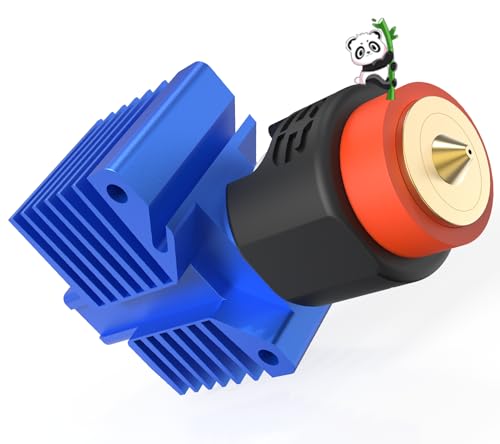 BIQU Panda Revo Hotend Quick-change nozzles by hand in seconds, so a wider bore for flexibles stops being a maintenance job and becomes a per-print choice. | Best if you want to switch bore sizes for TPU and back Getting quick nozzle changes on a P1S without buying a P2S | |
| 3 | 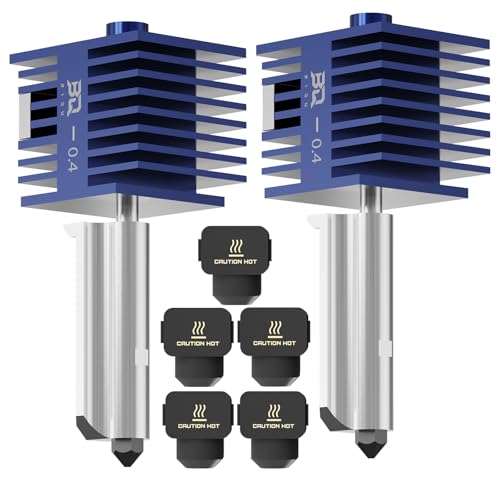 BIQU Panda Juicer SF 0.4 mm Hotend Kit A 0.4 mm hardened hotend for the A series at less than the official part - cheap enough to keep a spare on the shelf, which is the actual TPU insurance policy. | Budget pick, and the right one for an A1 or A1 mini A spare hardened hotend for an A1 or A1 mini at less than the official part | |
| 4 |  Bambu Lab 0.6 mm High Flow Induction Hotend A 0.6 mm high-flow hardened hotend - the wider bore that makes flexibles and filled materials easier to push. | Best wide-bore option, if you own an H-series machine Carbon-fiber filament that clogs a 0.4 mm nozzle on chopped fiber | $69.00 · View on Amazon #ad We earn a commission · price as of November 23, 2026 |
For unfilled TPU, the 0.4 mm nozzle already on your printer is the right one. Bambu's own TPU 95A HF page names exactly one nozzle as incompatible — the 0.2 mm stainless steel hotend — and one plate. Nothing about nozzle material is excluded. That is the manufacturer telling you the constraint is bore size, not steel hardness.
So the ranking below is about fitment and flow, not wear. Buy a bigger bore if you print a lot of flexible material and your machine supports it. Buy a spare hotend if TPU jams have cost you a weekend. Buy hardened steel only if filled flexibles like TPU-CF are on your shelf. And if your TPU prints are failing rather than slow, the cause is far more likely to be moisture or the plate than the nozzle.
What actually decides this, in four questions
Criteria first. The nozzle market for a Bambu Lab printer is small and heavily fitment-constrained, so three of these four questions narrow it to one or two options before preference enters the picture at all.
1. Which machine do you own?
This is most of the answer, and it is unusually strict here. The official hardened hotend assembly is a P1S, P1P and X1-series part. The cheaper third-party hardened hotend is an A1 and A1 mini part. The quick-change system is a P1S, P1P and X1C part. The genuine 0.6 mm high-flow hotend sold on Amazon is an H2-series part. There is no single nozzle on this page that fits every machine, and buying the wrong fitment is the most common expensive mistake in this category.
2. Is the TPU filled or unfilled?
Plain TPU is soft and not abrasive, so the stainless nozzle your machine shipped with is correct and will stay correct. TPU-CF and any fiber-filled flexible is a different material with the same name root, and the chopped fiber in it requires hardened steel. The rule is the same one that applies to PETG and PETG-CF, and the full per-material table is on do I need a hardened nozzle for this filament.
3. How much TPU do you print, and how big?
Bore size is the one nozzle variable that genuinely changes flexible printing. A wider orifice needs less pressure for the same volume, and pressure is what makes soft filament buckle in the feed path instead of going where you pushed it. If TPU is an occasional gasket, this does not matter. If it is a weekly job in quantity, a 0.6 mm bore — or a quick-change system that lets you fit one when you need it — is the upgrade with a mechanism behind it. Nozzle sizes explained covers the resolution cost of going wider.
4. Do you have a spare?
The least glamorous question on the page and the one most worth acting on. Flexibles are the material most likely to leave you clearing a hotend rather than a nozzle, and a printer with no spare hotend is a printer that stops for a week. On the A series particularly, the third-party hardened hotend is cheap enough that keeping one in a drawer is a rational purchase rather than a luxury. Spare parts worth having makes the broader case.
What Bambu actually rules out for TPU
This is the most useful paragraph on the page, because it replaces a lot of folklore with one published statement. The accessory compatibility note on Bambu's TPU 95A HF product page reads, in full: not compatible with Cool Plate SuperTack, Hotend with Stainless Steel Nozzle 0.2 mm.
Three things follow from that, and all three are worth reading twice.
One: the excluded nozzle is excluded for its bore, not its metal. A 0.2 mm orifice cannot pass soft filament reliably at any sensible pressure. Stainless steel in 0.4 mm is not on the list, which is the manufacturer confirming that the material is fine.
Two: there is no hardened-steel requirement for TPU anywhere in that note. If there were, it would be listed exactly like the plate is. Anyone telling you a hardened nozzle is needed for flexibles is describing filled TPU or guessing.
Three: a plate is excluded, which is a hint about where the real problem is. Adhesion, not extrusion, is where most TPU prints go wrong. Bambu's published plate table puts TPU at 35-45 C — the lowest bed temperature of any material on it — and lists glue stick as required, which for TPU is as much about protecting the plate as sticking the part. Textured PEI can grip a flexible part hard enough to tear its own surface on removal. The temperatures are on textured PEI plate temperature by material, and the plate shopping decision is on the build plate roundup. PETG is the other material where the plate choice is really a release decision rather than an adhesion one, for the opposite reason — the best build plate for PETG has that case.
The four hotends, side by side
| Hotend | Bore | Nozzle material | Fits | Why you would buy it for TPU |
|---|---|---|---|---|
| Bambu hardened hotend 0.4 mm | 0.4 mm | Hardened steel | P1S, P1P, X1C, X1 Carbon | A spare module, and cover for filled flexibles |
| BIQU Panda Revo | Quick-change, your choice | Per nozzle | P1S, P1P, X1C | Change bore size for a flexible job in seconds |
| BIQU Panda Juicer SF 0.4 mm | 0.4 mm | Hardened steel | A1, A1 mini | The cheap A-series spare, and filled-flexible cover |
| Bambu 0.6 mm high flow induction | 0.6 mm | Hardened steel | H2 series (listing states H2C) | The wide bore, with less back pressure |
| The stainless nozzle already fitted | 0.4 mm as supplied on the A series | Stainless steel | Your machine | Nothing to buy - it is not excluded and TPU does not wear it |
That last row is deliberate and it is not a joke. On a site whose standing principle is pointing you at the cheapest legitimate option, the honest top line for unfilled TPU on a stock machine is that there is nothing you need to buy. Everything above it is a spare, a convenience or a bore change.
How to run TPU once the hardware is sorted
None of this costs anything, and all of it does more for a flexible print than a nozzle swap.
Slow down. TPU is pushed through the melt zone by a soft column of filament. Speed is what makes that column buckle, and the fix is patience rather than pressure.
Bed at 35-45 C with glue. Those are the published figures, and the glue is partly there to protect the plate surface from a part that grips.
Keep the filament dry while printing, not just before. A spool that was dried last week and has sat out since is a wet spool. Printing from a heated unit closes that gap — printing while drying explains how much it is worth per material.
Mind the feed path. Every extra component between spool and nozzle is another place a soft filament can jam, which is why TPU and multi-material units are an uneasy pairing. AMS not loading filament is the troubleshooting page for when it goes wrong.
Who should buy what
You print occasional unfilled TPU on a stock machine. Buy nothing. Sort the bed temperature, the glue and the drying, and keep the nozzle you have.
You print TPU weekly on a P1S or X1C. The quick-change system, so a wider bore for flexible jobs is a per-print decision rather than a rebuild.
You own an A1 or A1 mini and TPU has jammed you once already. The cheap A-series hardened hotend as a spare. It is the lowest-cost insurance on this page.
You print TPU-CF or any filled flexible. Hardened steel for your fitment, and read the carbon fiber nozzle page — the filler, not the polymer, sets that requirement.
You own an H-series machine and print flexibles in volume. The 0.6 mm high-flow part, with the re-slicing and the resolution cost accepted up front.
What this page is and is not based on
The compatibility exclusion and the humidity statement are quoted from Bambu Lab's own TPU 95A HF product page, retrieved 22 November 2026. The 35-45 C bed range and the glue-stick requirement are Bambu's published figures for the textured PEI plate, retrieved 6 October 2026. The 40 against 65 mm3/s flow comparison is from Bambu's published H2D specification table, retrieved 22 November 2026, and is the manufacturer's own measurement on its own test model, not ours. The supplied-nozzle rows for the A series are from their published listings. Bore, material and fitment for every hotend are the manufacturers' and retailers' published specifications held in this site's registry. No hotend on this page has been bench-tested here and no flow rate was measured here. See how we review.
Every pick in full
#ad We earn a commission · price as of November 23, 2026
1. Best buy for a P-series or X1C owner who prints TPU and more
Bambu Lab Hotend with Hardened Steel Nozzle, 0.4 mm
A complete 0.4 mm hotend assembly that keeps every existing profile valid, and covers abrasive filament at the same time.
Be clear about what this does and does not do for TPU. Hardened steel is a wear answer, and unfilled TPU is not abrasive — the rule and the per-material table are on do I need a hardened nozzle. So this is not on the page because hardened steel prints TPU better.
It is here because of what it is: a complete 0.4 mm hotend assembly for the P1S, P1P, X1C and X1 Carbon that swaps as a module rather than as a nozzle extraction, at the diameter your existing profiles already assume. Owning a spare hotend is the real answer to a TPU jam at an awkward hour — flexibles are the material most likely to buckle in the feed path and leave you clearing a hotend rather than a nozzle. And if your shelf also has TPU-CF or any filled flexible on it, the chopped fiber in those does require hardened steel, which turns one purchase into two answers.
Honest cons. For plain TPU alone, this is money spent on a wear property you will not use — the stainless hotend on your machine will outlast the printer on flexibles. Hardened steel conducts heat slightly worse than stainless, so very high-flow work wants a small temperature bump. And it is P-series and X1 fitment only: the A series and the H series each need their own part.
What it gets right
- Abrasive filament rounds a stainless nozzle fast — with the worst materials, a single print can do it
- Comes as a complete assembly, so the swap is a module change rather than a nozzle extraction
- 0.4 mm keeps your existing print profiles valid
What it does not
- Hardened steel conducts heat slightly worse than stainless, so very high-flow PLA needs a small temperature bump
- Pointless if you only ever print plain PLA and PETG — stainless lasts for years on those
- P-series and X1 only; the A-series and H-series need their own part
| Nozzle | Hardened steel, 0.4 mm |
|---|---|
| Fits | P1S, P1P, X1C and X1 Carbon (model FAH001-N-1) |
| Hardness reference | Hardened steel is cited at HRA 74 |
| Supplied as | Complete hotend assembly |
2. Best if you want to switch bore sizes for TPU and back
BIQU Panda Revo Hotend
Quick-change nozzles by hand in seconds, so a wider bore for flexibles stops being a maintenance job and becomes a per-print choice.
This is the pick that actually matches the mechanism. If bore size is the TPU variable that matters, then the useful upgrade is being able to change bore size without rebuilding the toolhead. The Revo system does nozzle changes by hand in seconds, which turns “fit a wider nozzle for the flexible job” into a two-minute decision instead of a Sunday afternoon.
The listing positions it as high-flow and high-speed, with fitment for the P1S, P1P and X1C, which is a genuine throughput gain on large single-color prints as well. For a reader who prints TPU occasionally and PLA constantly, the flexibility is worth more than any single nozzle on this page.
Honest cons, and they are real. You are off the official hotend, which makes a Bambu support conversation harder. Revo nozzles cost more per nozzle than Bambu's own, so the per-diameter cost of your collection goes up. Flow calibration has to be redone and old profiles will not be exactly right. And none of that has been verified on a bench here — the system description and fitment are the vendor's.
What it gets right
- Revo nozzles change by hand in seconds — this is the single feature people buy a P2S for
- High-flow geometry is a genuine throughput gain on large single-color prints
- Turns nozzle diameter into a per-print choice instead of a maintenance decision
What it does not
- You are now off the official hotend, so a Bambu support conversation gets harder
- Revo nozzles cost more per nozzle than Bambu's own
- Flow calibration has to be redone; do not expect your old profiles to be exactly right
| System | E3D Revo quick-change nozzle |
|---|---|
| Fits | Bambu Lab P1S, P1P and X1C |
| Positioning | High-flow, high-speed |
3. Budget pick, and the right one for an A1 or A1 mini
BIQU Panda Juicer SF 0.4 mm Hotend Kit
A 0.4 mm hardened hotend for the A series at less than the official part - cheap enough to keep a spare on the shelf, which is the actual TPU insurance policy.
The A1 and A1 mini both ship with a 0.4 mm stainless nozzle, which is the correct nozzle for unfilled TPU and will stay correct for years. So the honest case for this part is not performance, it is availability: it is cheap enough to keep a second one in a drawer, and a spare hotend is what gets a flexible print back on the bed the same day.
It is also the A-series answer to filled flexibles. If you move from TPU to TPU-CF or any fiber-filled material, hardened steel becomes a requirement rather than an upgrade, and the official A-series part costs more than this one.
Honest cons. Standard flow, so do not buy it expecting faster TPU — and TPU is a material you print slowly on purpose. A third-party hotend on a machine under warranty is a decision rather than a free lunch. A-series fitment only: it will not fit a P1S, and the H series takes a different variant of the same part.
What it gets right
- Hardened steel at 0.4 mm covers abrasive filament on the A-series, which the stock stainless nozzle does not
- Cheap enough to keep a spare on the shelf, which is the actual answer to a clog at 2 a.m.
- Standard flow means your existing profiles stay close to right
What it does not
- Standard flow, so it is not a speed upgrade — do not buy it expecting one
- A third-party hotend on a machine under warranty is a decision, not a free lunch
- A-series fitment only; it will not fit a P1S, and the H2 series takes a different Juicer variant
| Nozzle | 0.4 mm hardened steel |
|---|---|
| Fits | Bambu Lab A1 and A1 mini |
| Positioning | Standard flow, for daily printing and maintenance |
#ad We earn a commission · price as of November 23, 2026
4. Best wide-bore option, if you own an H-series machine
Bambu Lab 0.6 mm High Flow Induction Hotend
A 0.6 mm high-flow hardened hotend - the wider bore that makes flexibles and filled materials easier to push.
The bore-size argument in product form, with one hard limit: the genuine 0.6 mm high-flow induction hotend Bambu sells through Amazon is an H2-series part, and its listing states H2C compatibility. It is not the part for a P1S or an X1C, whatever bore you want for them.
Why a wider bore helps with TPU: a flexible filament is pushed, not pulled, and a wider orifice means less back pressure for the same volume, which means less chance of the filament buckling or coiling in the feed path. Bambu's own H2D figures show the headroom involved on the flow side — 40 mm3/s with the standard hotend against 65 mm3/s with the optional high-flow one, measured by the manufacturer on a 250 mm single-wall model. It also helps with every filled material, which is the usual reason people buy it.
Honest cons. Every profile has to be re-sliced: a 0.6 mm nozzle is not a drop-in for 0.4 mm settings. Layer lines are visible and fine detail softens, which matters on the kind of parts people often print in TPU — grips, gaskets, phone cases. And the H2-only fitment makes this the narrowest pick on the page by a wide margin.
What it gets right
- The larger bore is the real fix for carbon-fiber clogging, not just a faster nozzle
- Hardened steel plus 0.6 mm is the combination for chopped-fiber filament
- Noticeably faster on functional parts where layer lines do not matter
What it does not
- H2-series only — this is not the part for a P1S or an X1C, whatever the nozzle size you want
- Every profile has to be re-sliced; a 0.6 mm nozzle is not a drop-in for 0.4 mm settings
- Visible layer lines and softer detail on anything decorative
| Nozzle | Hardened steel, 0.6 mm |
|---|---|
| Fits | Bambu Lab H2 series (listing states H2C) |
| Type | High-flow induction hotend, genuine replacement part |
Questions people actually ask
What is the best nozzle for TPU on a Bambu Lab printer?
The 0.4 mm nozzle your machine shipped with, for unfilled TPU. Bambu's TPU 95A HF page lists only one nozzle as incompatible - the 0.2 mm stainless steel hotend - so bore size is the constraint and nozzle material is not. If you print flexibles in volume and own an H-series machine, a 0.6 mm high-flow hotend is the upgrade with a real mechanism behind it.
Do I need a hardened steel nozzle for TPU?
No, not for unfilled TPU. TPU is soft and not abrasive, so a stainless nozzle will outlast the printer on it, and Bambu's own compatibility note for TPU 95A HF excludes no nozzle material at all. TPU-CF and other fiber-filled flexibles are a different case: the chopped fiber is abrasive and does require hardened steel.
What nozzle size is best for TPU?
0.4 mm is the practical default and 0.6 mm is better if you print flexibles in quantity, because a wider orifice needs less pressure for the same volume and soft filament is far less likely to buckle in the feed path. 0.2 mm is the one size to avoid - Bambu explicitly lists the 0.2 mm stainless hotend as not compatible with TPU 95A HF.
Why do my TPU prints under-extrude if the nozzle is fine?
Usually moisture or speed. Bambu states that TPU 95A HF is highly sensitive to humidity and recommends drying before use and after storage, and wet flexible filament pops and under-extrudes in a way that looks exactly like a partial clog. Slowing the print down is the other free fix, because a soft filament column buckles under pressure rather than feeding.
What bed temperature and plate does TPU need?
Bambu publishes 35-45 C for TPU on the textured PEI plate, which is the lowest bed temperature of any material on its table, with glue stick listed as required. On TPU the glue is partly there to protect the plate: textured PEI can grip a flexible part hard enough to tear its own surface when you pull the part off.
Is a quick-change hotend worth it for flexible filament?
It is if you switch materials often. The argument is not that it prints TPU better - it is that changing bore size stops being a maintenance job. A reader who prints PLA most days and TPU some days gets more from being able to fit a wider nozzle in seconds than from any single fixed nozzle. The trade is leaving official parts, higher per-nozzle cost and redoing flow calibration.
Can I run TPU through an AMS?
Sometimes, and carefully - it depends on the unit and the hardness of the filament, because every extra component between spool and nozzle is another place soft filament can jam. The dedicated page on running TPU through an AMS covers which units tolerate it and what to change first when the feed fails.
Should I buy a spare hotend for printing TPU?
It is the most practical purchase on this page. Flexibles are the material most likely to leave you clearing a hotend rather than a nozzle, and a machine with no spare stops for however long shipping takes. On the A1 and A1 mini the third-party hardened hotend is cheap enough that keeping one in a drawer is simply sensible.
Does a 0.6 mm nozzle hurt print quality on TPU?
Yes, in the ways you would expect: visible layer lines and softer fine detail, because the extrusion is wider. For gaskets, grips and functional flexible parts that trade is usually worth it. For anything decorative it is not, and a 0.4 mm nozzle run slowly is the better combination.
Sources
- Bambu Lab TPU 95A HF product page, printing tips section: accessory compatibility states "Not compatible with Cool Plate SuperTack, Hotend with Stainless Steel Nozzle 0.2 mm", and drying recommendations state "TPU 95A HF is highly sensitive to humidity. To achieve optimal printing performance, it is recommended further drying before use and after storage" - Bambu Lab US store, retrieved 2026-11-22
- Bambu Textured PEI Plate recommended heatbed temperatures and glue-stick requirements per material: TPU at 35-45 C with glue stick listed as required, the lowest bed temperature of any material on the table - official Bambu Lab store product page, retrieved 2026-10-06
- Bambu Lab H2D published specification table: 0.4 mm nozzle included with 0.2 / 0.4 / 0.6 / 0.8 mm supported, and maximum hotend flow of 40 mm3/s with the standard hotend against 65 mm3/s with the optional high-flow hotend (both measured by the manufacturer on a 250 mm single-wall round model in Bambu Lab ABS at 280 C) - Bambu Lab US store H2D page, retrieved 2026-11-22
- Bambu Lab A1 and A1 mini are both supplied with a 0.4 mm stainless steel nozzle, per their published specification rows - 3DJake A1 and A1 mini listings, retrieved 2026-11-07
- Nozzle diameter, material, fitment and flow positioning rows for every hotend on this page come from this site's product registry, whose spec provenance is documented in content/products.ts - vendor-stated claims are labeled as stated, and no figure is asserted that a manufacturer or a cited third party did not publish
- Every price shown on a buy button on this page is the live Amazon figure for that listing, refreshed daily and stamped with the date it was checked; a listing with no buyable offer at the last check renders "Check price on Amazon". No price is typed into this copy - see lib/prices.ts
Read this next
- The best nozzles and hotends for a Bambu LabHardened steel, quick-change or a second diameter - which nozzle upgrade matches your filament and your machine, with who each is wrong for.
- Do I need a hardened nozzle for this filament?The one rule that answers this for every filament, plus a per-material table covering PETG, ABS, CF, silk, wood, marble and glow.
- Bambu Lab nozzle sizes explainedWhat 0.2, 0.4, 0.6 and 0.8 mm nozzles are each for, what changing costs in re-slicing, and why friction stops most people switching.
- The best nozzle for carbon fiber filamentHardened steel at 0.6 mm is the answer for carbon-filled filament - and the reason your 0.4 mm nozzle keeps clogging is not wear.
- Running TPU through an AMSWhy TPU buckles in an AMS path, what genuinely helps, and why direct feeding is the answer most Bambu owners arrive at.
- The best filament dryer for TPUWhy TPU needs a dryer more than any other common filament, and which unit to buy when you want to print straight out of it.