Printers
Bambu Lab X1C vs H2C
This is not an upgrade path, it is a fork. One machine removes the reason you never use your 0.2 mm nozzle; the other does a single nozzle very well, for much less.
By Michael W. · Published October 17, 2026
Some links here are Amazon affiliate links, so a purchase may earn this site a commission at no cost to you. It does not change what gets recommended or the order it appears in — how that works.
The verdict
Buy the H2C only if you genuinely change nozzle diameters. The registry lists automatic hotend swapping as its headline feature on the large-format H2 chassis, released November 13, 2025. If your prints mix fine detail and bulk in one job, nothing else in the lineup does this.
Buy or keep the X1C if one nozzle covers your work. Lidar, an aluminum enclosure, a hardened steel nozzle and an auxiliary fan as standard, in a machine with years of parts and accessory support behind it.
Try a second hotend first. A 0.6 mm high-flow hotend on the shelf gets you a mixed-nozzle workflow between jobs for a fraction of the money. The H2C's unique capability is swapping within one job — be sure that is what you need.
Side by side
| X1-Carbon | H2C | |
|---|---|---|
| Released | May 24, 2022 | November 13, 2025 |
| Series | X1 | H2 large format |
| Headline feature | Lidar bed levelling and first-layer inspection | Automatic hotend swapping |
| Nozzle changes | Manual, by you | Automatic, mid-job |
| Nozzle included | Hardened steel | Not published by a source we fetched |
| Enclosure | Aluminum | Enclosed H2 chassis |
| Screen | 5-inch touchscreen | Not published by a source we fetched |
| Build area class | 256 mm class | H2 large format |
| Third-party support | Mature — most upgrades fit it | Minimal, by the registry's own note |
| Service history | Four years in the field | Thin — the mechanism is new |
Be honest about how often you swap
This comparison turns on one behavioral question, and it is easy to answer wrongly in your own favour. Not “would a mixed-nozzle workflow be nice” — it would — but how many times in the last six months you physically changed nozzle diameter.
For most owners the honest number is zero to twice, and the registry says the same thing: most owners do not change nozzle diameters often. At that rate the automation has nothing to automate. If the number is weekly, or if single prints genuinely need two diameters, the H2C is doing something no other machine here does and the money is defensible.
New mechanism, thin ecosystem
A machine released in November 2025 carries two costs that do not show up on a spec sheet. The first is mechanical: an automatic toolchanger has moving parts and alignment that a fixed hotend does not, and when it misbehaves the fix is less documented because fewer people have hit it.
The second is the accessory ecosystem, and on this site it is the more relevant one. Almost every upgrade in the upgrades roundup targets the P-series and X-series, because that is where the installed base is. Buying an H2C means accepting that for a while the machine stays close to stock. Bambu Lab upgrade kits covers what is actually purchasable per machine today.
The build-volume side effect
The H2C puts you on the large-format H2 chassis, which is a bigger change to your workflow than the toolchanger for some people. A bigger bed removes the design compromises that come from splitting parts, and it also removes the printer from your desk.
If build area is the real reason you are reading this, the toolchanger is an expensive way to get it and the H2 siblings deserve a look first. H2D versus H2C is the direct comparison, which Bambu Lab printer has the largest print area ranks the lineup on size alone, and printer dimensions covers whether the machine fits where you intend to put it.
What this page is and is not based on
Every figure above — release dates, headline features, enclosure materials, included nozzles, screen size, third-party support and build-area class — is a registry spec row whose provenance is documented in content/products.ts. We have not run an H2C: there is no test lab behind this site, nothing here is observation, and how we review says so plainly. Rows no source published are left empty rather than filled, and no price appears in prose.
The two machines, side by side
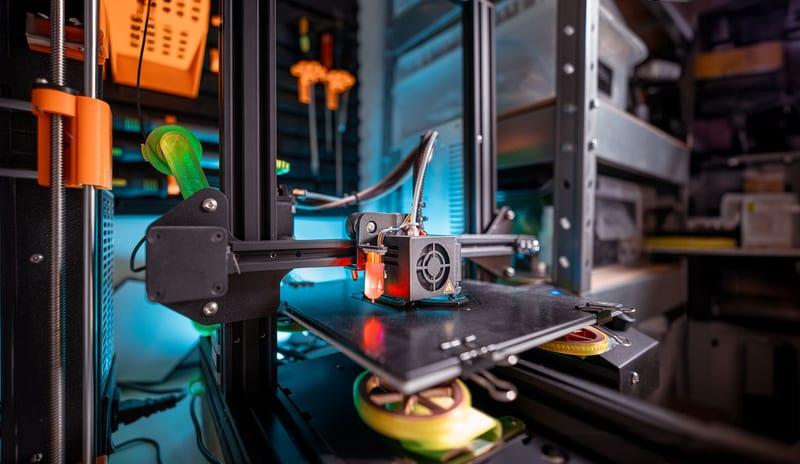
Stock photograph of this product class, not of this specific unit.
#ad We earn a commission · price as of November 20, 2026
1. Best if you genuinely change nozzle diameters
Bambu Lab H2C
Automatic hotend swapping on the large-format H2 chassis, released November 13, 2025. The only machine here that makes a mixed-nozzle job a single file.
The H2C solves a problem most owners have and few name. You own a 0.2 mm nozzle for detail and a 0.6 mm for bulk, and you use neither, because swapping is four interruptions per print. The registry lists automatic hotend swapping as this machine's headline feature, on the large-format H2 chassis, released November 13, 2025 — and that is the feature that removes the friction rather than working around it.
The second benefit is build area, and it comes free with the chassis rather than being the pitch. If your prints mix fine detail and bulk — terrain, models with bases, functional parts with cosmetic faces — this is the most interesting engineering in the current lineup, and the registry says so.
The costs are stated just as plainly: a newer, more complex mechanism means more to go wrong and a thinner service history, and because it is recent, third-party accessory support is minimal. That second point is a bigger deal than it sounds on a site like this one — most of the upgrades in the Panda range simply do not fit it yet.
What it gets right
- Automatic hotend swapping removes the one manual step that stops people using a 0.2 mm nozzle for detail
- Large-format H2 chassis, so build area is not the compromise
- The most interesting engineering in the current lineup if your prints mix fine detail and bulk
What it does not
- A newer, more complex mechanism means more to go wrong and a thinner service history
- Released November 2025 — third-party accessory support is minimal
- Only pays off if you genuinely swap nozzle sizes often; most owners do not
| Released | November 13, 2025 |
|---|---|
| Headline feature | Automatic hotend swapping |
| Series | H2 large format |
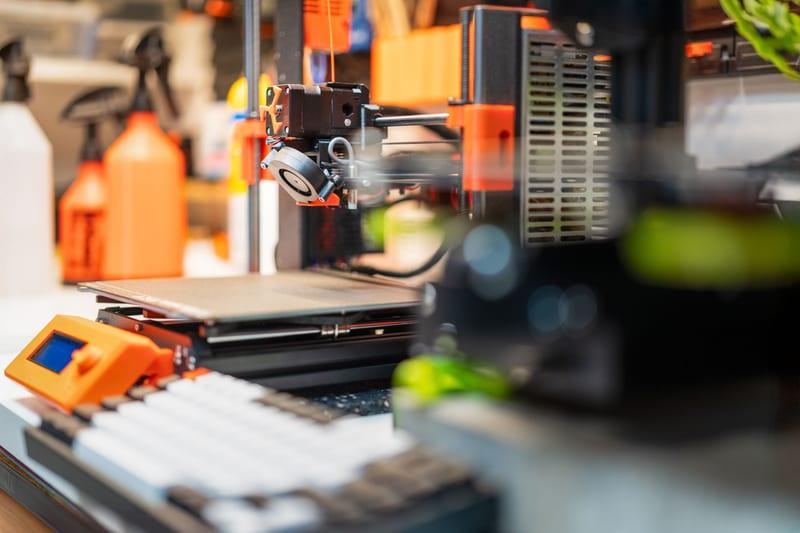
Stock photograph of this product class, not of this specific unit.
#ad We earn a commission · price as of November 20, 2026
2. Best if one nozzle is all you ever fit
Bambu Lab X1-Carbon
Lidar bed levelling, an aluminum enclosure, a hardened steel nozzle and an auxiliary fan, all standard, in a machine with four years of accessory support behind it.
The X1C's case against a far newer machine rests on maturity. The registry lists it as an enclosed CoreXY with lidar-based bed levelling, released May 24, 2022, with an aluminum enclosure, a hardened steel nozzle, an auxiliary cooling fan and a 5-inch touchscreen as standard. Everything on that list has been in the field for years.
That maturity is the actual product. Parts are available, profiles are proven, the failure modes are documented in a hundred forum threads, and essentially every third-party upgrade worth buying fits it. The hardened nozzle out of the box also means abrasive filament is a capability rather than a purchase.
Be clear about where it loses. The registry records that it is no longer the flagship and has not been since March 2025, that the H2D and X2D both exceed it, and that it is single-nozzle where the top of the range is dual. Against an H2C specifically, it cannot change nozzles without you. X1C versus P2S is the comparison if a current desk machine is the real alternative.
What it gets right
- Ships with a hardened steel nozzle, so abrasive filament is a day-one capability rather than a purchase
- Lidar bed leveling and first-layer inspection, which the P-series does not have
- An aluminum enclosure holds chamber heat better than the P1S's panels
What it does not
- It is not the current flagship and has not been since March 2025 — buying it new at flagship money is a mistake
- The H2D and X2D both exceed it, so resale value is on a downward path
- Single nozzle, where the current top of the range is dual
| Series | X1, released May 24, 2022 |
|---|---|
| Type | Enclosed CoreXY with lidar-based bed leveling |
| X1-Carbon spec | Aluminum enclosure, hardened steel nozzle, auxiliary cooling fan |
| Screen | 5-inch touchscreen |
| Superseded by | H2D (March 2025) and X2D (April 2026) |

#ad We earn a commission · price as of November 20, 2026
3. The cheap version of the H2C's whole argument
Bambu Lab 0.6 mm High Flow Induction Hotend
A 0.6 mm high-flow induction hotend. Owning two hotends and swapping by hand gets you most of a mixed-nozzle workflow for a tiny fraction of a new machine.
Before buying a machine to automate hotend swapping, price out doing it by hand. The registry lists this as a 0.6 mm high-flow induction hotend, positioned for carbon-fibre filament that clogs a 0.4 mm nozzle on chopped fibre — and a second hotend on the shelf is what turns “I own a nozzle size” into “I use one”.
The honest comparison is this: a hand swap costs you a few minutes and a calibration between jobs. The H2C removes that cost within a single job. If your detail work and your bulk work are different prints — which for most people they are — the hotend on the shelf is the rational purchase and the difference in money is enormous.
Where it genuinely does not substitute is one print that needs both diameters. Nozzle sizes explained covers what each diameter changes, and the nozzle roundup compares the hotends properly.
What it gets right
- The larger bore is the real fix for carbon-fiber clogging, not just a faster nozzle
- Hardened steel plus 0.6 mm is the combination for chopped-fiber filament
- Noticeably faster on functional parts where layer lines do not matter
What it does not
- H2-series only — this is not the part for a P1S or an X1C, whatever the nozzle size you want
- Every profile has to be re-sliced; a 0.6 mm nozzle is not a drop-in for 0.4 mm settings
- Visible layer lines and softer detail on anything decorative
| Nozzle | Hardened steel, 0.6 mm |
|---|---|
| Fits | Bambu Lab H2 series (listing states H2C) |
| Type | High-flow induction hotend, genuine replacement part |
Questions people actually ask
What is the difference between the X1C and the H2C?
The H2C automates hotend swapping on the large-format H2 chassis and was released November 13, 2025. The X1C is a 256 mm-class enclosed CoreXY from May 2022 whose standard kit includes lidar bed levelling, an aluminum enclosure, a hardened steel nozzle and an auxiliary cooling fan. One automates nozzle changes; the other does a single nozzle very well with years of accessory support behind it.
Is automatic hotend swapping worth it?
Only if you actually change nozzle diameters, and the honest test is how many times you did it in the last six months. The registry notes that most owners do not change diameters often. If the answer is zero to twice, the automation has nothing to automate. If single prints need both a fine and a coarse nozzle, nothing else in the lineup does this.
Can I get a mixed-nozzle workflow without buying an H2C?
Largely, yes - keep a second hotend on the shelf and swap between jobs. The registry lists a 0.6 mm high-flow induction hotend positioned for carbon-fibre filament that clogs a 0.4 mm nozzle. That covers detail-and-bulk work split across different prints for a tiny fraction of a new machine. What it cannot do is change diameter inside one print.
Does the H2C have good third-party upgrade support?
Not yet. The registry notes minimal third-party accessory support because the machine is recent, and that matches what is purchasable today - most of the Panda-range upgrades target the P-series and X-series where the installed base is. Expect an H2C to stay close to stock for a while.
Is the X1C still a good machine next to the H2 series?
For a single-nozzle workflow in the 256 mm class, yes, and its maturity is the product - parts, proven profiles, documented failure modes and almost every third-party upgrade. The registry is also clear that it is no longer the flagship, that the H2D and X2D both exceed it, and that it is single-nozzle where the top of the range is dual.
Sources
- Bambu Lab model list and release dates - Wikipedia, retrieved 2026-10-11
- Build volumes and feature rows for the X1-Carbon, X2D, H2S, H2D, H2D Pro, H2C and A2L, and for every AMS unit, come from this site's product registry, whose spec provenance is documented in content/products.ts - no figure is asserted that a manufacturer or a cited third party did not publish
Read this next
- Bambu Lab H2D vs H2CTwo nozzles held at once versus hotends swapped on demand. The H2C wins on multi-color waste and time; the H2D wins on soluble supports and flexibles.
- Bambu Lab X1C vs P2SThe X1C brings lidar, an aluminum enclosure and a hardened nozzle day one. The P2S brings a newer platform and a quick nozzle swap. Same 256 mm class either way.
- Which Bambu Lab printer has the largest print areaThe H2D holds the largest reported figure at 350 x 320 x 325 mm - with the full table, the models we will not estimate, and the test for whether you need it.
- Bambu Lab nozzle sizes explainedWhat 0.2, 0.4, 0.6 and 0.8 mm nozzles are each for, what changing costs in re-slicing, and why friction stops most people switching.
- Bambu Lab upgrade kitsTwo first-party kits matter: the P1P enclosure kit and the AMS 2 Pro upgrade kit. Everything else called a kit is a part, and this page says which part.
- The best Bambu Lab printer for miniaturesThe P1S wins because a small nozzle needs a rigid frame and a still chamber. Resin still beats it on display busts, and this page says where the line is.