Printers
Is the Bambu Lab H2D worth it?
Yes, if a print does not fit or needs two materials. No, for almost every other reason people give. Four questions decide it, and three of them you can answer tonight.
By Michael W. · Published October 17, 2026
Some links here are Amazon affiliate links, so a purchase may earn this site a commission at no cost to you. It does not change what gets recommended or the order it appears in — how that works.
The short answer
The H2D is worth it for two things: a bed no desk machine has, and a true dual nozzle. The registry lists a reported 350 x 320 x 325 mm build volume and a direct-drive dual nozzle, released March 25, 2025. Those are capabilities you cannot add to a smaller machine later.
It is not worth it for speed, print quality or multicolor. Every current Bambu Lab machine shares the same slicer and similar motion performance, and multicolor is an AMS 2 Pro on the printer you already own — for a fraction of the money.
If only one of the two tests is a yes, buy a different machine. Size but not dual nozzle is an H2S. Dual nozzle but not size is an X2D. Paying for both when you need one is the commonest expensive mistake in this part of the range.
Test one: does a print you actually made not fit?
Measure the largest thing you printed in the last six months — the real one, not the project you keep meaning to start. If it fits inside 256 mm with room to spare, build volume is not your constraint and the H2D's cleanest argument does not apply.
The test is deliberately retrospective because imagined prints are unlimited and real ones are not. If you have genuinely split designs into glued sections, or declined to make something because of the bed, that is a yes and it is worth money. Which Bambu Lab printer has the largest print area ranks the lineup on this alone.
Test two: have you abandoned a design over supports?
This is the dual-nozzle test, and it is the one people get wrong because they translate “two nozzles” into “two colors”. What two independent hotends actually buy is a support material in a different polymer from the part — something that breaks away or dissolves rather than being cut out of an internal cavity.
So the honest question is whether you have designed around that limit: an enclosed void you could not clear, an overhang whose support scar ruined a cosmetic face, a part you printed in two pieces purely to avoid supports. If yes, this is a capability purchase. If you mostly print parts whose supports come off fine, it is not.
| Need a bigger bed? | Need a second polymer? | The machine that matches |
|---|---|---|
| Yes | Yes | H2D — reported 350 x 320 x 325 mm, direct-drive dual nozzle |
| Yes | No | H2S — reported 325 x 320 x 325 mm, single nozzle, costs less |
| No | Yes | X2D — dual nozzle at the reported 256 mm class, reported 65 C chamber |
| No | No | Keep your machine. Spend the difference on an AMS 2 Pro and a hotend |
Test three: is the reason actually multicolor?
multicolor is the single commonest reason people start pricing an H2D, and it is the one this machine is the worst value for. An AMS feeds one hotend and purges between colors; a dual nozzle gives you two materials, not sixteen colors. For color, four spools on the printer you own is the right purchase.
The registry agrees in the H2D's own entry: if multi-color is the actual goal, an AMS 2 Pro on your existing printer gets you most of the way for a fraction of it. Read the multicolor roundup and combo or base printer before you spend machine money on a color problem.
Test four: where is it going to live?
The registry notes that large-format machines want floor or shelf space rather than desk space. That sounds like a logistics footnote and it is the reason some of these purchases end badly — a machine that does not fit where you work gets used less, not more.
No source we fetched published external dimensions for the H2 series, so this page does not state one; for scale, 3DJake lists the P2S at 392 x 406 x 478 mm and 14.9 kg and Makerpoint lists the P1S at 389 x 389 x 458 mm and 12.95 kg. The H2 chassis is larger than both. Printer dimensions has the published figures, and making a Bambu Lab printer quieter matters more once the machine is in the room with you.
What about the H2D Pro?
The Pro is a separate question with a narrower answer. The registry lists it as released August 11, 2025, positioned for enterprise, with a tungsten carbide nozzle at HRA 90 against hardened steel's HRA 74, and reportedly the same print hardware as the H2D plus enterprise networking.
That carbide nozzle changes abrasive-filament maintenance intervals outright, and enterprise networking matters the moment you run more than two machines. For a single hobby machine the registry's own verdict stands: the premium buys features you will never configure, and carbide is harder but more brittle, so a crash costs more. H2D versus H2D Pro is the comparison, and printers for a print farm is the page if that is the real context.
What this page is and is not based on
Build volumes, nozzle architecture, release dates, chamber figures, nozzle hardness ratings and positioning are registry spec rows whose provenance is documented in content/products.ts; every reported figure is labelled as reported. The P1S and P2S dimensions quoted for scale come from the Makerpoint P1S listing and the 3DJake P2S listing, both retrieved 11 October 2026. Nobody here has run an H2D, an H2S, an H2D Pro or an X2D — there is no test lab behind this site, the four tests above are decision framework rather than measurement, and how we review says so. No price appears in prose.
One more option this page deliberately does not cost in: leaving the range. Bambu Lab vs the Creality K2 Plus compares the H2D against a machine listed at a true 350 mm cube with an actively heated chamber, which is the one capability no Bambu enclosure on this site has.
What to buy
Stock photograph of this product class, not of this specific unit.
#ad We earn a commission · price as of November 20, 2026
1. Worth it for build volume and a second nozzle
Bambu Lab H2D
A reported 350 x 320 x 325 mm build volume with a direct-drive dual nozzle, released March 2025. Both are capabilities, not conveniences.
The H2D passes the worth-it test on two counts and fails it on every other reason people give. The registry lists a reported 350 x 320 x 325 mm build volume — the largest of the models an enthusiast realistically buys — a direct-drive dual nozzle, a March 25, 2025 release, and a Laser Edition that reportedly adds laser, blade and pen toolheads.
Build volume is the cleanest argument because it is the only thing on that list you cannot buy later. No upgrade makes a 256 mm machine print a 320 mm part, and splitting a design into glued sections is a real compromise in strength and finish, not just in effort.
The dual nozzle is the more valuable and more misunderstood half. Two independent hotends means dissolvable support in a different polymer from the part, which unlocks geometry rather than speeding anything up. The registry does not hide the costs: the biggest single jump in money in the lineup, two of every maintenance task, and the blunt note that if multi-color is the goal, an AMS 2 Pro on your existing printer gets most of the way for a fraction of it.
What it gets right
- Direct-drive dual nozzle is a different kind of machine, not a faster version of the one you own
- The largest reported build area of the models an enthusiast realistically buys
- Two hotends means dissolvable or contrast material without an AMS color-change purge every layer
What it does not
- This is the biggest single jump in money in the whole lineup — it has to replace a workflow, not a wish
- Two nozzles is two of every maintenance task
- If multi-color is the actual goal, an AMS 2 Pro on your existing printer gets you most of the way for a fraction of it
| Released | March 25, 2025 |
|---|---|
| Type | Large-format enclosed, direct-drive dual nozzle |
| Build volume (reported) | 350 x 320 x 325 mm |
| Laser Edition (reported) | Adds laser, blade and pen toolheads |
Stock photograph of this product class, not of this specific unit.
#ad We earn a commission · price as of November 20, 2026
2. Worth considering instead, if it is only the size
Bambu Lab H2S
A reported 325 x 320 x 325 mm build volume, single nozzle, released August 2025. The H2 bed without paying for a second hotend you will not use.
This is the pick most people in the market for an H2D should look at first. The registry lists the H2S at a reported 325 x 320 x 325 mm build volume, single nozzle, released August 26, 2025, and notes it costs less than the H2D for the same reported footprint and near-identical bed size.
Read that carefully, because it decomposes the H2D's price into its two parts. If your answer to the build-volume test is yes and your answer to the dual-nozzle test is no, the H2S gives you the capability you need and declines the one you do not. One hotend is also one hotend to maintain.
The registry's caution applies here too: large-format machines want floor or shelf space, not desk space, and if your prints all fit in 256 mm you are paying for air either way. H2D versus H2S is the direct comparison.
What it gets right
- The large-format build area is the only thing a P1S genuinely cannot give you
- Single nozzle means one hotend to maintain instead of two
- Costs less than the H2D for the same reported footprint and near-identical bed size
What it does not
- No dual nozzle, so no support material in a different polymer and no two-color single-head workflow
- Large-format machines want floor or shelf space, not desk space
- If your prints all fit in 256 mm, you are paying for air
| Released | August 26, 2025 |
|---|---|
| Type | Large-format enclosed, single nozzle |
| Build volume (reported) | 325 x 320 x 325 mm |
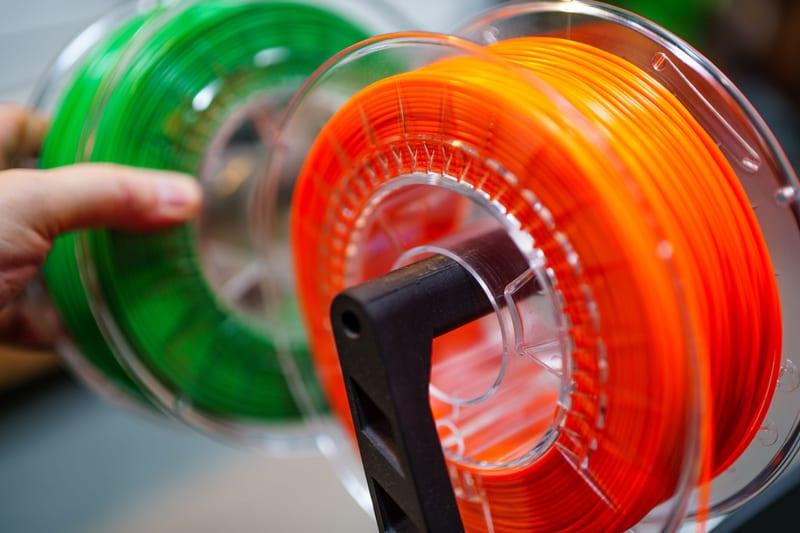
Stock photograph of this product class, not of this specific unit.
#ad We earn a commission · price as of November 20, 2026
3. Worth buying instead, if the goal is multicolor
Bambu Lab AMS 2 Pro
Four spools with active drying on the P-series or X-series machine you already own. This is what most people actually wanted when they started pricing an H2D.
A large share of “is the H2D worth it” searches are really multicolor searches. The registry lists the AMS 2 Pro as a four-spool automatic material system whose headline feature is active filament drying, inheriting humidity monitoring and RFID logging from the original AMS.
On the printer you already own, that is four colors and a drying problem solved for a fraction of a new machine. The registry notes the honest downside too: four-color printing wastes filament on every tool change and the purge tower is real and not small.
What it is not is a dual nozzle. One hotend means every material change is a purge, so dissolvable support in a second polymer stays an H2D capability. AMS 2 Pro compatibility and the filament buffer covers fitment and which kit variant you need.
What it gets right
- Active drying means the spool you print from is the spool you dried — no transfer step, no re-absorption window
- Four colors on a machine you already own, for a fraction of a new printer
- RFID logging removes the single most common cause of a ruined multi-color print: the wrong material profile
What it does not
- Four-color printing wastes filament on every tool change; the purge tower is real and it is not small
- If you only print single-color PLA, you are buying a dryer with a filament changer attached
- Needs the space beside or above the printer that your shelf may not have
| Type | Four-spool automatic material system |
|---|---|
| Headline feature | Active filament drying |
| Inherits | Humidity monitoring and RFID logging from the original AMS |
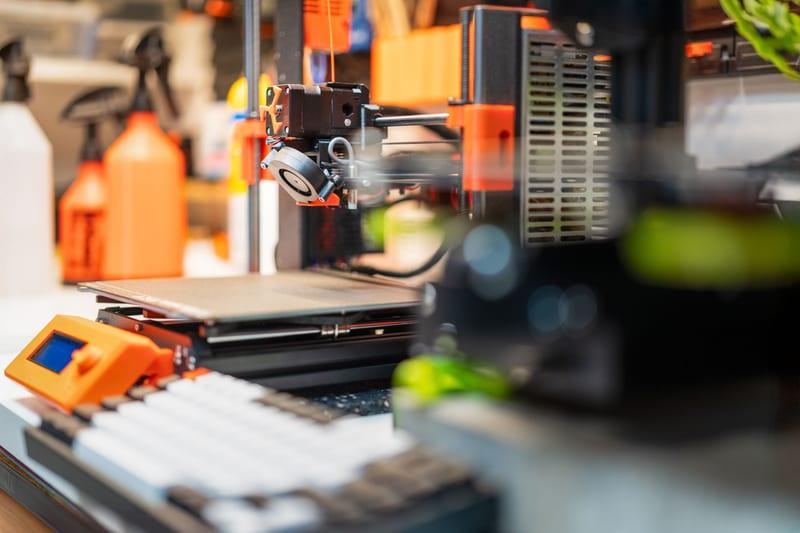
Stock photograph of this product class, not of this specific unit.
#ad We earn a commission · price as of November 20, 2026
4. Worth considering instead, for the chamber
Bambu Lab X2D
Dual nozzle at the 256 mm class with a reported 65 C heated chamber, released April 2026. The dual-nozzle capability without the large-format footprint.
If the dual-nozzle test is a yes and the build-volume test is a no, this is the machine that matches your answers. The registry lists the X2D as an enclosed CoreXY dual-nozzle machine released April 14, 2026, with cited improvements in air filtration, thermal management and speed, a reported 256 mm cube and a reported chamber heated to 65 C.
That chamber figure is the one spec on this page that is a genuine capability jump over any passive enclosure, including the H2 chassis as described in the registry. A heated chamber is what turns ABS and ASA from a technique into a setting.
Costs: released April 2026, so third-party part support is thin, and the registry states plainly that nobody here has run one — everything on this site about the X2D is specification and reasoning rather than observation. H2D versus X2D is the comparison.
What it gets right
- Dual nozzle without stepping up to the H2 footprint — two materials on a desk-sized machine
- A reported 65 C heated chamber is a real capability jump over any passive P-series enclosure
- Newest filtration and thermal hardware in the smaller form factor
What it does not
- Released April 2026, so third-party part support is thin compared with the P1S
- Same reported 256 mm build volume as a P1S — this is a capability upgrade, not a size one
- I have not run one. What follows anywhere on this site about the X2D is specification and reasoning, not observation
| Released | April 14, 2026 |
|---|---|
| Type | Enclosed CoreXY, dual nozzle |
| Improvements cited | Air filtration, thermal management and speed |
| Build volume (reported) | 256 mm cube |
| Chamber (reported) | Heated to 65 C |
Questions people actually ask
Is the Bambu Lab H2D worth it?
For two things: a bed no desk machine has, and a true dual nozzle. The registry lists a reported 350 x 320 x 325 mm build volume and a direct-drive dual nozzle, released March 25, 2025. It is not worth it for speed, print quality or multicolor - those have far cheaper answers, and multicolor in particular is an AMS 2 Pro on the printer you already own.
Is the H2D worth it over the H2S?
Only if you need two materials in one print. The registry lists the H2S at a reported 325 x 320 x 325 mm against the H2D's 350 x 320 x 325 mm, notes the near-identical bed size and reported footprint, and records that the H2S costs less. If build volume is the whole reason you are shopping, the H2S delivers it without a second hotend to buy and maintain.
Is the H2D worth it over the X2D?
It depends entirely on build volume. Both have a dual nozzle; the registry reports the X2D at the 256 mm class with a chamber heated to 65 C, released April 14, 2026, and the H2D at a reported 350 x 320 x 325 mm. If your prints fit in 256 mm, the X2D gives you dual-nozzle capability plus a heated chamber without the large-format footprint.
Is the H2D Pro worth it?
For a print farm or a shop, possibly. The registry lists a tungsten carbide nozzle at HRA 90 against hardened steel's HRA 74, which changes abrasive-filament maintenance intervals outright, plus enterprise networking and reportedly the same print hardware as the H2D. For a single hobby machine the premium buys features you will never configure, and carbide is more brittle, so a crash costs more.
Will an H2D print faster or better than my P1S?
That is not what it adds. Every current Bambu Lab machine shares the same slicer and broadly similar motion performance, so the H2D is a capability upgrade - build volume and a second hotend - rather than a speed or quality one. If print quality is your complaint, start with dry filament, a healthy plate and a nozzle that is not worn.
Does a dual nozzle replace an AMS?
No, and conflating them is the expensive mistake here. A dual nozzle gives you two materials, including dissolvable support in a different polymer from the part. An AMS gives you up to four colors through one hotend with a purge between each. If color is the goal, buy the AMS; if geometry is the goal, buy the nozzles.
Sources
- Bambu Lab model list and release dates - Wikipedia, retrieved 2026-10-11
- P1S build volume (256 x 256 x 256 mm), machine dimensions (389 x 389 x 458 mm), net weight 12.95 kg, 300 C nozzle and 100 C bed - Makerpoint P1S listing, retrieved 2026-10-11
- P2S build volume (256 x 256 x 256 mm), printer dimensions (392 x 406 x 478 mm), net weight 14.9 kg, 300 C nozzle, 110 C bed and the absence of an active chamber heater - 3DJake P2S listing, retrieved 2026-10-11
- Build volumes and feature rows for the X1-Carbon, X2D, H2S, H2D, H2D Pro, H2C and A2L, and for every AMS unit, come from this site's product registry, whose spec provenance is documented in content/products.ts - no figure is asserted that a manufacturer or a cited third party did not publish
Read this next
- Bambu Lab H2D vs H2STwo machines on one chassis. The beds are nearly the same; the difference is one nozzle, and most people will not use the second.
- Bambu Lab H2D vs P2SThe H2D buys a 350 x 320 x 325 mm bed and a dual nozzle. The P2S buys a screen, a quick nozzle swap and a 256 mm cube. Different problems, not two price points.
- Bambu Lab H2D vs X2DH2D for build volume, X2D for an actively heated chamber in a desk footprint. Both reported dual nozzle, so that is not the deciding factor.
- Bambu Lab H2D vs H2D ProThe Pro's tungsten carbide nozzle at HRA 90 and enterprise networking are a running-cost argument. For one hobby machine, buy the H2D.
- Bambu Lab X1C vs H2CThe H2C automates hotend swapping on the large H2 chassis. The X1C gives lidar, aluminum and a hardened nozzle in a 256 mm box. Different jobs entirely.
- Which Bambu Lab printer has the largest print areaThe H2D holds the largest reported figure at 350 x 320 x 325 mm - with the full table, the models we will not estimate, and the test for whether you need it.