Printers
Creality K2 Plus alternatives
Three different things come in that box - a huge cube, a hot chamber, and automatic four-spool color. Work out which one you are buying and the alternative picks itself.
By Michael W. · Published November 22, 2026
Some links here are Amazon affiliate links, so a purchase may earn this site a commission at no cost to you. It does not change what gets recommended or the order it appears in — how that works.
Quick picks
Tap any row to jump to the full write-up. Prices are read from Amazon and dated; stock is always whatever the listing says.
| # | Product | Best for | Price |
|---|---|---|---|
| 1 | Bambu Lab H2S The largest print space Bambu sells, at a stated 340 x 320 x 340 mm, with a single nozzle to maintain instead of two. | Best alternative if you are buying the build volume Buying the H2 build volume without paying for a dual nozzle you would not use | Check price on Amazon #ad We earn a commission · price as of November 23, 2026 |
| 2 | Bambu Lab H2D A published 65 C actively heated chamber, a 350 C hardened steel nozzle and a second nozzle for soluble supports, in the same large-format body. | Best alternative if the heated chamber was the point The genuine step up — large format plus a direct-drive dual nozzle in one machine | Check price on Amazon #ad We earn a commission · price as of November 23, 2026 |
| 3 | 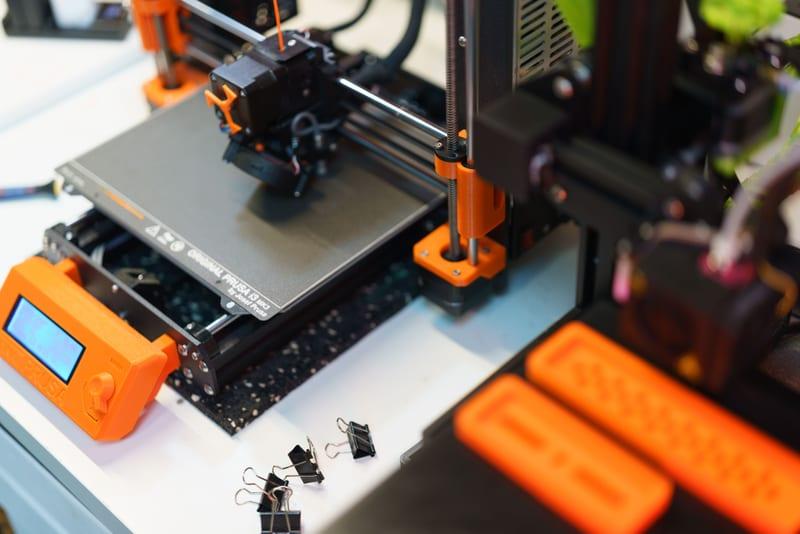 FlashForge Creator 5 Four independent toolheads in a 256 mm cube, so materials change without purging the last one through a shared nozzle. | Best alternative if four-spool color was the point Multi-material printing where purge waste is the actual complaint - four independent toolheads instead of one shared nozzle | Check price on Amazon #ad We earn a commission · price as of November 23, 2026 |
| 4 |  Bambu Lab P2S If your parts fit a 256 mm bed, the enclosed P-series machine plus a four-spool AMS does the same work for far less money and floor space. | Budget pick: the honest answer for most people The P1S owner whose actual complaint is the nozzle swap and the missing screen |
The K2 Plus sells three capabilities at once, and no single alternative replaces all three. Creality's published figures are a 350 x 350 x 350 mm build volume, a chamber actively heated to 60 C, a tri-metal nozzle to 350 C, a 120 C bed, up to 600 mm/s at up to 30,000 mm/s2, and the CFS four-spool system with automatic filament change — in a 495 x 515 x 640 mm, 33.5 kg machine. That is a genuinely capable specification and this page is not going to pretend otherwise.
So split it. Buying the volume? The large-format single-nozzle Bambu is the closest thing. Buying the hot chamber? The dual-nozzle H2 publishes 65 C and adds a second nozzle the K2 does not have. Buying four-spool color? A four-toolhead machine does it without purging. And if your parts fit inside 256 mm, the cheapest right answer is an enclosed desktop machine plus an AMS.
What the K2 Plus is known for
Worth stating plainly before recommending anything else, because an alternatives page that misrepresents the original is useless. The K2 Plus Combo is a large-format enclosed CoreXY with three things that are hard to find together at its price:
A true 350 mm cube. 350 x 350 x 350 mm in all three axes. The largest print space Bambu states for any of its machines is the H2S at 340 x 320 x 340 mm, so on paper the Creality is larger in every axis — most noticeably in depth.
An actively heated chamber at 60 C. Published, not implied. That is the feature that makes big ABS and ASA parts viable rather than a warping lottery, and it is the specification most desktop enclosures cannot claim at all — chamber temperature on a passive enclosure is the page explaining why a passive box is not the same thing.
Four-spool color in the box. The CFS system with automatic filament change, plus an Apus all-metal direct drive extruder and a tri-metal nozzle to 350 C, rather than three upgrades bought separately.
The trade is equally plain and it is not a criticism of the machine: at 33.5 kg and 495 x 515 x 640 mm it is an appliance rather than a desk tool, and it is a separate ecosystem. Different slicer, different profiles, no AMS and no Bambu plate fits it. If you already own a Bambu Lab printer, that second point is the real cost of the switch, and it is the reason most of this page points at the H2 series.
The four alternatives, side by side
| Machine | Published build volume | Chamber | Multi-material | What you give up |
|---|---|---|---|---|
| Creality K2 Plus Combo (the original) | 350 x 350 x 350 mm | Actively heated to 60 C | CFS, four spools, one nozzle | Ecosystem, floor space, 33.5 kg |
| Bambu Lab H2S | 340 x 320 x 340 mm stated today; 325 x 320 x 325 mm reported at launch | Not asserted here - see note | AMS units, bought separately | The second nozzle; a true 350 mm cube |
| Bambu Lab H2D | 325 x 320 x 325 mm single nozzle; 350 x 320 x 325 mm total | Active heating to 65 C (published) | Dual nozzle plus AMS units | Price, 31 kg, two hotends to maintain |
| FlashForge Creator 5 | 256 x 256 x 256 mm | None; the Creator 5 Pro adds 65 C | Four independent toolheads | Build volume, enclosure, ecosystem |
| Bambu Lab P2S | 256 x 256 x 256 mm | No published figure | AMS 2 Pro, four spools, one nozzle | Build volume entirely |
How to choose, in four questions
1. Measure your largest actual print
Not the one you imagine making — the biggest thing you have actually sliced in the last six months. If it fits in 256 mm, the entire large-format section of this page is optional and the budget pick is your answer. The build volume page has the full per-model figures.
2. Do you need a hot chamber or just a closed box?
These are different products. A passive enclosure traps heat the bed produces; an actively heated chamber holds a set temperature. For ABS, ASA and carbon-filled nylon the second one is what stops large parts warping, and only two machines on this page publish a figure for it. If your material list is PLA and PETG, you do not need either — how to print ABS is the page that sorts out which camp you are in.
3. Is the four-spool system about color or about materials?
Color changes through one nozzle are what a CFS, an AMS or an IFS does well. Printing a part in one material with supports in another is what a second nozzle or four toolheads does, and a shared-nozzle system cannot do it at all. That single distinction decides between the dual-nozzle machine, the toolhead machine and the cheap AMS route. AMS alternatives covers the third-party side of it.
4. How much does leaving the ecosystem cost you?
If you already own a Bambu Lab printer, switching brands means a different slicer, new profiles, and a shelf of plates, nozzles and AMS units that no longer fit anything. That is not an argument against Creality or FlashForge — it is a real cost that belongs in the comparison, and it is why two of the four picks here are in-family. Bambu Lab alternatives is the mirror image of this page for readers who want to leave deliberately.
Alternatives this page considered and did not rank
The Bambu Lab X2D. Published as a 65 C actively heated chamber in the same body size as a P2S, which makes it an interesting machine and a poor K2 Plus alternative: the print volume is the 256 mm class, so it answers the chamber question and not the size one. P2S versus X2D and H2D versus X2D are the pages for it.
The FlashForge AD5X. Four-spool IFS with automatic color change in the box, which is the K2 Plus's headline feature at a much lower price, but a 220 mm cube and an open frame — it answers the color question only. It is ranked on the FlashForge comparison.
The Elegoo Centauri Carbon 2. A 350 C hardened steel nozzle in a 256 mm cube, and the one machine documented on this site that reaches the published nozzle range for PPS-CF. It carries no buy row anywhere here because the retailer we could read states delivery to the United States is not possible, so it is discussed on the Elegoo comparison without one.
A Creality K2 Plus bought today. Still a reasonable purchase on its published specification. It has no buy row on this page for one reason only: its current US stock could not be verified on the day this was written, because Creality's own store would not serve us a product page. Check it yourself before you rule it out, and read the head-to-head comparison if it is still on your list.
Who should buy what
Your parts do not fit 256 mm and you print one material at a time. The large-format single-nozzle machine. It is the cheapest way to get that volume without leaving the ecosystem.
You print ABS, ASA or carbon-filled nylon in large sizes. The dual-nozzle machine with the published 65 C chamber and specified filtration, and read the carbon fiber page for the nozzle and drying side of that purchase.
Purge waste is your actual complaint. The four-toolhead machine, with the open-frame limitation understood.
You wanted a big machine because big machines look capable. Be honest about it, buy the enclosed desktop machine and an AMS, and spend the difference on filament, a dryer and a second build plate — the three purchases that change print outcomes more reliably than bed size does.
You already own a P1S and just want more room. Read upgrading from a P1S first. The step that actually helps is usually not the one you were about to buy.
What this page is and is not based on
The K2 Plus figures are the retailer's published specification, retrieved 18 October 2026 and cited below. The H2S volume statement and the H2D specification table are Bambu Lab's own, retrieved from its US store on 22 November 2026, and the stock status for both machines was read from that store's structured data on the same day. The Creator 5 was confirmed available on FlashForge's own US store on 22 November 2026. Everything else is a registry spec row whose provenance is recorded in the registry itself. No machine on this page has been run or bench-tested here — there is no test lab behind this site, which is why the reasoning above is published specification, mechanism and fitment rather than results. See how we review.
Every pick in full
Stock photograph of this product class, not of this specific unit.
#ad We earn a commission · price as of November 23, 2026
1. Best alternative if you are buying the build volume
Bambu Lab H2S
The largest print space Bambu sells, at a stated 340 x 320 x 340 mm, with a single nozzle to maintain instead of two.
If the reason you are looking at a K2 Plus is simply that your parts do not fit a 256 mm bed, this is the shortest route out of that problem without leaving the ecosystem your plates, profiles and spare parts already live in. Bambu's own store page now states a build volume of 340 x 320 x 340 mm and calls it the largest print space among all its printers, with a claimed 120% more volume than an X1 Carbon; the figure reported at launch, and the one in the specification table below, is 325 x 320 x 325 mm. Both are printed here and neither is preferred. Every variant on its store page showed in stock when this page was written.
The single-nozzle choice is the real argument for it over the H2D below. One hotend is one thing to clean, one thing to calibrate and one thing to replace, and for printing one material at a time in a big volume that is the sensible configuration. It is also the cheaper of the two H2 machines, which matters when the thing you wanted was space.
Honest cons. It is a floor-or-shelf machine, not a desk machine. A single nozzle means no support material in a different polymer and no two-color single-head workflow, so if you were drawn to the K2 Plus for its four-spool system you are paying for volume here and will still need an AMS. And if your prints actually fit inside 256 mm, you are buying air — the value page makes that case bluntly.
What it gets right
- The large-format build area is the only thing a P1S genuinely cannot give you
- Single nozzle means one hotend to maintain instead of two
- Costs less than the H2D for the same reported footprint and near-identical bed size
What it does not
- No dual nozzle, so no support material in a different polymer and no two-color single-head workflow
- Large-format machines want floor or shelf space, not desk space
- If your prints all fit in 256 mm, you are paying for air
| Released | August 26, 2025 |
|---|---|
| Type | Large-format enclosed, single nozzle |
| Build volume (reported) | 325 x 320 x 325 mm |
Stock photograph of this product class, not of this specific unit.
#ad We earn a commission · price as of November 23, 2026
2. Best alternative if the heated chamber was the point
Bambu Lab H2D
A published 65 C actively heated chamber, a 350 C hardened steel nozzle and a second nozzle for soluble supports, in the same large-format body.
This is the machine to compare with the K2 Plus spec for spec, because it answers the same two questions. Bambu's published table gives the H2D active chamber heating to a maximum 65 C, a hardened steel nozzle to a maximum 350 C with 0.4 mm included and 0.2 to 0.8 mm supported, a 120 C heatbed, 1000 mm/s maximum toolhead speed at 20,000 mm/s2, and maximum hotend flow of 40 mm3/s standard or 65 mm3/s with the optional high-flow hotend. Build volume is 325 x 320 x 325 mm on a single nozzle and 350 x 320 x 325 mm total across both.
The capability the K2 Plus does not have is the second nozzle. Two nozzles means soluble support material in a different polymer from the part, which no single-nozzle machine with a four-spool feeder can do no matter how many spools it carries. Filtration is also specified rather than implied: a G3 pre-filter, H12 HEPA and activated carbon, which is what makes a hot chamber usable in a room you sit in. H2D versus H2S is the page for choosing between the two.
Honest cons. At 492 x 514 x 626 mm and 31 kg it is heavy and large, and it is the most expensive machine on this page. Two nozzles is two of everything to maintain. The laser edition is a separate product decision and not a free extra — the laser page covers whether that is worth paying for. And a hot chamber only earns its keep if you actually print ABS, ASA or carbon-filled engineering material.
What it gets right
- Direct-drive dual nozzle is a different kind of machine, not a faster version of the one you own
- The largest reported build area of the models an enthusiast realistically buys
- Two hotends means dissolvable or contrast material without an AMS color-change purge every layer
What it does not
- This is the biggest single jump in money in the whole lineup — it has to replace a workflow, not a wish
- Two nozzles is two of every maintenance task
- If multi-color is the actual goal, an AMS 2 Pro on your existing printer gets you most of the way for a fraction of it
| Released | March 25, 2025 |
|---|---|
| Type | Large-format enclosed, direct-drive dual nozzle |
| Build volume (reported) | 350 x 320 x 325 mm |
| Laser Edition (reported) | Adds laser, blade and pen toolheads |
Stock photograph of this product class, not of this specific unit.
#ad We earn a commission · price as of November 23, 2026
3. Best alternative if four-spool color was the point
FlashForge Creator 5
Four independent toolheads in a 256 mm cube, so materials change without purging the last one through a shared nozzle.
Read the K2 Plus spec sheet again and notice what the CFS system is: four spools feeding one nozzle, with automatic filament change. Every machine in that class — CFS, AMS, IFS — has to purge the old material through the shared hotend at each change, and that purge is where multi-color printing gets expensive in filament and time.
Four independent toolheads is the other way to solve it. The published figures here are a 256 x 256 x 256 mm volume, four toolheads, a 0.4 mm nozzle to 320 C, a 120 C bed, up to 300 mm/s printing and 600 mm/s travel at up to 30,000 mm/s2, 436 x 432 x 480 mm without accessories, 14 kg, a built-in 1280 x 720 camera and a rated noise below 55 dB in silent mode. FlashForge's own US store listed it as available when this page was written. Soluble support in a second material is a genuine capability that no single-nozzle AMS machine can match.
Honest cons, and they are the reason it is third rather than first. It is an open frame with no active chamber heating — the Creator 5 Pro is the variant that adds a 65 C chamber — so the 320 C nozzle is further ahead of the enclosure than it looks, and ABS or ASA will want an enclosure anyway. Four toolheads is four of everything to calibrate, clean and eventually replace. It is a separate ecosystem: nothing from a Bambu shelf fits it and no AMS attaches. And nobody here has run one — every figure above is published specification.
What it gets right
- Four independent toolheads change material without purging the previous one through a shared nozzle
- Soluble support in a second material is a genuine capability a single-nozzle AMS machine cannot match
- The same 256 mm cube as a P1S, so parts that fit your current machine fit this one
What it does not
- Open frame with no active chamber heating, so the 320 C nozzle is further ahead of the enclosure than it looks
- Four toolheads is four of everything to calibrate, clean and eventually replace
- Separate ecosystem: nothing from a Bambu shelf fits it and no AMS attaches
- I have not run one; everything on this site about it is published specification and reasoning, not observation
| Build volume | 256 x 256 x 256 mm |
|---|---|
| Toolheads | Four independent |
| Nozzle | 0.4 mm standard, to 320 C |
| Bed | To 120 C |
| Speed | Up to 300 mm/s printing, up to 600 mm/s travel |
| Acceleration | Up to 30,000 mm/s2 |
| Machine dimensions | 436 x 432 x 480 mm without accessories; 520 x 443 x 710 mm with |
| Net weight | 14 kg |
| Screen | 4-inch 800 x 480 color touchscreen |
| Camera | Built-in, 1280 x 720 at 30 fps |
| Rated noise | Below 55 dB in silent mode |
| Chamber | No active heating; the Creator 5 Pro adds a 65 C heated chamber |
4. Budget pick: the honest answer for most people
Bambu Lab P2S
If your parts fit a 256 mm bed, the enclosed P-series machine plus a four-spool AMS does the same work for far less money and floor space.
The uncomfortable question this page has to ask: how many of your prints are actually bigger than 256 mm in every direction? For most people the honest answer is none, and a large-format machine is a solution to a problem they do not have. An enclosed 256 mm machine plus a four-spool AMS 2 Pro gives you the enclosure and the automatic color changing for a fraction of the money and a desk-sized footprint.
It also keeps you inside the ecosystem this whole site is built around: the same plates, the same profiles, the same spare parts, the same AMS units, and a known upgrade path if you decide later that you do want the big machine. The buy button here carries the live Amazon price for the machine, which the large-format Bambu machines do not have.
Honest cons. It is not a K2 Plus alternative on volume at all — it is a refutation of needing one. Bambu does not publish a chamber temperature for the P series, and the P1S versus X2D page records the contradictory retailer figures rather than picking one, so if a documented hot chamber is a requirement this is the wrong machine. And a four-spool AMS still purges at every change, which is the thing the toolhead machine above is designed to avoid.
What it gets right
- Quick-swap nozzle turns a 0.4-to-0.6 change from a maintenance task into a between-prints decision
- A real touchscreen on the machine, so you are not opening an app to start a print
- Same footprint and roughly the same build area as the P1S, so your enclosure and shelf still work
What it does not
- If you have never once wished your P1S had a screen, this is not the upgrade you need
- Reported build volume is a 256 mm cube — the same class as the P1S, so it buys you nothing in size
- Your P1S-specific third-party parts may not carry over; check fitment per part, not per brand
| Released | October 9, 2025 |
|---|---|
| Type | Enclosed CoreXY, P1S successor |
| Over the P1S | Touchscreen and quick-swap nozzle |
| Build volume (reported) | 256 mm cube |
Questions people actually ask
What is the best alternative to a Creality K2 Plus?
It depends which of its three features you are buying. For the build volume, the Bambu Lab H2S is the closest thing, with a manufacturer-stated 340 x 320 x 340 mm. For the heated chamber, the H2D publishes active chamber heating to 65 C and adds a second nozzle. For four-spool color without purge waste, a four-toolhead machine like the FlashForge Creator 5 does it differently and better. No single machine replaces all three.
Does any Bambu Lab printer have an actively heated chamber?
Yes. Bambu's published specification table for the H2D lists active chamber heating supported to a maximum of 65 C, and the X2D is published at the same 65 C figure in a 256 mm class body. The P series is the gap: Bambu publishes no chamber temperature for it, and retailer listings contradict each other, so this site does not assert one.
Is the K2 Plus bigger than the biggest Bambu Lab printer?
On published figures, yes, in every axis. The K2 Plus Combo is listed at 350 x 350 x 350 mm. The largest print space Bambu states is the H2S at 340 x 320 x 340 mm, with 325 x 320 x 325 mm reported for the same machine at launch, and the H2D's total across two nozzles is 350 x 320 x 325 mm. The practical difference is small unless your parts are specifically deep.
Is a four-spool system the same as a second nozzle?
No, and this is the most expensive misunderstanding in the category. A four-spool system - CFS, AMS or IFS - feeds several spools through one nozzle, so every change purges the previous material. A second nozzle or a toolhead changer can print the part in one material and its supports in another, which a shared-nozzle system cannot do at any spool count.
Should I switch brands if I already own a Bambu Lab printer?
Count the switching cost before you decide. A different brand means a different slicer, new profiles, and plates, nozzles and AMS units that no longer fit anything. That is a genuine cost rather than a brand loyalty argument, and it is why the in-family large-format machines are ranked first here. If you want to leave deliberately, the Bambu Lab alternatives page is the one to read.
Do I actually need a 350 mm printer?
Measure the largest thing you have genuinely sliced in the last six months rather than the largest thing you imagine printing. For most owners it fits inside 256 mm, which makes an enclosed desktop machine plus a four-spool AMS the cheaper right answer, with the difference spent on filament, a dryer and a second build plate.
Why is there no buy button for the Creality K2 Plus on this page?
Because its current US stock could not be verified on the day this page was written - Creality's own store would not serve a product page to us. This site does not put a buy row on a machine it has not confirmed is currently purchasable. The head-to-head comparison page covers the K2 Plus in detail, and checking stock yourself is worth doing before ruling it out.
Does a heated chamber matter for PLA and PETG?
No. A hot chamber earns its money on ABS, ASA, polycarbonate and carbon-filled nylon, where large parts warp and layers split as they cool. PLA is actively happier with cooling, and PETG does not need chamber heat either. If your filament list is PLA and PETG, buying a chamber figure is buying a specification you will never use.
What about the Creality K2 Pro or the K2 Plus Combo versus the base model?
The figures on this page are for the K2 Plus Combo, which is the variant with the CFS four-spool system included. A base machine without the multi-material unit changes the comparison: at that point you are buying volume and a chamber, which makes the large-format single-nozzle alternative the straightest comparison rather than the dual-nozzle one.
Sources
- Creality K2 Plus Combo build volume (350 x 350 x 350 mm), machine dimensions (495 x 515 x 640 mm), net weight 33.5 kg, tri-metal nozzle to 350 C, bed to 120 C, chamber to 60 C, speed up to 600 mm/s and acceleration up to 30,000 mm/s2, the CFS four-spool filament system with automatic filament change, the Apus all-metal direct drive extruder, the 4.3-inch color touchscreen and the stated PLA, PETG, ABS, ASA and PA-CF material support - 3DJake K2 Plus Combo listing, retrieved 2026-10-18
- Bambu Lab H2S: build volume stated as 340 x 320 x 340 mm and described by the manufacturer as "the largest print space among all Bambu Lab printers", with a claimed 120% larger build volume than the X1 Carbon; every variant on the page returned schema.org/InStock - Bambu Lab US store H2S page, retrieved 2026-11-22
- Bambu Lab H2D published specification table: build volume 325 x 320 x 325 mm single nozzle, 300 x 320 x 325 mm dual nozzle and 350 x 320 x 325 mm total for two nozzles; all-metal hotend with a hardened steel nozzle to a maximum 350 C, 0.4 mm included and 0.2 / 0.4 / 0.6 / 0.8 mm supported; maximum heatbed 120 C; active chamber heating supported to a maximum 65 C; 1000 mm/s maximum toolhead speed and 20,000 mm/s2; maximum hotend flow 40 mm3/s standard and 65 mm3/s with the optional high-flow hotend; G3 pre-filter, H12 HEPA and activated carbon; 492 x 514 x 626 mm and 31 kg; supported plates textured PEI and smooth PEI. Every variant on the page returned schema.org/InStock - Bambu Lab US store H2D page, retrieved 2026-11-22
- FlashForge Creator 5 and Creator 5 Pro both returned as available products on FlashForge's own US store search index on 2026-11-22, which is the availability check this site runs before featuring a machine with no Amazon listing
- Build volume, nozzle, bed, chamber, multi-material and dimension rows for every machine on this page come from this site's product registry, whose spec provenance is documented in content/products.ts - each figure is the manufacturer's or a cited retailer's own published number, and where no source published a figure the row is omitted rather than estimated
- Every price shown on a buy button on this page is the live Amazon figure for that listing, refreshed daily and stamped with the date it was checked; a listing with no buyable offer at the last check renders "Check price on Amazon" instead of a number. No price for any machine is typed into this copy - see lib/prices.ts
Read this next
- Bambu Lab vs the Creality K2 PlusThe K2 Plus Combo publishes 350 x 350 x 350 mm, a 350 C nozzle, a 120 C bed and a 60 C heated chamber. Bambu answers with ecosystem and footprint.
- Bambu Lab alternatives worth shortlistingThree non-Bambu machines that are currently purchasable in the US, each ranked by the one thing it does that no Bambu in this site's registry does - and an honest accounting of the switching cost.
- Bambu Lab H2D vs H2STwo machines on one chassis. The beds are nearly the same; the difference is one nozzle, and most people will not use the second.
- Which Bambu Lab printer has the largest print areaThe H2D holds the largest reported figure at 350 x 320 x 325 mm - with the full table, the models we will not estimate, and the test for whether you need it.
- Bambu Lab vs FlashForgeThe AD5X puts four-spool color in a 220 mm open frame; the Creator 5 puts four independent toolheads in a 256 mm cube. Where each beats a P1S, A1 or P2S.
- Bambu Lab AMS alternativesThe one third-party unit that adds automatic four-spool switching to an A1, A1 mini, P1P or P1S, plus the three products that cover what most AMS buyers actually want - dry, fed, organized filament.