Printers
The best Bambu Lab printer for carbon fiber
Three requirements decide this and the nozzle ceiling is not one of them. What carbon-filled filament actually asks for is an abrasion-proof flow path, a closed box and a spool that is genuinely dry.
By Michael W. · Published October 31, 2026
Some links here are Amazon affiliate links, so a purchase may earn this site a commission at no cost to you. It does not change what gets recommended or the order it appears in — how that works.
Quick picks
Tap any row to jump to the full write-up. Prices are read from Amazon and dated; stock is always whatever the listing says.
| # | Product | Best for | Price |
|---|---|---|---|
| 1 | 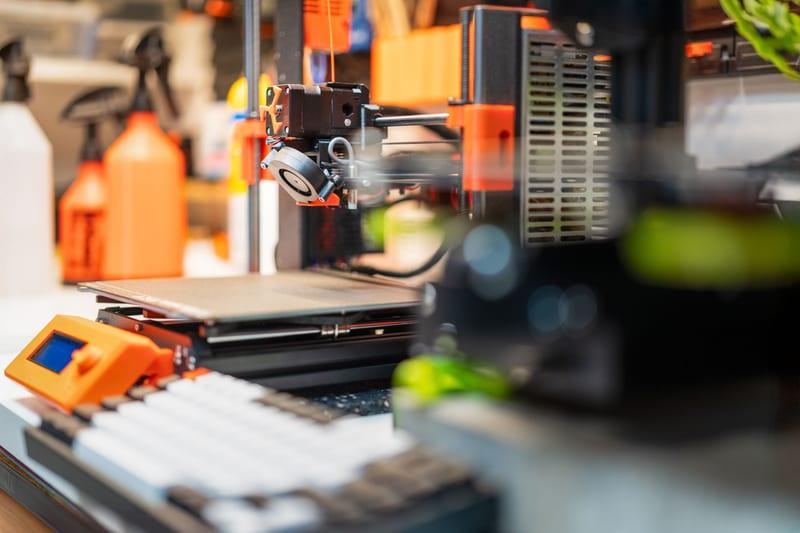 Bambu Lab X2D The only current machine here that arrives carbon-ready: hardened steel in the box, a 120 C bed and a published 65 C active chamber, at the same 300 C nozzle as everything else. | Best overall for carbon fiber Dual-nozzle printing at the smaller build volume, if you want two materials more than you want a big bed | Check price on Amazon #ad We earn a commission · price as of November 20, 2026 |
| 2 |  Bambu Lab 0.6 mm High Flow Induction Hotend Both of Bambu's own carbon-filled listings name a hardened steel nozzle at 0.6 mm as the recommended size. On a machine you already own, this is the entire upgrade. | The purchase that actually unlocks carbon fiber Carbon-fiber filament that clogs a 0.4 mm nozzle on chopped fiber | $69.00 · View on Amazon #ad We earn a commission · price as of November 20, 2026 |
| 3 |  Bambu Lab P1S Enclosed, published at a 300 C nozzle, and one upgrade part away from the full carbon-filled material list. For most owners this is where the answer stops. | Best value for carbon fiber The machine most people reading this site already own, and the one most of them should keep | |
| 4 | 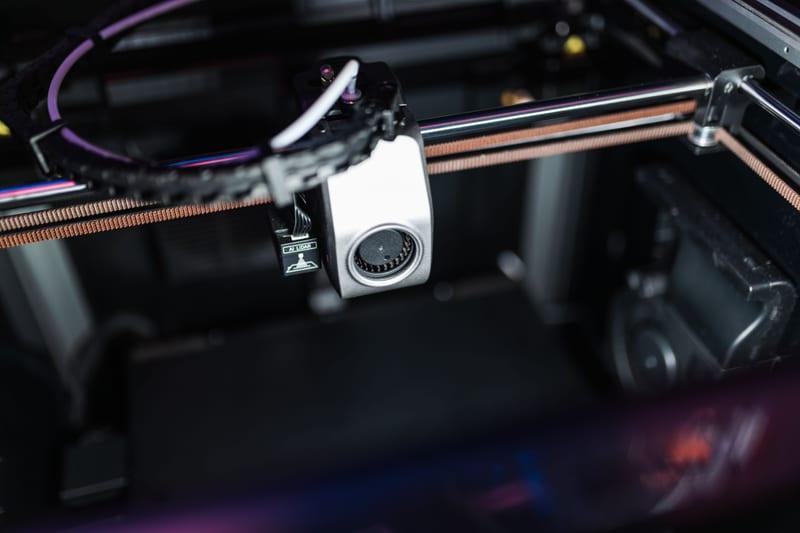 Bambu Lab AMS HT Both carbon-filled listings publish 80 C drying for 8-12 hours. This is the in-family unit that dries hot and feeds the printer straight from the spool. | The half of the job everyone skips One engineering-grade spool, dried hot, printed straight from the unit | Check price on Amazon #ad We earn a commission · price as of November 20, 2026 |
| 5 |  Bambu Lab P2S A 110 C bed against the P1S's 100 C, inside the same closed box, at the same 300 C nozzle. The middle option for carbon-filled nylon. | Best enclosed machine if you are buying new anyway The P1S owner whose actual complaint is the nozzle swap and the missing screen | |
| 6 | 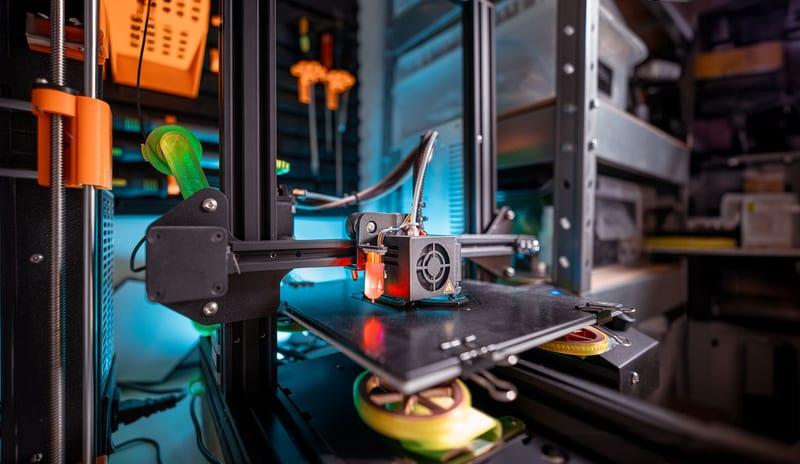 Bambu Lab H2D The large-format enclosed machine with a direct-drive dual nozzle, for carbon-filled parts that do not fit a 256 mm cube. | Best for large carbon fiber parts The genuine step up — large format plus a direct-drive dual nozzle in one machine | Check price on Amazon #ad We earn a commission · price as of November 20, 2026 |
The verdict
If you own an enclosed Bambu machine, buy a hardened hotend, not a printer. Bambu's own carbon-filled listings name a hardened steel nozzle at 0.6 mm as the recommendation and mark stainless Not Recommended. On a P1S, P1P, P2S or X1C that part is the whole upgrade.
The best machine for carbon fiber is the X2D. It is the only one here published with hardened steel included, a 120 C bed and active chamber heating to 65 C. Its nozzle ceiling is still 300 C, the same as a P1S.
An open-frame printer is not a candidate. 3D Universe states “Fully Enclosed Printer Required” for PAHT-CF and calls it unsuitable for open-frame printers. That rules out the A-series for this material class regardless of nozzle.
Dry the filament or none of it works. Both listings publish 80 C for 8-12 hours, which is above what a standard 70 C dryer reaches. This is the requirement most buyers skip and most failures come from.
PPS-CF is out of reach on every Bambu machine here. Its published nozzle range is 310-340 C against a 300 C ceiling across the lineup.
What actually decides this
“Carbon fiber” covers two very different groups of filament and the confusion costs people money. PLA-CF and PETG-CF are ordinary materials with chopped fiber added: abrasive, but printed at ordinary temperatures in an ordinary way. PA6-CF, PAHT-CF and PPA-CF are nylon composites — abrasive, hygroscopic, warp-prone and published with requirements that eliminate most machines. Every filament in the first group needs one thing from you. The second group needs four.
1. An abrasion-resistant flow path
This applies to every filled filament, cheap or expensive. The MatterHackers PA6-CF listing instructs you to use a hardened steel nozzle of 0.6 mm or larger instead of stainless steel; the 3D Universe PAHT-CF listing lists hardened steel as recommended and stainless steel as Not Recommended. The Bambu Lab wiki records the P1 series as shipping with a stainless hotend and extruder suited to standard non-abrasive filament, so on a P1S or P1P this is a purchase rather than a setting.
2. A nozzle ceiling above the material, not level with it
Both nylon composites are published at 260-290 C, which every current Bambu machine clears at its published 300 C. The trap is at the top of the range: PPS-CF is published at 310-340 C, above every machine here, and PA6-CF is published two different ways — 260-290 C on the MatterHackers listing and 260-300 C on Bambu's own product page. At the higher reading you would be printing at the ceiling instead of inside it, which is not where you want a material that needs flow.
3. A closed box
This is the requirement that eliminates machines rather than parts. 3D Universe states “Fully Enclosed Printer Required” for PAHT-CF and describes it as unsuitable for open-frame printers; the MatterHackers PA6-CF listing gives the printer type as an enclosed printer. Nylon contracts hard as it cools, so a tall part in moving room air splits along a layer line. Why prints warp is the mechanism, and the enclosure roundup is the answer for an A-series owner who wants to try anyway — with the honest warning that an aftermarket box traps heat but does not make it.
4. A genuinely dry spool
Published as 80 C for 8-12 hours on both listings, and in a blast drying oven for PAHT-CF. A wet nylon composite prints with surface bubbling, stringing and a strength loss you cannot see until the part fails, and it absorbs moisture fast enough that the spool you dried last month is not dry now. Wet filament symptoms covers what to look for, and how to dry filament covers doing it properly.
What the materials publish
| PA6-CF | PAHT-CF | PPS-CF | |
|---|---|---|---|
| Nozzle temperature | 260-290 C (Bambu's own page gives 260-300 C) | 260-290 C | 310-340 C |
| Bed temperature | 80-100 C with glue | 80-100 C with glue | Not published by a source we fetched |
| Drying | 80 C for 8-12 h | 80 C for 8-12 h in a blast drying oven | Not published by a source we fetched |
| Nozzle material | Hardened steel; stainless explicitly not recommended | Hardened steel recommended; stainless Not Recommended | Not published by a source we fetched |
| Recommended nozzle size | 0.6 mm or larger | 0.6 mm; 0.4 and 0.8 mm compatible; 0.2 mm not compatible | Not published by a source we fetched |
| Enclosure | Enclosed printer | Fully enclosed printer required | Not published by a source we fetched |
| AMS compatible | No | Yes | Not published by a source we fetched |
| In range on a 300 C Bambu machine | Yes | Yes | No - the range starts above the ceiling |
What the machines publish
| Nozzle ceiling | Nozzle material included | Bed ceiling | Chamber | |
|---|---|---|---|---|
| Bambu Lab X2D | 300 C | Hardened steel, 0.4 mm | 120 C | Active, 65 C maximum |
| Bambu Lab P2S | 300 C | Not published by a source we fetched | 110 C | No active chamber heater |
| Bambu Lab P1S | 300 C | Stainless steel; hardened sold as an upgrade | 100 C | Passive enclosure |
| Bambu Lab H2D | Not published by a source we fetched | Not published by a source we fetched | Not published by a source we fetched | Enclosed; no figure published |
| Bambu Lab A1 / A1 mini | 300 C | Stainless steel; hardened sold as an upgrade | 100 C / 80 C | Open frame - ruled out by the material spec |
Why the nozzle beats the printer for most people
Put the published numbers side by side and the conclusion is uncomfortable for a site that earns money on printers. A P1S clears the nozzle range for both nylon composites, clears the bed range, and satisfies the enclosure requirement. The only published requirement it fails is nozzle material, and that is a part costing a small fraction of any machine on this page.
The X2D is still the better machine for this material class, and the reason is reliability rather than possibility: a chamber that holds 65 C by design gives you a repeatable outcome where a passive box gives you a variable one. But “better” and “necessary” are different words, and a reader with a P1S and a wet spool of PA6-CF has a filament problem and a hotend problem, not a printer problem.
The order that makes sense: hardened 0.6 mm hotend, then a dryer that reaches the published 80 C, then glue stick and a plate that suits the material, then — only if tall parts are still failing and the material is most of what you print — a machine with an active chamber. The build plate roundup covers the surface question, since both listings specify glue on the bed.
Where the Bambu range runs out
PPS-CF is the hard edge. Its published nozzle range is 310-340 C and every Bambu machine documented on this site is published at a 300 C maximum. There is no setting, nozzle or firmware change that closes a 10-40 C gap at the hotend.
The nearest machine with a published figure above it is the Elegoo Centauri Carbon 2, which 3DJake lists with a 350 C hardened steel nozzle, a 110 C bed and the same 256 mm cube. We are not giving it a buy row here, and the reason is availability rather than quality: the same listing showed 0 units in the warehouse and states that delivery to the United States is not possible, retrieved 31 October 2026. A machine you cannot order is not a recommendation. P1S vs Elegoo Centauri Carbon is the full cross-brand comparison if that direction interests you.
PPA-CF is the more useful upper bound in practice: it is listed for the P1S, X1C and X1E with an enclosure and a hardened steel nozzle, which puts it inside the range of hardware most readers of this page already own.
Who should buy what
You own a P1S, P1P, P2S or X1C. Buy the hardened 0.6 mm hotend and a dryer that reaches 80 C. You are done, and you have spent a fraction of a machine.
You own an A1 or A1 mini. PLA-CF and PETG-CF are fine with a hardened nozzle. The nylon composites are not — the material specification requires a fully enclosed printer. An aftermarket enclosure improves the odds and does not change the published requirement. Upgrading from an A1 is the honest page for that situation.
You are buying a machine for engineering material. The X2D, for the active chamber, the 120 C bed and the nozzle material it arrives with. The P2S is the sensible middle if the chamber is not worth the step.
Your carbon-filled parts are large. The H2D, because build volume is the only requirement a parts purchase cannot satisfy.
What this page is and is not based on
PA6-CF figures — the 260-290 C nozzle, 80-100 C bed with glue, 80 C for 8-12 hours of drying, the hardened 0.6 mm nozzle instruction, the enclosed printer requirement and the AMS incompatibility — come from the MatterHackers Bambu Lab PA6-CF listing retrieved 31 October 2026. PAHT-CF figures come from the 3D Universe PAHT-CF listing, same date, which also showed the filament in stock. The alternative 260-300 C PA6-CF range and the PPS-CF 310-340 C range come from Bambu Lab's own product pages retrieved 17 October 2026, and where the two PA6-CF sources disagree both are printed above. X2D figures come from the MatterHackers and Makerpoint X2D listings, P1S figures from the Makerpoint P1S listing, all retrieved 31 October 2026; P2S figures from the 3DJake P2S listing retrieved 11 October 2026. The Elegoo availability result comes from the 3DJake Centauri Carbon 2 listing, 31 October 2026. The factory nozzle material point comes from the Bambu Lab wiki. H-series rows are registry entries whose provenance is documented in content/products.ts, and no external dimension, weight or chamber temperature is asserted for any H-series machine because no source we fetched publishes one. I have not printed PA6-CF, PAHT-CF or PPS-CF on any of these machines and nothing here was measured: this page is published specifications plus mechanism. See how we review. No price appears in prose.
Every pick in full
Stock photograph of this product class, not of this specific unit.
#ad We earn a commission · price as of November 20, 2026
1. Best overall for carbon fiber
Bambu Lab X2D
The only current machine here that arrives carbon-ready: hardened steel in the box, a 120 C bed and a published 65 C active chamber, at the same 300 C nozzle as everything else.
Carbon-filled filament asks three things of a machine and the X2D is the only one in the Bambu range that answers all three out of the box. MatterHackers lists it with hardened steel as the nozzle material and a 0.4 mm nozzle included, a 120 C maximum heatbed and active chamber heating to a 65 C maximum. Makerpoint's listing agrees on all three figures.
Line that up against the materials. MatterHackers publishes PA6-CF at a 260-290 C nozzle and an 80-100 C bed with glue; 3D Universe publishes PAHT-CF identically and adds “Fully Enclosed Printer Required.” The X2D's 300 C nozzle clears the nozzle range with margin, its 120 C bed clears the bed range with more, and the chamber is active rather than incidental. Nylon-based carbon composites warp hard, and a chamber that holds a set temperature is worth more to them than any speed figure on the page.
Two honest cautions. The nozzle ceiling is 300 C, the same as a P1S, so this machine does not reach PPS-CF's published 310-340 C range either. And the registry records it as an April 2026 machine: almost nothing third-party fits it yet, which for a site about upgrades is a real cost. P1S vs X2D is the page that prices this decision properly if you already own the P1S.
What it gets right
- Dual nozzle without stepping up to the H2 footprint — two materials on a desk-sized machine
- A reported 65 C heated chamber is a real capability jump over any passive P-series enclosure
- Newest filtration and thermal hardware in the smaller form factor
What it does not
- Released April 2026, so third-party part support is thin compared with the P1S
- Same reported 256 mm build volume as a P1S — this is a capability upgrade, not a size one
- I have not run one. What follows anywhere on this site about the X2D is specification and reasoning, not observation
| Released | April 14, 2026 |
|---|---|
| Type | Enclosed CoreXY, dual nozzle |
| Improvements cited | Air filtration, thermal management and speed |
| Build volume (reported) | 256 mm cube |
| Chamber (reported) | Heated to 65 C |
#ad We earn a commission · price as of November 20, 2026
2. The purchase that actually unlocks carbon fiber
Bambu Lab 0.6 mm High Flow Induction Hotend
Both of Bambu's own carbon-filled listings name a hardened steel nozzle at 0.6 mm as the recommended size. On a machine you already own, this is the entire upgrade.
This is the pick that saves most readers the price of a printer, so it goes above the machines. The MatterHackers PA6-CF listing says it plainly: use a hardened steel nozzle of 0.6 mm or larger instead of stainless steel. The 3D Universe PAHT-CF listing recommends 0.6 mm hardened steel, lists 0.4 mm and 0.8 mm as compatible, marks 0.2 mm not compatible, and records stainless steel as Not Recommended.
There are two separate reasons for that and they get confused constantly. Hardness is about wear: chopped carbon fiber is abrasive and it scours a stainless nozzle wider and rounder until dimensional accuracy goes. Bore size is about clogging: fiber fragments bridge a narrow orifice far more readily than a wide one. The nozzle page takes that apart at length, and nozzle sizes covers what the bore change does to your profiles.
The registry lists this part as a 0.6 mm high-flow induction hotend. The 0.4 mm hardened assembly is the other option if you refuse to reslice — both listings treat 0.4 mm as compatible, just not recommended — and that part is the one featured on the X2D comparison.
What it gets right
- The larger bore is the real fix for carbon-fiber clogging, not just a faster nozzle
- Hardened steel plus 0.6 mm is the combination for chopped-fiber filament
- Noticeably faster on functional parts where layer lines do not matter
What it does not
- H2-series only — this is not the part for a P1S or an X1C, whatever the nozzle size you want
- Every profile has to be re-sliced; a 0.6 mm nozzle is not a drop-in for 0.4 mm settings
- Visible layer lines and softer detail on anything decorative
| Nozzle | Hardened steel, 0.6 mm |
|---|---|
| Fits | Bambu Lab H2 series (listing states H2C) |
| Type | High-flow induction hotend, genuine replacement part |
3. Best value for carbon fiber
Bambu Lab P1S
Enclosed, published at a 300 C nozzle, and one upgrade part away from the full carbon-filled material list. For most owners this is where the answer stops.
Makerpoint lists the P1S at a 256 mm cube, a 300 C maximum nozzle and a 100 C maximum bed, inside an enclosure. Hold that against the two published material specifications: PA6-CF and PAHT-CF both at 260-290 C nozzle and 80-100 C bed with glue. The nozzle clears, the bed clears, and the box is closed. The one thing it does not ship with is the nozzle material, and the Bambu Lab wiki records the P1 series as arriving with a stainless steel hotend and extruder suited to standard non-abrasive filament.
So the honest version of this roundup, for the majority of people reading it, is: you already own the right printer and you need a hotend. That is the argument upgrading from a P1S makes about nearly every weakness on this machine, and carbon fiber is the clearest example of it.
Where the P1S genuinely runs out is the top of the range. PPS-CF is published at 310-340 C and nothing in the Bambu lineup documented here reaches it. PA6-CF's upper bound is also published two ways — the MatterHackers listing gives 260-290 C and Bambu's own product page gives 260-300 C — and at the 300 C reading you are printing at the machine's ceiling rather than inside it. What the P1S can and cannot print goes material by material.
What it gets right
- The enclosure plus auxiliary fan is what makes ABS and ASA realistic rather than aspirational
- Still the best-supported machine in the range for third-party upgrades — screens, hotends, plates, ducts
- Fast enough that the P2S's speed gain is not the reason to replace it
What it does not
- No touchscreen as shipped, which is why the Panda Touch exists
- No quick-swap nozzle: a nozzle change is a hotend job, not a 30-second one
- Passive chamber only — it holds heat, it does not make heat
| Released | July 13, 2023 |
|---|---|
| Type | Enclosed CoreXY |
| Over the P1P | Enclosure, auxiliary cooling fan and air filter |
| Multi-color | AMS and AMS 2 Pro (4 spools, expandable) |
Stock photograph of this product class, not of this specific unit.
#ad We earn a commission · price as of November 20, 2026
4. The half of the job everyone skips
Bambu Lab AMS HT
Both carbon-filled listings publish 80 C drying for 8-12 hours. This is the in-family unit that dries hot and feeds the printer straight from the spool.
Here is the requirement nobody puts in a printer comparison. The MatterHackers PA6-CF listing publishes drying at 80 C for 8-12 hours. The 3D Universe PAHT-CF listing publishes 80 C for 8-12 hours in a blast drying oven. Nylon-based filament is hygroscopic enough that a spool left open for a weekend will print with surface bubbling, stringing and a measurable loss of strength no matter which machine it is in.
That 80 C figure is also the quiet reason most filament dryers do not qualify. A standard-temperature unit tops out around 70 C, which is under the published figure for every carbon-filled nylon here. The SUNLU S4 review works through exactly that ceiling on a four-spool box, and the nylon dryer roundup names the units that do reach it.
The AMS HT's advantage over a standalone dryer is not the temperature, it is that the printer feeds from the unit. There is no window where a dried spool sits on the bench reabsorbing water while the print starts. AMS HT versus a dryer is the honest comparison of the two approaches, including the case for buying neither.
What it gets right
- Dries at a higher temperature than the AMS 2 Pro, which is what nylon and PC actually need
- Prints directly from the dryer, so there is no window where a dried spool sits absorbing moisture again
- Single spool is the right shape for engineering filament, which you rarely want four of
What it does not
- One spool. If multi-color is the goal, this is the wrong unit entirely
- Costs real money for a capability a standalone high-temp dryer also delivers
- Only worth it if you print materials that genuinely need the extra heat
| Type | Single-spool material system |
|---|---|
| Headline feature | High-temperature active drying |
5. Best enclosed machine if you are buying new anyway
Bambu Lab P2S
A 110 C bed against the P1S's 100 C, inside the same closed box, at the same 300 C nozzle. The middle option for carbon-filled nylon.
3DJake lists the P2S at the same 256 mm cube and 300 C nozzle as the P1S with a 110 C bed, 392 x 406 x 478 mm and 14.9 kg, and no active chamber heater. For carbon-filled nylon the bed figure is the one that counts: both published material specifications call for 80-100 C with glue, so 110 C gives you headroom where the P1S gives you exactly enough.
It is a genuinely better starting point than a P1S for this material class and a genuinely worse one than an X2D, which is the whole of its position here. If you are buying a first enclosed machine and nylon composites are part of the plan, this is the sensible middle. P1S vs P2S is the full comparison.
What it does not do is make the hotend question go away. No fetched source published the P2S's factory nozzle material, so budget for a hardened assembly and treat it as part of the machine's cost rather than an accessory.
What it gets right
- Quick-swap nozzle turns a 0.4-to-0.6 change from a maintenance task into a between-prints decision
- A real touchscreen on the machine, so you are not opening an app to start a print
- Same footprint and roughly the same build area as the P1S, so your enclosure and shelf still work
What it does not
- If you have never once wished your P1S had a screen, this is not the upgrade you need
- Reported build volume is a 256 mm cube — the same class as the P1S, so it buys you nothing in size
- Your P1S-specific third-party parts may not carry over; check fitment per part, not per brand
| Released | October 9, 2025 |
|---|---|
| Type | Enclosed CoreXY, P1S successor |
| Over the P1S | Touchscreen and quick-swap nozzle |
| Build volume (reported) | 256 mm cube |
Stock photograph of this product class, not of this specific unit.
#ad We earn a commission · price as of November 20, 2026
6. Best for large carbon fiber parts
Bambu Lab H2D
The large-format enclosed machine with a direct-drive dual nozzle, for carbon-filled parts that do not fit a 256 mm cube.
Carbon-filled nylon is the material people reach for when a part has to carry load, and load-bearing parts are often the big ones. The registry records the H2D as a large-format enclosed machine with a direct-drive dual nozzle and a reported 350 x 320 x 325 mm build volume, which is the one thing no upgrade to a 256 mm machine can provide.
The second nozzle earns its place here more than it does elsewhere on the site. Two hotends held hot at once means a support material in a different polymer, which matters for the geometry engineering parts tend to have. What dual nozzles actually change is the mechanism, and H2D vs P1S is the money question stated plainly.
The cautions are the familiar ones and they are serious. No fetched source publishes an external dimension, weight or chamber temperature for any H-series machine, so nothing is asserted for those here. Two nozzles is two of every maintenance task. And if your parts fit in 256 mm, this is the most expensive way to solve a nozzle problem.
What it gets right
- Direct-drive dual nozzle is a different kind of machine, not a faster version of the one you own
- The largest reported build area of the models an enthusiast realistically buys
- Two hotends means dissolvable or contrast material without an AMS color-change purge every layer
What it does not
- This is the biggest single jump in money in the whole lineup — it has to replace a workflow, not a wish
- Two nozzles is two of every maintenance task
- If multi-color is the actual goal, an AMS 2 Pro on your existing printer gets you most of the way for a fraction of it
| Released | March 25, 2025 |
|---|---|
| Type | Large-format enclosed, direct-drive dual nozzle |
| Build volume (reported) | 350 x 320 x 325 mm |
| Laser Edition (reported) | Adds laser, blade and pen toolheads |
Questions people actually ask
Can the Bambu Lab P1S print carbon fiber filament?
Yes, with one purchase. Makerpoint lists the P1S at a 300 C maximum nozzle inside an enclosure, which clears the published 260-290 C nozzle range and the enclosed-printer requirement for both PA6-CF and PAHT-CF. What it does not clear is nozzle material: the Bambu Lab wiki records the P1 series as shipping with a stainless steel hotend, and both filament listings call for hardened steel. Add a hardened hotend, dry the spool at the published 80 C, and the machine is capable.
What nozzle do I need for carbon fiber filament?
Hardened steel, and 0.6 mm is the published recommendation. The MatterHackers PA6-CF listing says to use a hardened steel nozzle of 0.6 mm or larger instead of stainless steel. The 3D Universe PAHT-CF listing recommends 0.6 mm hardened steel, lists 0.4 mm and 0.8 mm as compatible, and marks 0.2 mm not compatible. Hardness stops the nozzle wearing out; bore size stops fiber fragments bridging the orifice.
Which Bambu Lab printer is best for carbon fiber?
The X2D, if you are buying new. MatterHackers lists it with hardened steel as the nozzle material and a 0.4 mm nozzle included, a 120 C maximum bed and active chamber heating to a 65 C maximum - the only machine in the range published with all three. Its nozzle ceiling is still 300 C, the same as a P1S, so the advantage is chamber control and bed temperature rather than reach.
Can an A1 or A1 mini print carbon fiber?
PLA-CF and PETG-CF, yes, with a hardened nozzle. The nylon composites, no: 3D Universe states 'Fully Enclosed Printer Required' for PAHT-CF and calls it unsuitable for open-frame printers, and the MatterHackers PA6-CF listing gives the printer type as enclosed. An aftermarket enclosure improves your odds but does not satisfy a published requirement, and the A1 mini's 80 C bed is below the 80-100 C the material asks for.
Do I have to dry carbon fiber filament before printing?
For the nylon composites, yes, and the published figure is specific: 80 C for 8-12 hours on both the PA6-CF and PAHT-CF listings, with PAHT-CF specifying a blast drying oven. This is the requirement most people skip. It also rules out a lot of hardware - a standard filament dryer tops out around 70 C, which is under the published figure.
Can any Bambu Lab printer print PPS-CF?
No. PPS-CF's published nozzle temperature range is 310-340 C and every Bambu machine documented on this site is published at a 300 C maximum nozzle. That gap cannot be closed with a setting or a nozzle swap. PPA-CF is the realistic upper bound for this hardware: it is listed for the P1S, X1C and X1E with an enclosure and a hardened steel nozzle.
Is PA6-CF AMS compatible?
The two materials differ, which catches people out. The MatterHackers comparison table lists AMS compatibility as No for PA6-CF, while 3D Universe lists PAHT-CF as AMS compatible. If you want a carbon-filled nylon running through an AMS, PAHT-CF is the one that is listed for it.
Will a hardened nozzle hurt my PLA prints?
Slightly, and only at the extremes. Hardened steel conducts heat a little worse than stainless, so very high-flow PLA may want a small temperature increase to keep the same flow rate. For normal printing the difference is not something you will see, and moving from 0.4 mm to 0.6 mm matters far more - that changes layer width, wall count and print time, so your profiles need redoing.
Do I need a hardened extruder gear as well as a nozzle?
Some retailer listings for abrasive filament call for a hardened extruder gear alongside the nozzle; the two listings cited on this page do not state that requirement, so we do not assert it. What is clear is that the extruder gears are a wear part - this site's maintenance pages cover replacing them when they are worn, and abrasive filament is the thing that wears them.
Sources
- Bambu Lab PA6-CF published settings: 260-290 C nozzle, 80-100 C bed with glue, drying at 80 C for 8-12 hours, the explicit instruction to use a hardened steel nozzle of 0.6 mm or larger instead of stainless steel, an enclosed printer, and AMS compatibility listed as No - MatterHackers Bambu Lab PA6-CF 1 kg listing, retrieved 2026-10-31
- Bambu Lab PAHT-CF published settings: 260-290 C nozzle, 80-100 C bed with glue, drying at 80 C for 8-12 hours in a blast drying oven, hardened steel nozzles recommended with stainless steel listed Not Recommended, 0.6 mm hardened steel recommended with 0.4 and 0.8 mm compatible and 0.2 mm not compatible, "Fully Enclosed Printer Required" with the material called unsuitable for open-frame printers, AMS compatible, and "In-Stock Now" availability - 3D Universe Bambu Lab PAHT-CF listing, retrieved 2026-10-31
- The wider 260-300 C nozzle range published for PA6-CF, already cited on this site's filament-compatibility pages, against the 260-290 C the MatterHackers listing gives for the same material - Bambu Lab PA6-CF product page, retrieved 2026-10-17
- PPS-CF recommended nozzle temperature range 310-340 C - Bambu Lab PPS-CF product page, retrieved 2026-10-17
- X2D main-nozzle build volume 256 x 256 x 260 mm against 235.5 x 256 x 256 mm in dual-nozzle mode, 300 C maximum nozzle, hardened steel nozzle material with 0.4 mm included and 0.2, 0.4, 0.6 and 0.8 mm supported, 120 C maximum heatbed, active chamber heating to a 65 C maximum, 1000 mm/s maximum toolhead speed, 20,000 mm/s2 maximum toolhead acceleration, 392 x 406 x 478 mm, 16.25 kg net weight, 5-inch 1280 x 720 touchscreen, a 1920 x 1080 live-view camera and a 1600 x 1200 toolhead camera, G3 pre-filter plus H12 HEPA plus granulated coconut-shell activated carbon filtration, and the stated AMS limits of up to four AMS 2 Pro and eight AMS HT units with the AMS hub not compatible - MatterHackers X2D listing, retrieved 2026-10-31
- X2D build volume 256 x 256 x 260 mm with the dual-nozzle mode given as around 235 x 256 x 256 mm, 300 C maximum nozzle, 120 C maximum build plate, 65 C maximum chamber, machine size 392 x 406 x 478 mm, 16.25 kg net weight, hardened 0.4 mm steel nozzles, textured PEI spring steel plate with automatic bed leveling, 1.75 mm filament and AMS compatibility - Makerpoint X2D listing, retrieved 2026-10-31. The same page showed the machine in stock, which is the availability check behind every X2D buy row in this round
- P1S build volume 256 x 256 x 256 mm, 300 C maximum nozzle, 100 C maximum bed, machine dimensions 389 x 389 x 458 mm and 12.95 kg net weight, shown available on backorder - Makerpoint P1S listing, retrieved 2026-10-31. The same page contradicts itself on chamber heating: its specification table gives a maximum chamber temperature of 0 C while its description copy claims an actively heated chamber to 60 C, so no P1S chamber figure is asserted anywhere in this round
- P2S build volume (256 x 256 x 256 mm), machine dimensions (392 x 406 x 478 mm), net weight 14.9 kg, 300 C nozzle, 110 C bed and the absence of an active chamber heater - 3DJake P2S listing, retrieved 2026-10-11
- The P1 series ships with a stainless steel hotend and extruder suited to standard non-abrasive filament, with the hardened steel nozzle and hotend sold as a separate upgrade part - Bambu Lab wiki, P1S extruder upgrade page
- Elegoo Centauri Carbon 2 350 C hardened steel nozzle, 110 C maximum bed and 256 x 256 x 256 mm build volume, together with a stock status of 0 units in the warehouse and the statement that delivery to the United States is not possible - 3DJake Centauri Carbon 2 listing, retrieved 2026-10-31. That availability result is why the machine is discussed on the carbon-fiber page but carries no buy row there
- Feature rows for the AMS units, the hardened hotends and the H-series machines come from this site's product registry, whose spec provenance is documented in content/products.ts - no figure is asserted that a manufacturer or a cited third party did not publish
Read this next
- The best nozzle for carbon fiber filamentHardened steel at 0.6 mm is the answer for carbon-filled filament - and the reason your 0.4 mm nozzle keeps clogging is not wear.
- Do I need a hardened nozzle for this filament?The one rule that answers this for every filament, plus a per-material table covering PETG, ABS, CF, silk, wood, marble and glow.
- What a P1S can and cannot printPA6-CF fits at 260-300 C against the P1S's 300 C ceiling. PPS-CF needs 310-340 C and does not. PPA-CF is listed for the P1S with an enclosure and a hardened nozzle.
- SUNLU FilaDryer S4Four 1 kg spools at a published 70 C, with filament fed out to up to four printers while it dries. The specs, the two figures retailers disagree on, and who should skip it.
- Bambu Lab P1S vs X2DSame 256 mm build class. The X2D adds a published 65 C active chamber, a 120 C bed, dual nozzles and hardened steel in the box. Whether that justifies replacing a P1S.
- The best Bambu Lab printer for ASAWhich machines handle ASA and ABS, why passive and active chambers differ, and the free technique to try before buying.